

Perfume is the category where packaging cost and packaging risk both peak. A 50 ml flacon weighs around 200 g empty and close to 400 g filled; the glass is thin at the shoulder, the cap is heavy metal, and the carton has to carry all of it through a parcel network without a chip. At the same time the box must sell a scent nobody can smell until it is open.
This guide covers the four structures that dominate the category, the fitments that decide your damage rate, and the freight maths most brands get wrong on the first order.
Why a fragrance box is not a normal carton
Weight sits in a small footprint. A filled 100 ml bottle is roughly 400 to 500 g concentrated on a base of about 60 by 40 mm. That is a high point load for any board structure, and the reason a perfume pack needs a cradle rather than void fill.
Glass fails at the shoulder and neck. The weakest part of a flacon is the neck, where the wall thins to hold the crimp. A one metre drop load transmitted through an unsupported neck snaps it, so any insert that holds the body but leaves the neck floating has solved half the problem.
Fragrance is a regulated good. Alcohol-based perfume is a flammable liquid for transport. Most air carriers refuse it or apply a dangerous-goods surcharge that can exceed the value of the packaging, so the category moves by sea, where the pack is locked into your cubic metre for the life of the SKU.
The four structures that dominate perfume
Tuck-end folding carton. One ply of 300 to 400 gsm coated board, printed flat, glued and shipped collapsed. The cheapest structure in the category and the standard for retail lines, but it offers no structural protection of its own.
Rigid two-piece, lid and base. A 1.5 to 2 mm greyboard core wrapped in printed art paper. The base holds the insert, the lid slides over. The workhorse of premium fragrance: stable, printable on five surfaces, and assembled by hand, which is where the cost sits.
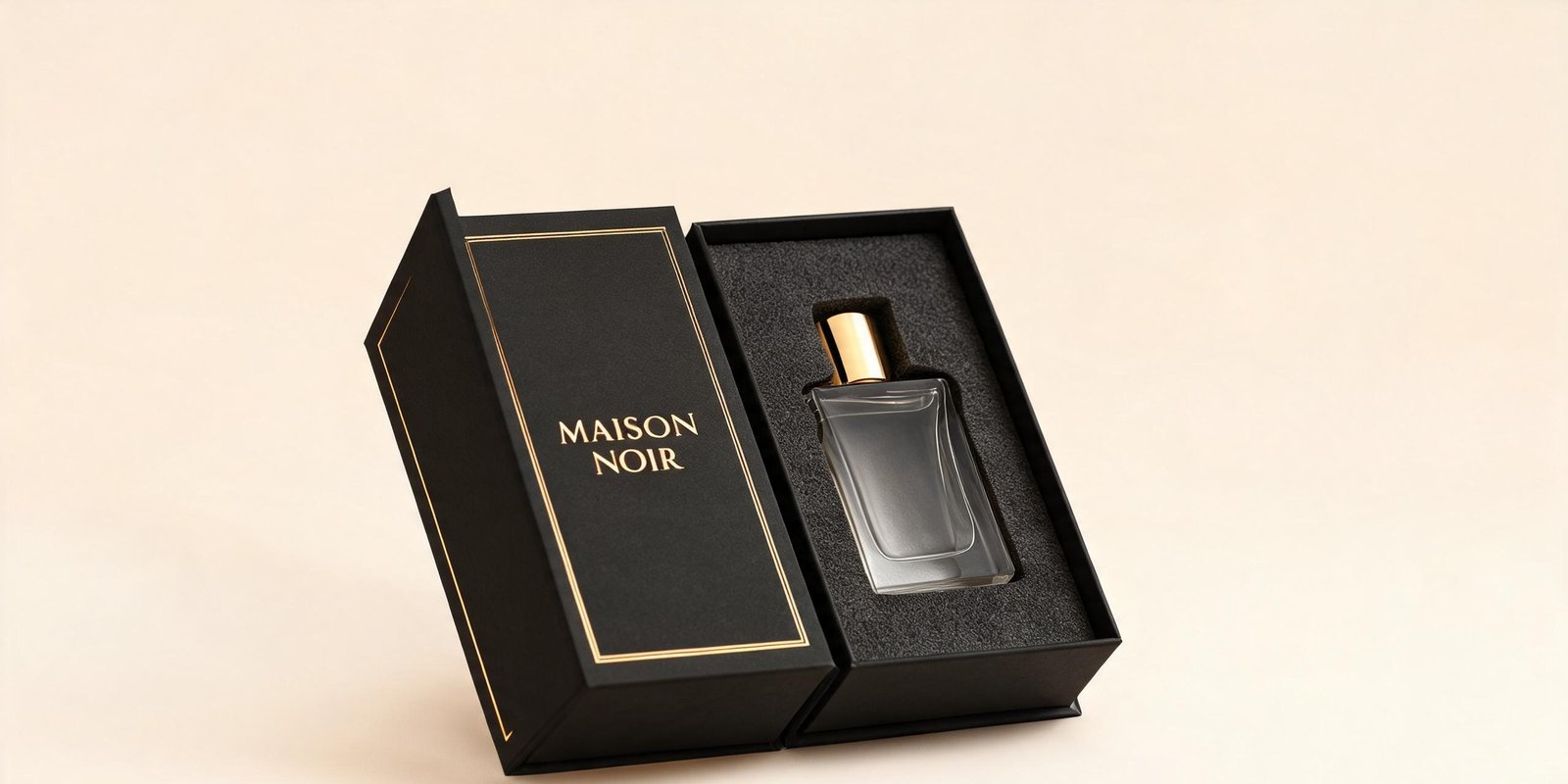
Rigid flip or magnetic. A hinged lid held by magnets or friction, usually with a ribbon tab. This is the structure that produces the unboxing moment most brands chase, and every hinge is aligned by hand, so it carries the highest unit cost.
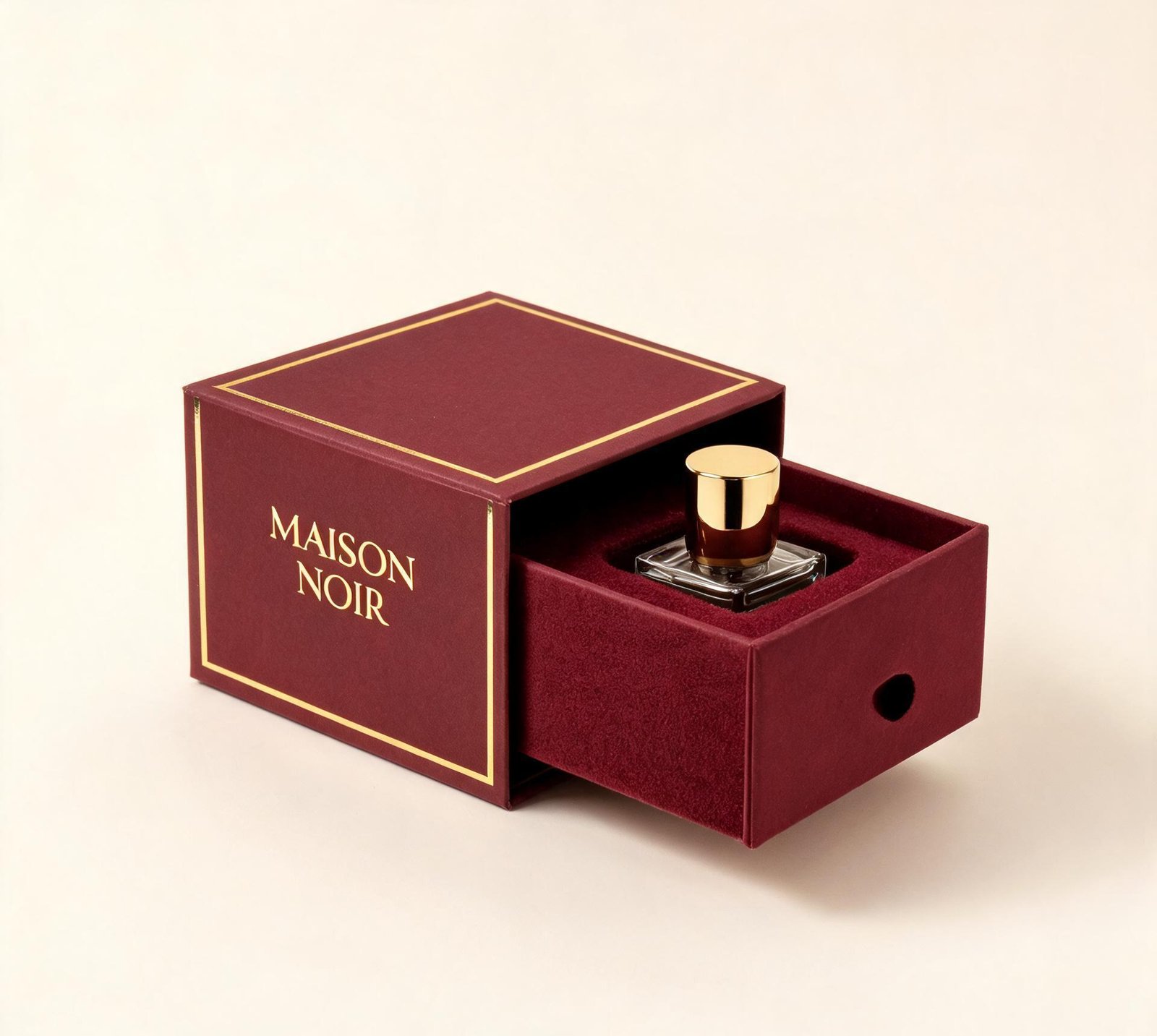
Drawer or slide. An outer sleeve with an inner tray that slides out on a ribbon. It reads as ceremony and photographs well, but the tolerance has to be tight or the tray rattles.
How the four compare on the numbers that decide
| Decision | Folding carton | Rigid lid and base | Rigid flip / magnetic | Drawer / slide |
|---|---|---|---|---|
| Board | 300–400 gsm coated | 1.5–2 mm greyboard + wrap | 2 mm greyboard + wrap | 1.5 mm greyboard, two parts |
| Tooling | Cutting die | Die + assembly jig | Die + jig + magnet jig | Die + two jigs + ribbon |
| Unit cost index | 1.0 | 3.0–4.0 | 4.0–5.5 | 3.5–4.5 |
| Freight cube | Low, ships flat | High, ships assembled | High, ships assembled | High, two assembled parts |
| Bottle protection | None without a shipper | Good with insert | Good with insert | Good, tray walls add support |
| Unboxing gesture | Open and discard | Lift the lid | Snap the flap | Slide the tray |
| Best for | Retail lines, refills, testers | Core premium SKUs | Launch kits, gifting | Limited editions, PR boxes |
| MOQ | From 500 pcs | From 500 pcs | From 500 pcs | From 500 pcs |
Read the table twice. At 500 units the rigid flip box can cost five times the carton before tooling is amortised, and that gap only narrows past 5,000 units. Then look at freight cube: an assembled rigid box occupies its protected volume on every shipment, inbound and outbound, for the life of the SKU. That second number is the one brands forget to model.
Fitments: the part that decides your damage rate
Every flacon needs one of five inserts. The choice is mostly about how much hand labour and how much plastic you are willing to buy.
- Flocked EVA. Die-cut foam, 20 to 30 mm thick, with a cavity 2 to 3 mm larger than the bottle and a deeper pocket at the neck. The default for rigid boxes and the best protection per gram.
- Moulded pulp. Formed paper trays that grip the bottle profile. Mono-material and the right answer for a refill line; tooling is higher and the finish is rougher.
- Paper honeycomb. Good compression for heavy caps and wide bases, and it stacks flat before assembly.
- Thermoformed PET with flocking. The crispest cavity and the best hand feel, at the cost of a plastic insert that will not repulp.
- Corrugated cradle. Folded E-flute platforms for cartons that ship inside a mailer. Cheap, recyclable, adequate up to 30 ml.
Two clearances matter more than the material. Leave 2 to 3 mm around the bottle body so the glass is never under pressure, and support the neck from below so the crimp never carries the drop load. A cavity cut exactly to the bottle dimension will either rattle or crack.
The unboxing moment, in three beats
The reveal
The lid comes off and the bottle is seen against a surface. A dark flocked insert makes clear glass read brighter, which is why black interiors dominate the category. If the bottle is dark, a contrasting insert does the same job in reverse.
The lift
The customer puts a hand in and pulls. A ribbon tab gives the fingers something to find and stops the natural instinct to grip the bottle by the cap. It costs cents and removes the most common cause of damage after delivery.
The leave-behind
A rigid box survives on a shelf and keeps the brand in the room; a carton goes in the recycling. If the pack is built to be kept, the interior should look finished, not raw greyboard.
Finishes that survive a fragrance shelf
Soft touch lamination is the most effective single upgrade on any wrap: it changes the hand feel before the customer reads a word. Foil on the wrap holds registration far better than foil on flute, because the substrate is flat and stable. Registered emboss, where the relief lines up with the print, is what separates a premium box from a decorated one, and it needs a heavier board to avoid show-through inside.
Spot UV over a matte field creates a gloss contrast that photographs well in paid social. Window patching suits refills and travel sizes, where the bottle colour sells itself better than any print.

Sizing, freight and the dangerous-goods reality
Parcel billing uses dimensional weight: length by width by height divided by 5,000 or 6,000 depending on the carrier. A box 10 mm oversized in each dimension is charged as a larger parcel on every order, and across a launch quantity that exceeds the packaging budget.
Fragrance adds a constraint other categories do not have. Because alcohol-based perfume is a flammable liquid, air freight either refuses it or applies a surcharge, so volume moves by sea in 20 or 40 foot containers, charged by cubic metre. An assembled rigid box is mostly air. That is why a carton that ships flat can beat a rigid box on landed cost even when its unit price is higher, and why both structures should be modelled at the same quantity before you commit.
A practical rule: size the box to the bottle plus 4 to 5 mm of insert clearance, then check the outer dimension against the standard shipper carton.

Sustainability without breaking the ritual
Three claims hold up in fragrance. Mono-material construction, where wrap, core and insert are all paper, repulps cleanly and still reads premium if the pulp insert is moulded well. FSC-certified board with chain-of-custody documentation on request is now expected by most European retailers. Refill architecture, a heavier outer box with a light refill carton, cuts material per millilitre sold and gives the customer a reason to keep the original pack.
What does not hold up is a recyclable claim on a box that still contains a bonded PET insert or a magnet set into the wrap. If it cannot be separated by hand in ten seconds, it is not recyclable in practice.
How a perfume pack runs
- Brief and dieline. Send the bottle drawing with wall thickness, cap height, fill weight, quantity band and channel. We draft the flat pattern and hand it over for artwork at no cost, so the designer builds to a real die.
- Sample. A pre-production sample on the specified board, wrap and insert, typically three to five days. The bottle is tested in the cavity at this stage, not after bulk.
- Bulk and inspection. Production runs seven to fifteen days after approval, with inspection before the boxes close: dimensional check, print registration, board caliper and a drop test at the filled weight.
Minimum order is 500 pieces per design. Cartons, rigid boxes, inserts and printing run under one roof, so both structures can be quoted against the same brief instead of across two suppliers.
Where to start
Fix the opening first, then the insert, then the finish. The opening sets the structure and the unit cost, the insert sets the damage rate, and the finish is the budget conversation that follows.
Our perfume and fragrance packaging range covers cartons, rigid lid-and-base and flip constructions, and the rigid paper box range shows the heavier end of the family. For two concrete starting points, compare the rigid flip perfume box with the drawer perfume box: same bottle, two different unboxing gestures. Send your bottle dimensions through the contact page and we will come back with a dieline, an insert proposal and a quote at your quantity.