

Ask five suppliers for a board specification and you will get five different answers, because paper can be described by weight, by thickness, or by layers. None of those translate into each other reliably: two boards at 400 gsm can behave very differently in a corner, and two at 1.5 mm can weigh noticeably different amounts. Specify the role each layer plays and the numbers become meaningful.
Wrap paper is not structural
On a rigid box the visible paper is a wrap — it carries the print and the feel, and the core carries the shape. Common wraps:
- Coated art paper, 128–175 gsm (single or double-sided). The default for offset printing; takes foil, embossing and spot UV well. Heavier coated stock is more forgiving over a greyboard edge but cracks sooner on a tight fold.
- Kraft, 120–170 gsm. Natural, printable in one or two colours, and the easiest story to tell on recycled content. It shows fibre and softens colour, so proofs matter more.
- Specialty and textured stocks, 90–140 gsm. Excellent under low-pressure embossing; poor under deep embossing, because a heavy pattern tears a long-fibre decorative sheet.
- Paper-backed liner board. Where the inside of a lid must look as finished as the outside.
Core board: chipboard versus greyboard
Chipboard (bleached white or duplex with a grey back) is what a folding carton is made from, typically 350–600 gsm. It is cut and creased, ships flat, and erects by hand. Above about 600 gsm a crease starts to be a liability — the fold weakens and the board wants to spring back.
Greyboard is the rigid-box core, described in millimetres rather than grams: 1.2 mm for small cosmetic set-ups, 1.5–2.0 mm for gift boxes and watch cases, 2.5–3.0 mm where the lid spans a large area and must not dish. Density matters as much as thickness — a cheap 2 mm core that crumbles at a corner is worse than a well-made 1.5 mm one.
A starting specification
| Box type | Core | Wrap | Usual finish |
|---|---|---|---|
| Folding carton (cosmetics, food) | 350–400 gsm white chipboard | Printed directly | Matte lamination |
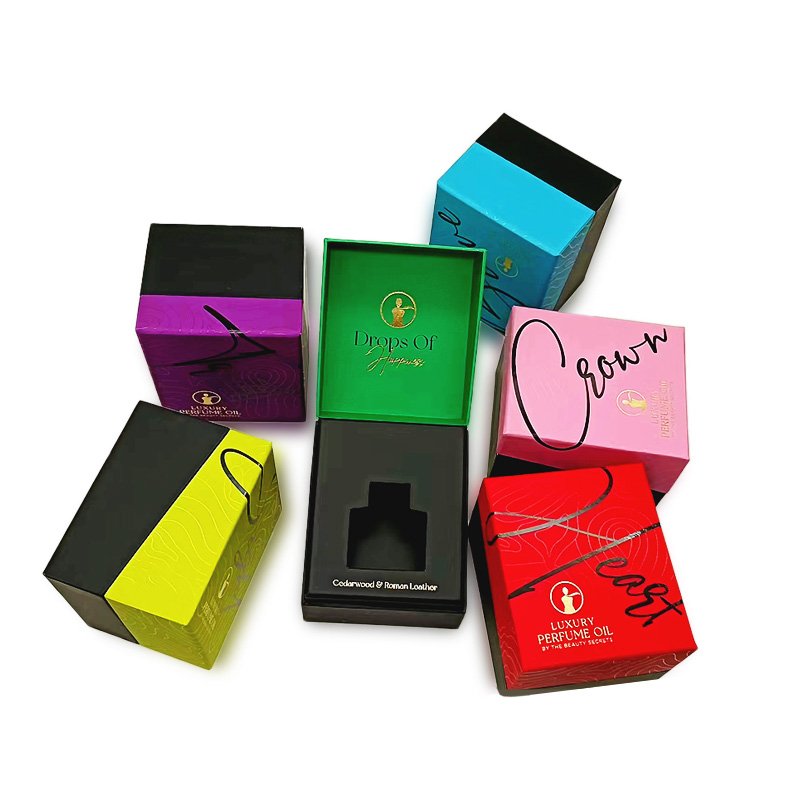
| Rigid lid-and-base gift box | 1.5–2.0 mm greyboard | 157 gsm coated art | Soft touch + foil |
| Magnetic closure folder | 1.2–1.5 mm greyboard | 128–157 gsm art or specialty | Emboss, spot UV |
| Roll-end mailer | E-flute or B-flute, 350–450 gsm liner | Printed liner or kraft | 1–2 colour flexo |
| Display box / PDQ | 400–600 gsm chipboard | Printed directly | Gloss varnish |
Weight is a freight decision as much as a feel decision
Going from 1.5 mm to 2.0 mm core is a 33 percent jump in board weight, and it lands on every unit you ship, in every container. The right way to choose is to decide the failure mode you are protecting against: does the lid dish when a customer picks it up, do the corners crush in a stacked master carton, or does it simply need to feel substantial at a premium price point? If the answer is the third, a good 1.5 mm core with a well-laminated wrap will feel better than a badly made 2.0 mm one.
Board and the recycled question
Kraft and greyboard made from recovered fibre are the easy wins; white chipboard is not, because bleaching is what makes it white. If a specification depends on a bright white surface, ask what share of the board is recovered fibre and whether that share sits in the visible layer or only in the core. Ask for the certification code, not a logo. We will cover chain of custody in more detail in a later post.
Send us your product, target price and quantity through the contact page and we will propose a board specification with the exact grades rather than a range.