
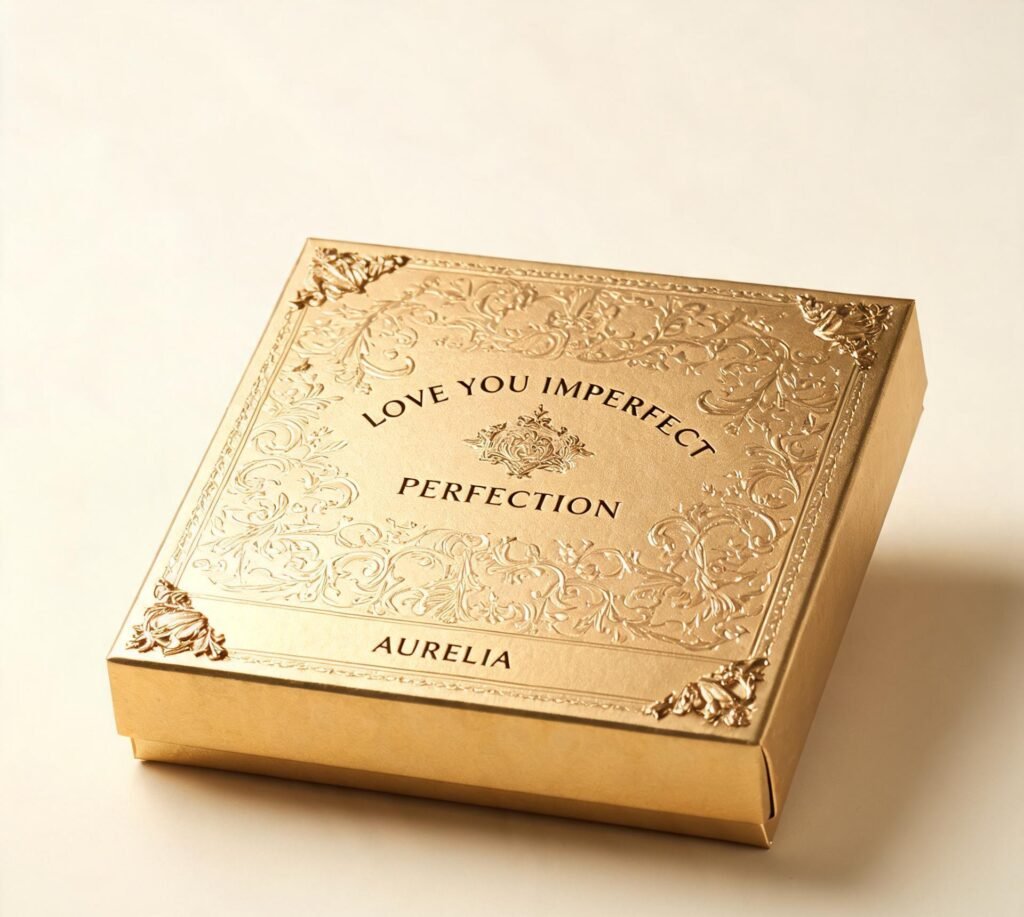
Most beauty launches overspend on packaging in the wrong place. A brand decides the box has to feel expensive, orders a rigid magnetic-closure construction for a 30 ml serum, and then discovers the unit cost has eaten the margin the product needed to fund sampling. The opposite mistake is just as common: a folding carton specified for a gift set that arrives crushed because nobody bought the shipper.
Both formats are legitimate. They solve different problems, and the decision is usually settled by four questions: what is inside, where it is sold, how it opens, and how many units you can commit to. This guide walks through each of those for beauty brands ordering in the 500 to 20,000 unit range, and shows where the cost actually goes.
What the two formats actually are
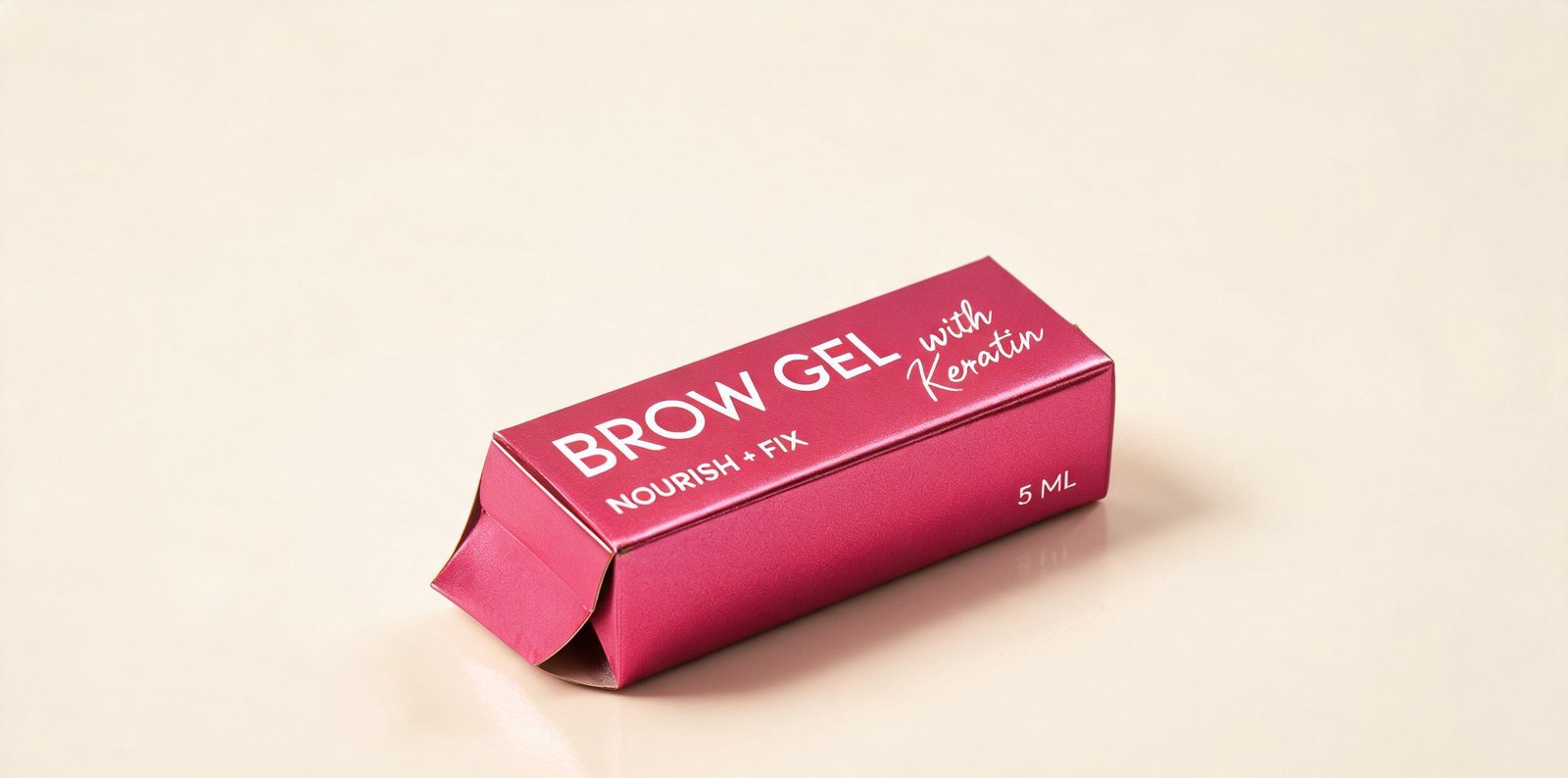
A folding carton is a single ply of coated paperboard — typically 300 to 400 gsm solid bleached sulphate or coated recycled board — printed, creased and die-cut flat. It arrives glued and collapsed, and one person can erect a few hundred an hour by hand. It is the cheapest way to put a printed, structured surface around a product.
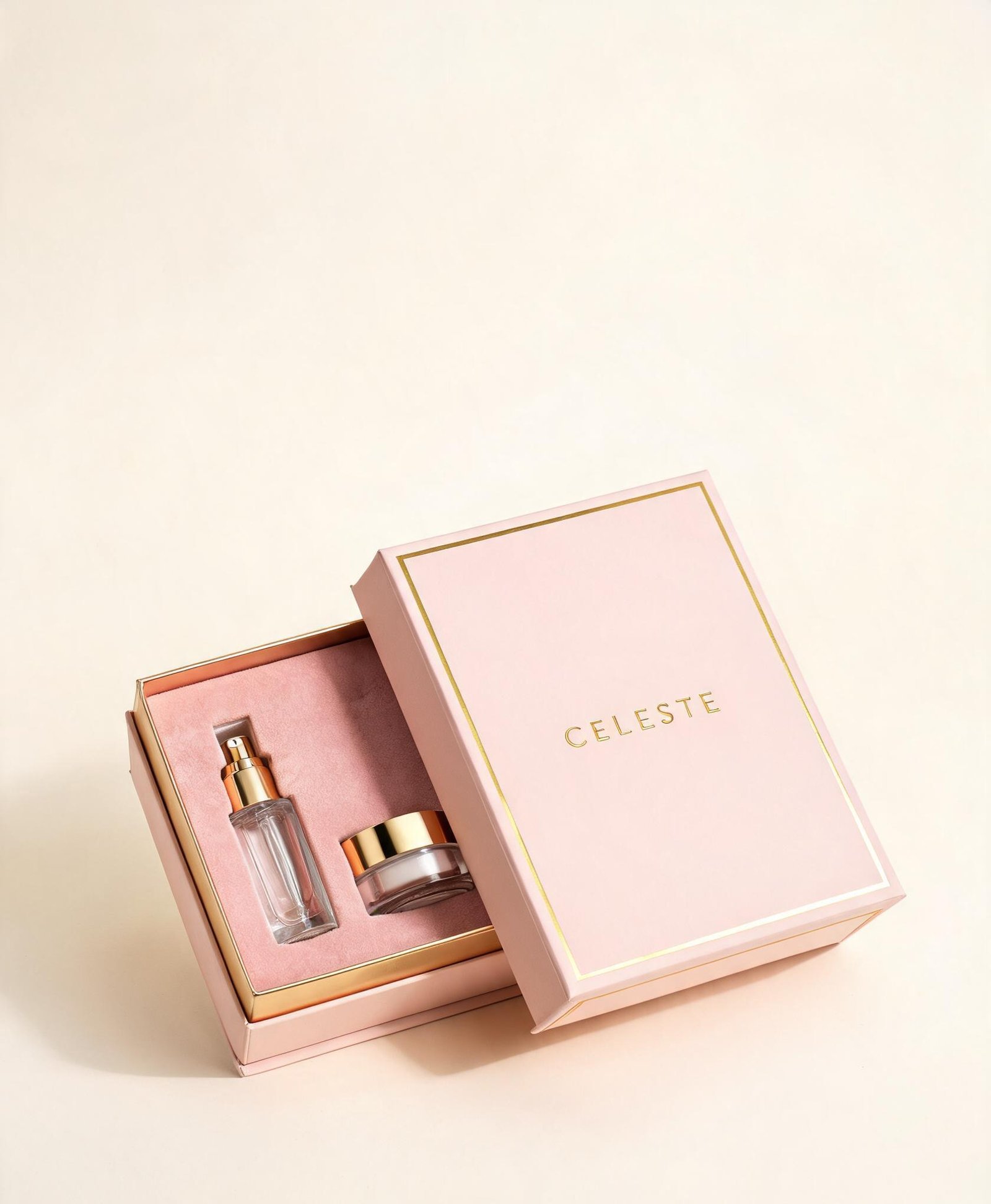
A rigid box is a greyboard core, usually 1.5 mm to 2.5 mm thick, wrapped in 157 to 200 gsm printed art paper with the edges turned in. It does not collapse. It is assembled by hand or semi-automatically around a jig, which is where the labour cost comes from. Magnetic closures, drawers and double-door openings all live in this family.
Where the money goes
The gap between the two is not one number but a stack of them. The table below is the comparison most brands actually need before they commit.
| Decision | Folding carton | Rigid box |
|---|---|---|
| Board | 300–400 gsm coated paperboard | 1.5–2.5 mm greyboard + printed wrap |
| Tooling | Cutting die only | Die plus assembly jig and wrap plates |
| Unit cost | Baseline | Typically 3–5× the carton |
| Ships | Flat, glued and collapsed | Assembled, corner-protected |
| Freight cube | Low | High, both inbound and outbound |
| MOQ | From 500 pcs per design | From 500 pcs, hand assembly dominates |
| Protection | Presentation only — needs a shipper | Good, once an insert is specified |
| Best for | Masks, tubes, single SKUs, shelf facings | Gift sets, launch kits, PR mailers |
Two lines in that table decide most projects. Tooling is a one-off and amortizes across the run, so it matters at 500 units and almost disappears at 10,000. Freight cube never amortizes: an assembled rigid box occupies the volume it protects, on every shipment, for the life of the SKU.
The four questions that set the structure
What is inside
A tube or a compact is a rectangle with forgiving corners: a carton with a tuck end is enough. A glass dropper bottle is not — it needs a cradle, because a 30 ml bottle weighs about 100 g and a 1 kg drop load will snap a neck that is unsupported. If the answer involves glass, start from the insert design and work outwards to the box.
Where it is sold
Retail shelf and parcel are different packaging problems. On shelf, the box has seconds to read: face size, print contrast and finish matter more than board weight. In a parcel network, the box has to survive sorting machines and a doorstep, which means corrugated or a carton inside a shipper — never a carton alone.
How it opens
The opening is the only part of the package the customer physically handles. A lid that lifts away, a drawer that slides, a magnetic flap that snaps: each is a rigid-family gesture and each adds assembly steps. If your brand story is a quiet, sustainable unboxing, a printed carton inside a kraft mailer often reads better than a rigid box that feels like a jewellery store.
How many units you can commit to
Folding cartons scale down more gracefully. Rigid boxes are hand-assembled, so small runs carry a disproportionate labour share. At 500 to 1,000 units, a carton usually wins on total cost. Past 5,000, the rigid premium becomes a smaller percentage of the retail price and easier to justify.
Fitments: protecting glass without foam
Every beauty SKU with glass needs one of four fitments, and the choice is mostly about how much hand labour you want to pay for.
- Die-cut corrugated cradle. Cut from E or B flute, folded into a platform that holds the bottle away from the walls. Cheapest, recyclable, and adequate for most serums and toners.
- Moulded pulp. Formed paper trays that hug a bottle profile. Better for heavy jars and suitable for mono-material recycling; tooling is higher than a die-cut cradle.
- Paper honeycomb. Good compression resistance for wide jars and palettes, and it cuts cleanly into custom cavities.
- EVA foam. The strongest option for very fragile or very heavy items, and the one that breaks a recyclability claim unless it is separated in the unboxing instructions.
Finishes that read as premium on a carton
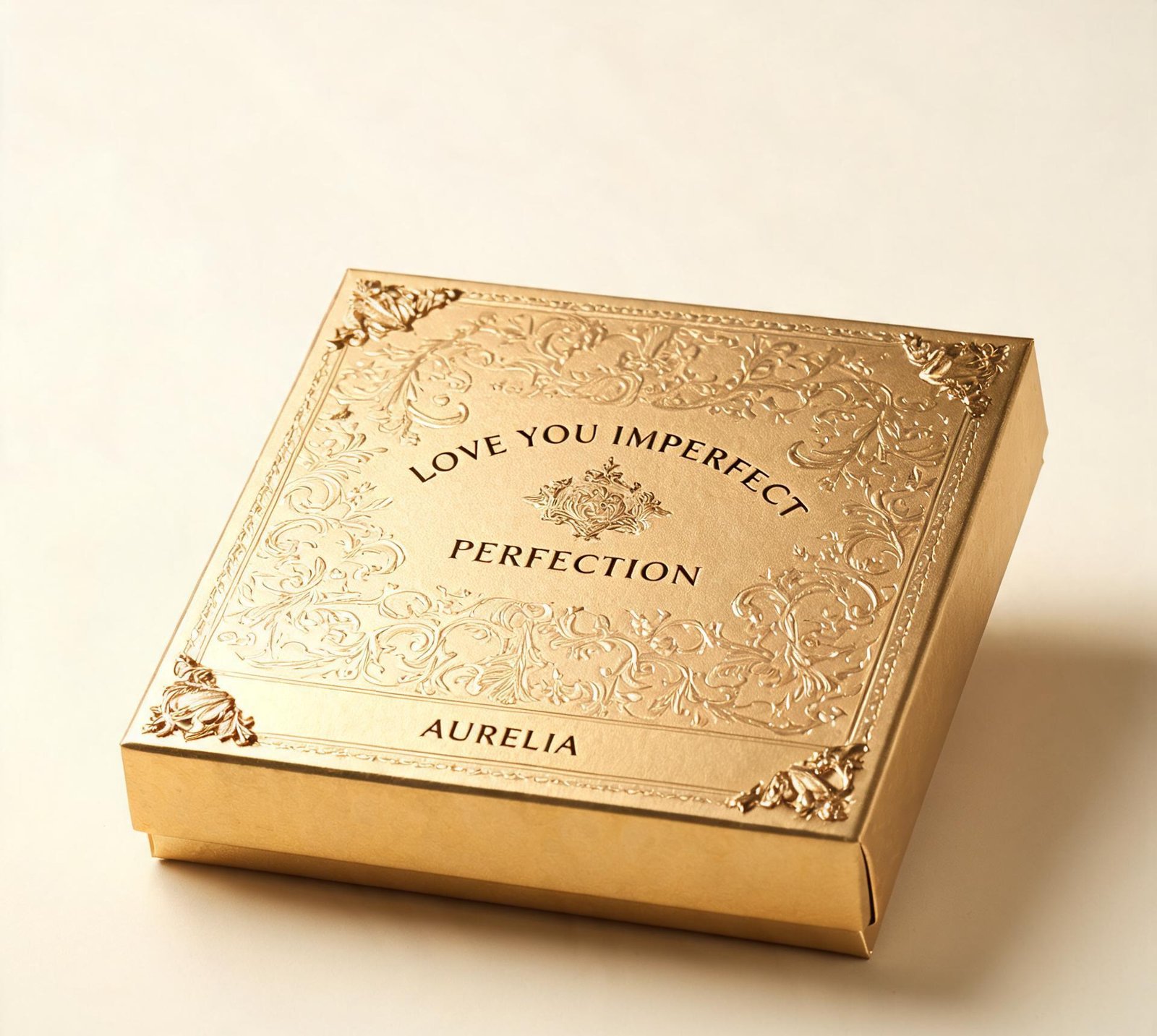
You do not need a rigid box to look expensive; you need the right two finishes. Soft touch lamination gives a velvet hand feel and is the single most effective upgrade on a carton. Spot UV over a matte field creates a gloss contrast that photographs well on shelf and in social content. Foil stamping holds registration best on flat, stable surfaces, which is why it works on a carton face and poorly on flute. Embossing adds depth but needs a heavier board to avoid show-through on the reverse.
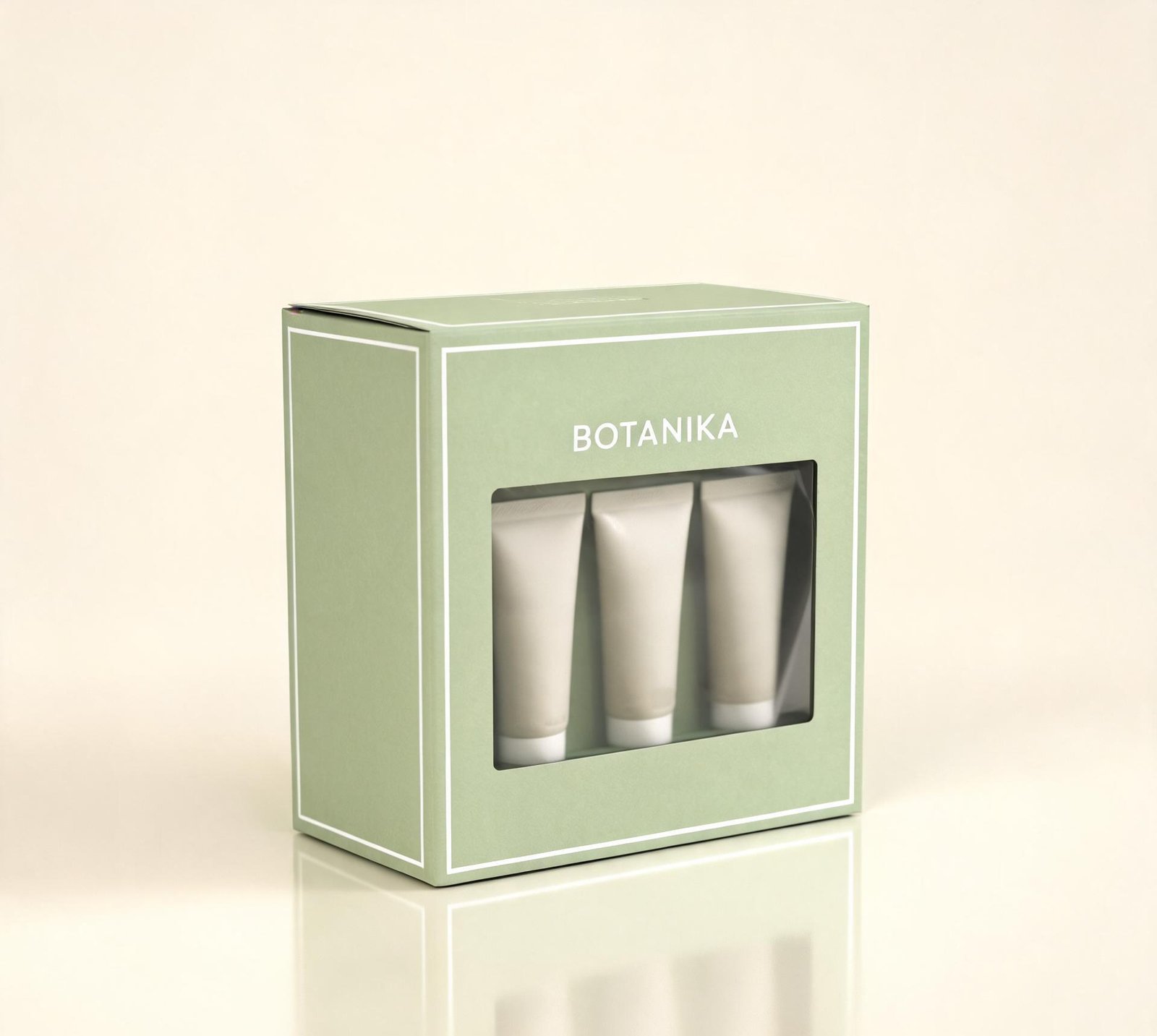
Window patching deserves a mention for beauty specifically: a die-cut aperture covered with a clear film lets the product colour do the selling, which is usually stronger than any print. If the film has to go for recyclability, a shaped aperture without film achieves most of the same effect.
Sizing and shelf math
Two numbers decide whether the box pays for itself. Shelf facing is the width the box occupies on a retail planogram; a millimetre of extra width multiplies across a range and can cost a listing. Dimensional weight is volume divided by 5,000 or 6,000 for parcel, so a box 10 mm oversized in every dimension is charged as a bigger parcel on every order.
Practical approach: size the carton to the product plus 3 to 5 mm clearance, confirm the facing against the retailer’s planogram, and standardize to two or three sizes across the range so paper buying and tooling amortize. A serum, a cream and a mask rarely need three different footprints; one body with different heights usually covers all three.
Sustainability claims you can defend
Beauty is the category where unverifiable green claims attract the most attention. Three that hold up: FSC-certified board with chain-of-custody documentation supplied on request; mono-material construction with no PE lamination or plastic window that prevents repulping; and right-sizing, which removes void fill and air from every shipment. Recycled content lowers the fibre footprint but typically costs 10 to 20 percent of strength, so specify a grade step-up at the same time or the box will not survive transit.
How a beauty launch actually runs
Our process is deliberately short, because most of the risk sits in two places: the dieline and the fitment.
- Brief and dieline. Send product dimensions, weight, photos of the bottle, quantity band and channel. We draft the flat pattern and hand it over for artwork at no cost, so your designer builds to a real die rather than an estimate.
- Sample. A pre-production sample on the specified board and finish, typically three to five days. Insert, fitment and opening are tested in the sample, not discovered in bulk.
- Bulk and inspection. Production runs seven to fifteen days after approval, with inspection before cartons close: dimensional check, print registration, board caliper and a drop test at the parcel weight.
Minimum order is 500 pieces per design. Cartons, rigid boxes, inserts and printing all run under one roof, which is why you can compare both formats on a single quote instead of two suppliers.
Where to start
Choose the opening first, then the board, then the insert — in that order. The opening fixes the family; the board fixes the cost; the insert fixes the damage rate. Everything else, including print and finish, is a budget conversation after those three are settled.
Our cosmetic and beauty packaging range covers both families, and if you want a side-by-side starting point, the book-style cosmetic box and the double-door rigid personal care box show the two ends of the spectrum at the same footprint. For folding carton structures, see the folding carton range. Send your product details through the contact page and we will come back with a dieline, a board recommendation and a quote at your quantity.