

Cardboard is the most over-promised word in packaging. A founder asks a supplier for “cardboard packaging boxes” and receives a quote for a corrugated shipper; the same founder later discovers that the box in the unboxing video they were copying is a rigid board construction costing four times as much per unit. Both are called cardboard. Neither can do the other’s job.
This guide is for brands ordering between 500 and 20,000 units — the band where a wrong material decision is expensive, but a right one is still reachable without a five-figure tooling budget. It separates the three families, explains which grades you need for shipping versus retail, and shows where cost accumulates.
The three families behind the word “cardboard”
- Corrugated board is two liner sheets with a fluted layer glued between them. The flute is the protective structure: air columns that absorb impact and carry load. This is the material of shipping cartons and mailers.
- Folding carton board is a single ply of coated or uncoated paperboard, typically 250–450 gsm, printed and die-cut flat with creases so it folds and glues into a box. This is the material of retail shelves and pharmacy.
- Rigid board is a core of greyboard, 1.2 mm to 3 mm thick, wrapped in printed paper. It does not fold flat. It is the material behind magnetic closures and gift-set presentations.
Most specification arguments start with someone confusing these three. Parcel network: the first. Retail shelf: the second. Opening as part of the price: the third.
Corrugated board: flutes, ECT, and what the numbers mean
Corrugated is specified by flute profile and strength rating. The flute letter describes the height of the corrugation and therefore the caliper: E flute is about 1.5 mm, B flute 3 mm, C flute 4 mm, and a BC double wall about 6 mm. Taller flutes give more cushioning per gram of fibre; finer flutes print and fold better.
Strength is quoted two ways. Edge crush test (ECT) measures the load a strip carries on its edge — 32 ECT is the practical floor for parcel shipping and what most marketplace compliance programmes ask for. Mullen burst measures puncture resistance. A working rule: single wall B or C flute at 32 ECT handles most e-commerce orders; go to double wall above roughly 15 kg, for glass, or for parcels larger than the standard sorting envelope.

Folding cartons: the retail layer, not the shipping layer
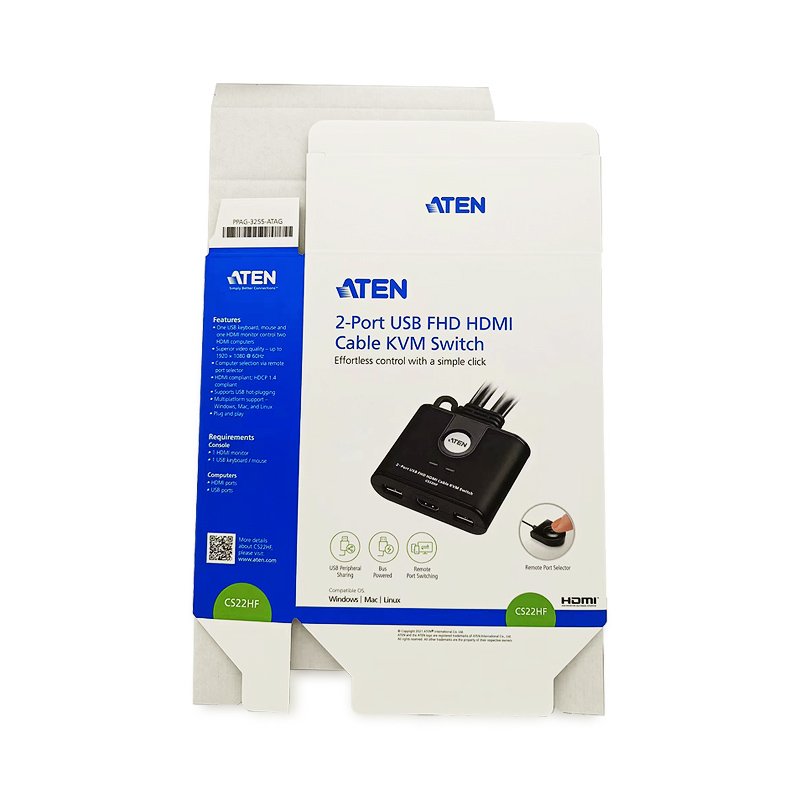
Folding cartons are the cheapest way to put a printed, structured package around a product. The board is around 300–400 gsm solid bleached sulphate or coated recycled board, printed, die-cut and creased, then delivered flat and glued. Because they ship flat, freight per unit is the lowest of any box family.
The trade-off is protection. A folding carton is a presentation shell: there is no fluted layer to absorb impact, so put one directly into a courier network and it arrives scuffed at best. If your product is a bottle, a jar or anything breakable, the carton belongs inside a corrugated shipper, not in place of it.
Rigid board: where the unboxing premium lives
Rigid boxes are built from a greyboard core wrapped in 157–200 gsm printed art paper, with the wrap turned in over the edge so no raw core shows. They are assembled by hand or semi-automatically, which is why unit cost is typically three to five times a folding carton of similar size.
What you buy with that cost is presence: a lid that lifts away, a magnetic closure that snaps, an interior that feels like furniture. For gift sets, watch and jewellery presentation and premium spirits, rigid is correct. For a subscription box opened once and recycled, it is over-specified.
Cardboard packaging boxes versus corrugated mailers
The comparison most brands actually face is not between materials but between two shipping formats.
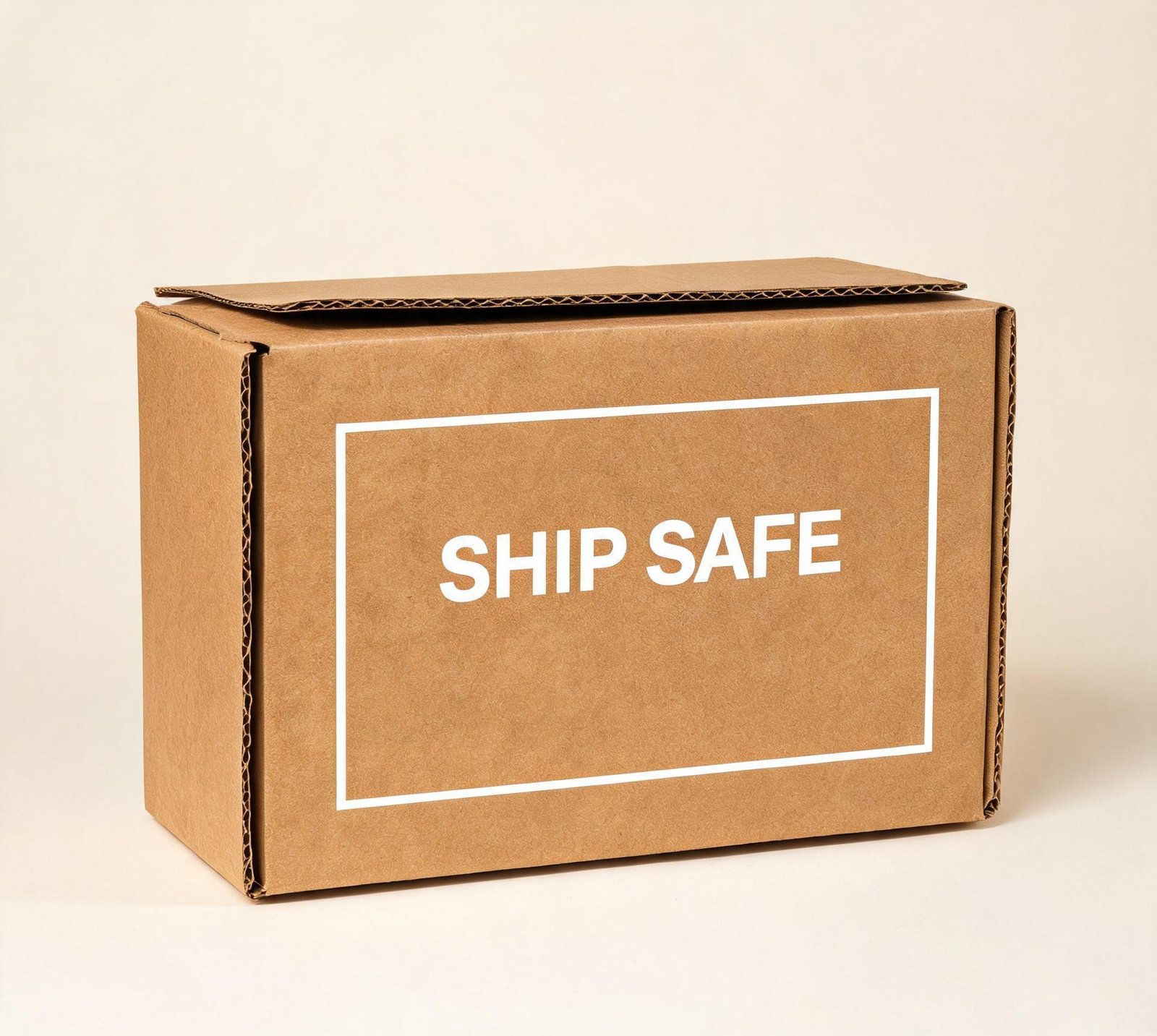
- A regular slotted container is the cheapest corrugated box per unit and the most flexible in size. Its weakness is void space: an RSC is rarely the exact size of the product, so you fill the gap with paper or air pillows, which costs money and still leaves the product free to move.
- A corrugated mailer — roll-end tuck, snap-lock or self-seal — is die-cut to a fixed size, assembles without tape and presents a clean printed face on arrival. Unit cost is higher than an RSC, but the difference is often recovered on void fill, packing time, dim-weight charges and fewer damage claims.
- A folding carton is not a shipping format. Budget for it as retail presentation and pair it with a shipper.
For most brands shipping direct to consumers, the answer is a die-cut corrugated mailer with an inner fitment, plus a folding carton only where the product also sits on a shelf. Our e-commerce corrugated mailer boxes and kraft snap-lock mailers are built around exactly this decision.
Material grades and the real cost drivers
Buyers assume board weight is the main cost lever. It is one of six, and rarely the largest.
- Sheet yield. How many boxes fit on one press sheet drives paper cost per unit more than the grade does. A structure that nests badly can cost more than a heavier board that nests well.
- Board grade and weight. 300 to 350 gsm is a small step; single to double wall is a large one.
- Print coverage. Four-colour process over the full surface costs more than one spot colour on a kraft face, and the gap compounds at volume.
- Finishing. Foil, emboss, spot UV and soft touch each add a separate pass, priced per thousand impressions.
- Assembly. Flat-shipped cartons and mailers are cheap to pack. Rigid boxes are not.
- Freight cube. Flat-packed goods ship at a fraction of assembled volume, which often decides landed cost on export orders.
Protective features that cut damage claims
Box strength protects the outside of the package. Fitments protect the product inside it, and that is where damage claims are won or lost.
- Corrugated cradles are die-cut platforms that hold a product away from the walls — cheap, recyclable, effective for anything with a rigid body.
- Partitions and dividers keep glass and cans from touching, the most common cause of breakage in multi-unit packs.
- Moulded pulp and paper honeycomb replace foam for fragile items and keep the package mono-material.
- Double-wall base and reinforced corners matter when a parcel sits at the bottom of a pallet for a week.
Whatever the fitment, leave 3–5 mm of clearance and no more. Excess gap lets the product accelerate before it hits the wall.
Size optimization: the cheapest change on the sheet
Carriers bill on dimensional weight — volume divided by 5,000 or 6,000 depending on service. A box 10 mm too large in each dimension is charged as a materially bigger parcel, every time it ships. Three changes pay for themselves within a quarter: cut each dimension to the minimum that still clears the product and fitment; consolidate to two or three box sizes so tooling amortizes; and prefer structures that ship flat. On a 5,000-unit run, trimming 20 mm from one dimension commonly saves more than the finishing upgrade the same brand was debating.
Printable surfaces and finishes
Print quality follows the liner, not the artwork. Direct flexo on B or C flute is fine for a logo and two colours and coarse for photography; E flute accepts finer detail. For photo-realistic reproduction on corrugated, the standard route is litho lamination — print the sheet on coated paper by offset, then mount it to the board.
Finishes stack on top of the print, each with a cost and a complaint profile. Matte aqueous varnish resists scuffing and is the default for shipping boxes. Soft touch gives a velvet hand feel and shows fingerprints. Spot UV creates gloss contrast against a matte field. Foil and emboss add depth but only hold registration on flat surfaces, which is why they belong on cartons and rigid wraps rather than on flute. Window patching is usually the cheapest way to make a carton read as premium.

Sustainable choices that survive scrutiny
Recyclability claims are easy to print and hard to defend. Four choices hold up.
- FSC-certified board. Chain-of-custody certification ties the fibre to responsibly managed forests and is verifiable. Ask for it in the specification, not in an email.
- Recycled content. Post-consumer board lowers the fibre footprint but typically loses 10–20 percent of strength, so a grade step-up is often needed to hold the same ECT. Plan for it rather than discovering it after a transit test.
- Mono-material construction. Remove plastic windows, PE laminations and foam where the product allows. A package that cannot be repulped because of a film layer cannot honestly be called recyclable.
- Right-sizing. The most measurable gain in e-commerce packaging is eliminating void fill and oversized cartons: less board, less air, fewer truck trips.
From brief to bulk: the three-step route
Once the material is settled, the shortest path from brief to delivered pallet is three steps, and it is the route we run for every order.
- Brief and dieline. Send product dimensions, weight, photos from two angles, the quantity band, the sales channel and whether artwork exists. We draft the flat pattern and send it back for your artwork at no cost, so your designer works to a real die.
- Sample. A pre-production sample is made on the specified board with the specified finish, typically in three to five days. Nothing goes to plate until it is signed off.
- Bulk and inspection. Production runs seven to fifteen days after approval, with inspection before cartons close: dimensional check, print registration, board caliper and a transit check against the drop height. Then export packing and shipment.
Minimum order is 500 pieces per design — deliberately set so a small brand can test a structure in market before committing to a container. Printing, finishing and assembly run under one roof, which is why a foil-and-emboss rigid box and a plain kraft mailer can be quoted on the same document.
Where to start
Decide the channel first — parcel, shelf, or hand-over — because that one answer eliminates two of the three cardboard families before you spend anything. Then size the box to the product and its fitment, choose the cheapest structure that survives the transit test, and put the remaining budget into the print face the customer actually sees.
If you are ordering between 500 and 20,000 units and want the structure and dieline worked out before you commit, send the details through our contact page. We will come back with a dieline, a board recommendation and a quote at your quantity.