
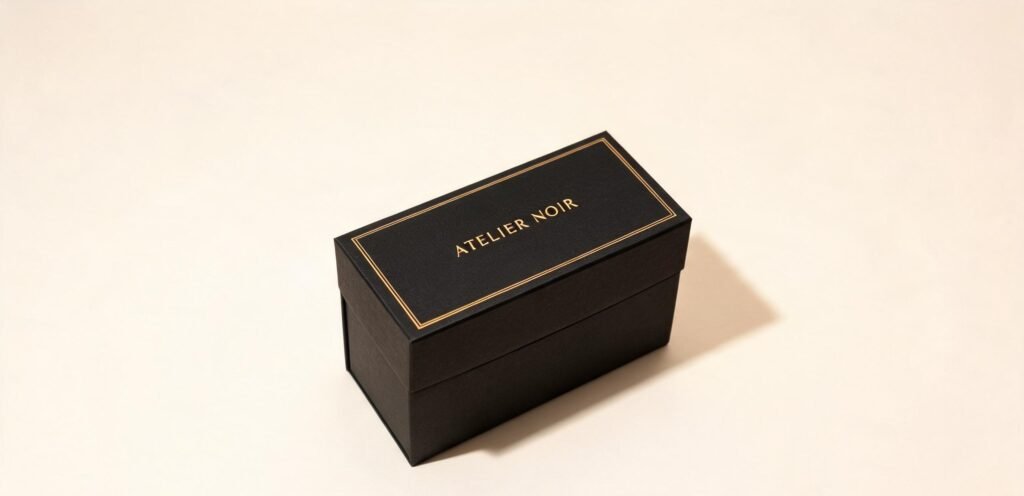
A gift set is not just a product; it is an experience wrapped in paperboard. The box is the first thing the recipient touches, and it sets the price expectation before the lid is even lifted. When a customer holds a gift set box, they are judging the quality of everything inside, which is why the structure, finish and insert design matter far more for gift sets than for standard retail packaging.
This guide breaks down the structural decisions behind premium gift set boxes: rigid board grades, closure mechanisms, insert tiers and the finishing techniques that make a set feel worth its price.
Why Gift Sets Demand Rigid Board, Not Folding Carton
A folding carton is built for cost and shelf efficiency. A gift set box is built for perceived value, and the difference starts at the board. Rigid set-up boxes use 1.5 to 2.5 mm greyboard wrapped with printed paper, which gives them a substantial weight, sharp edges and a matte handfeel that folding carton cannot replicate. When a recipient lifts the lid, the box should feel heavy and precise, not flimsy.
Rigid board also holds decorative techniques better. Embossing, debossing, foil stamping and spot UV sit flat on a rigid surface, whereas the same techniques on a 350 gsm folding carton can look uneven under light because the board flexes. For gift sets sold at a premium price point, that rigidity is the difference between a gift and a giveaway.
- 1.5 mm greyboard is the entry-level choice for small sets such as a two-item skincare duo.
- 2.0 mm greyboard suits medium sets with three to four items and a tiered insert.
- 2.5 mm greyboard is used for large sets, heavy contents or box formats that double as keepsakes.
- Wrapped paper finish over the greyboard takes print, foil and embossing more evenly than direct board printing.
Our rigid paper boxes catalogue covers the standard set-up structures, while the rigid paper gift set boxes product line shows multi-item configurations with inserts already engineered.
Closure Mechanisms: Magnetic, Ribbon and Hinged Lid
The closure is the interaction point that defines the unboxing moment. Three mechanisms dominate the gift set category, and each suits a different product profile and price tier.
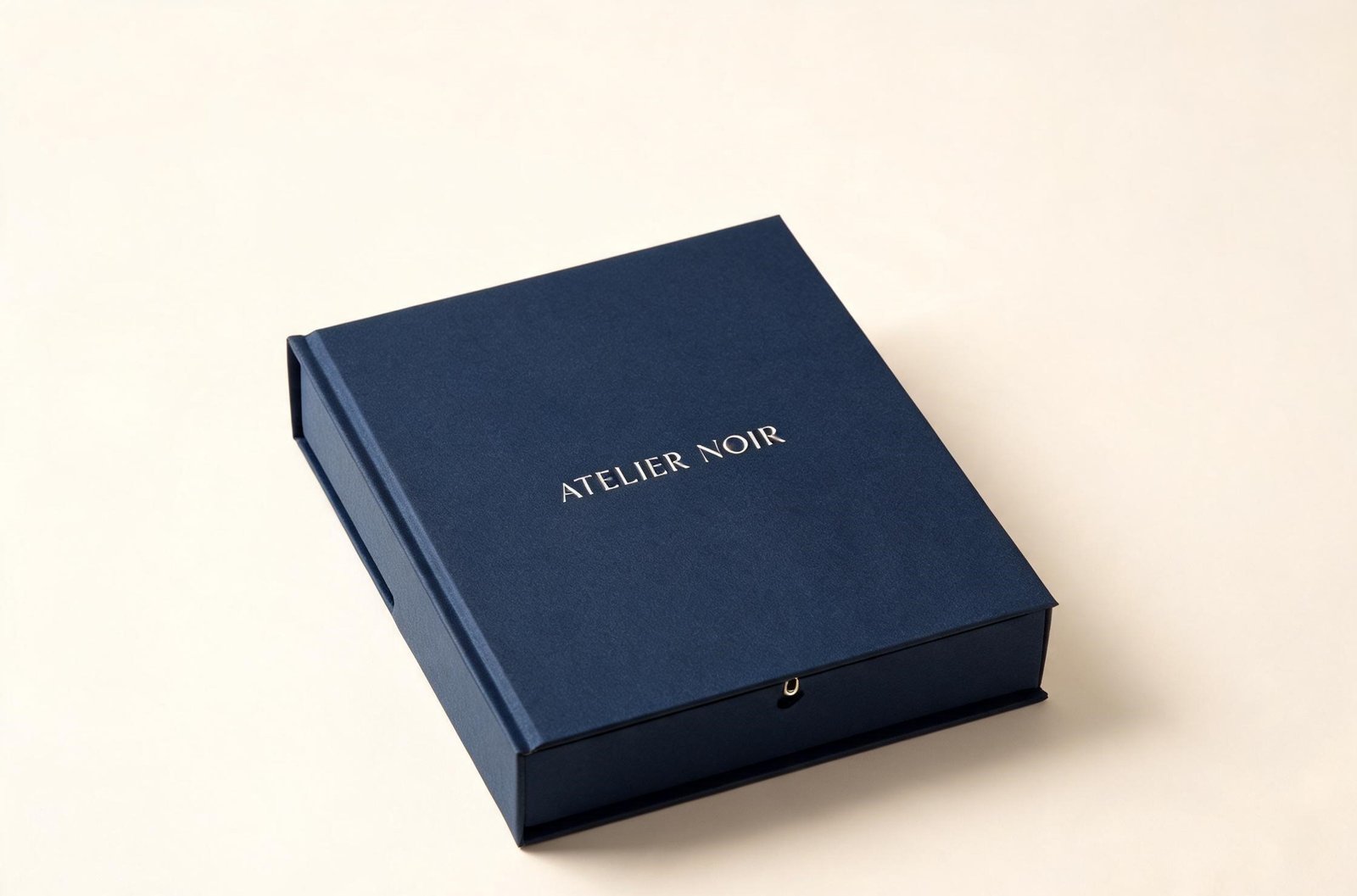
Magnetic closure is the most popular premium option. Hidden magnets set into the front flap create a satisfying snap when the lid closes, and the mechanism is invisible from the outside. It works best on book-style boxes where the lid swings on a hinged spine. The magnets must be positioned so the flap lies flat without gapping, which requires precise board thickness control at assembly.
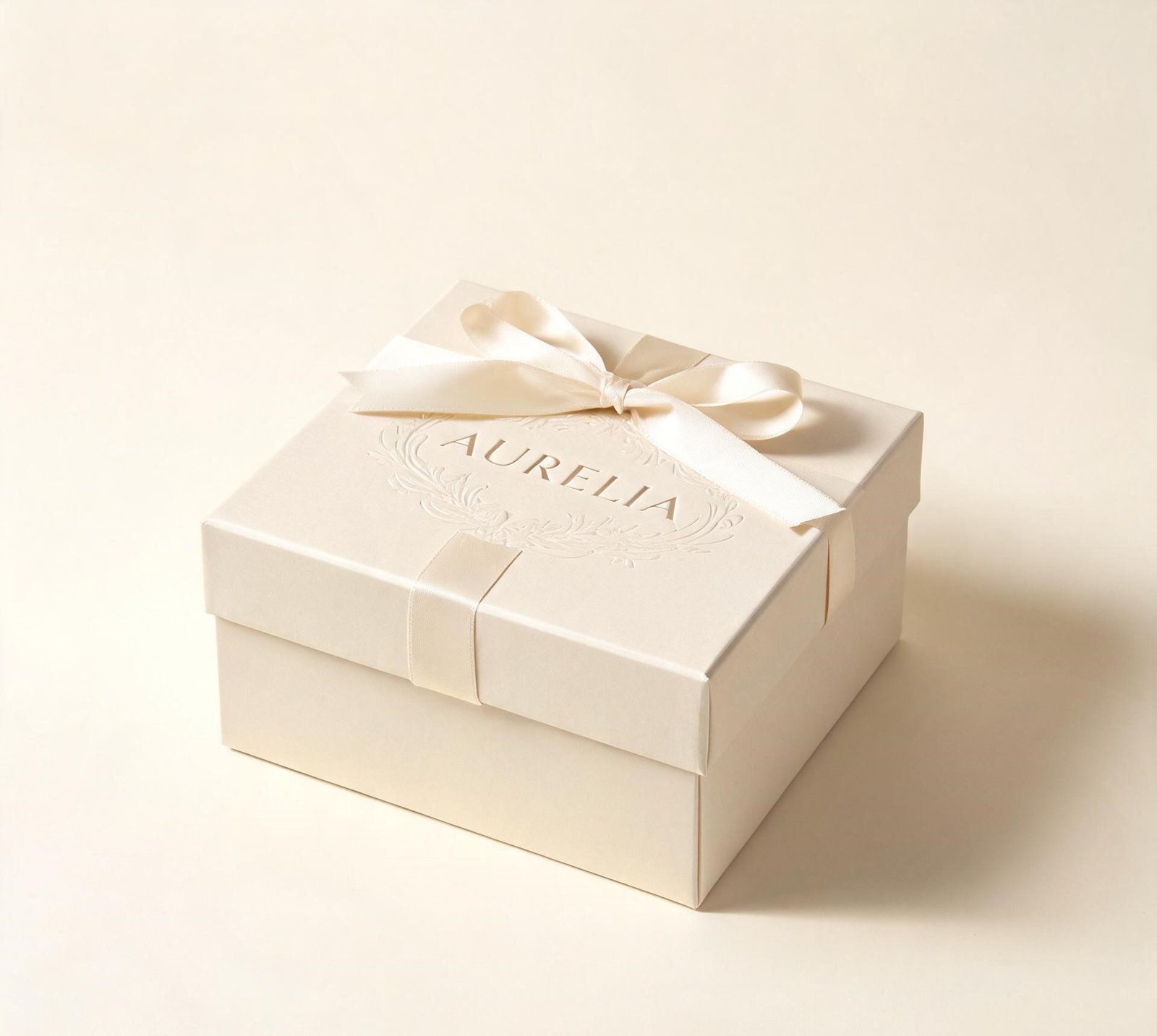
Ribbon ties add a soft, celebratory feel and are common for seasonal and wedding gift sets. The ribbon is anchored through slots cut into the greyboard and tied in a bow on the lid. It is lower in tooling cost than magnetic closure but slower to assemble, and the bow must be tied by hand.
Hinged lid boxes use a folded paper spine to connect the lid to the base, so the lid opens on a living hinge. This is the most cost-effective rigid structure and suits sets where contents are shown directly on opening, such as a chocolate assortment. The hinge crease must be reinforced to survive repeated opening without cracking the wrap.
Tiered Inserts: Holding Multiple Items Without Rattle
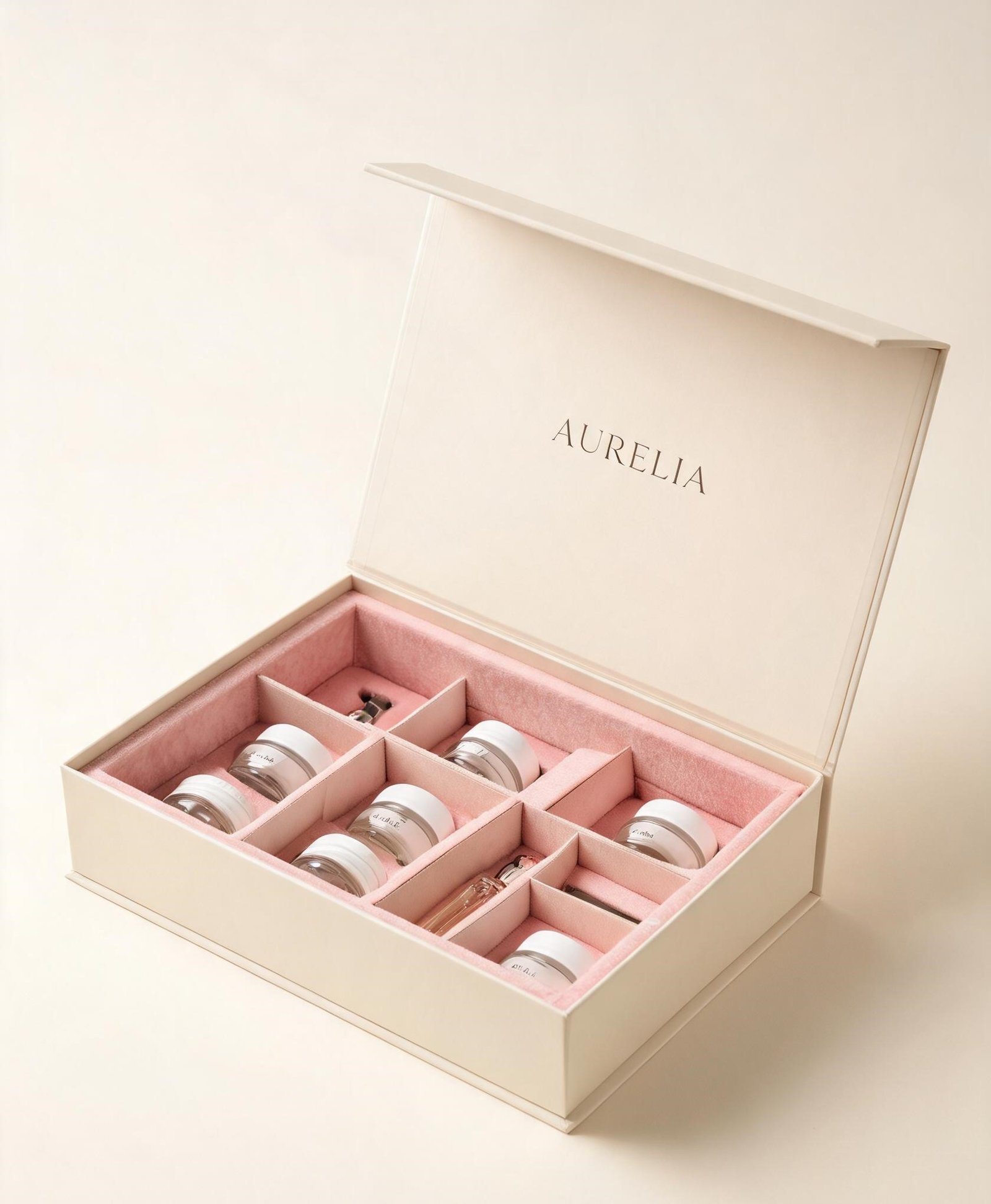
The insert is where a gift set earns its keep. A set with four or five items that shifts in transit arrives looking cheap, even if the outer box is perfect. The insert must locate each item individually, hold it off the walls and prevent it from rotating during shipping.
Tiered inserts solve the problem of items with different heights. A typical skincare set, for example, pairs a tall serum bottle with short cream jars and a small vial. A single-level insert would force every item into the same depth, wasting space and leaving the taller item loose. A tiered insert steps the cavities down so each item sits at the right height and the lid closes flush.
The three most common insert materials are die-cut paperboard, velvet-lined pulp and EVA foam. Paperboard is the lightest and most recyclable, and it can be wrapped to match the box. Velvet-lined moulded pulp adds a soft, cushioned feel for premium cosmetics. EVA foam is the highest-protection option for heavy or fragile items such as glass bottles or ceramic mugs. The insert should match the box lining so the set reads as one piece.
Finishing Techniques That Read as Premium
The outer finish is what the recipient sees first, and it has to justify the price. Soft-touch lamination gives the board a velvety feel that reads as luxury, but it shows fingerprints and scratches more readily than a standard matte finish, so it works best on sets that are opened only once or twice. Matte aqueous coating is more robust and suits everyday gifting.
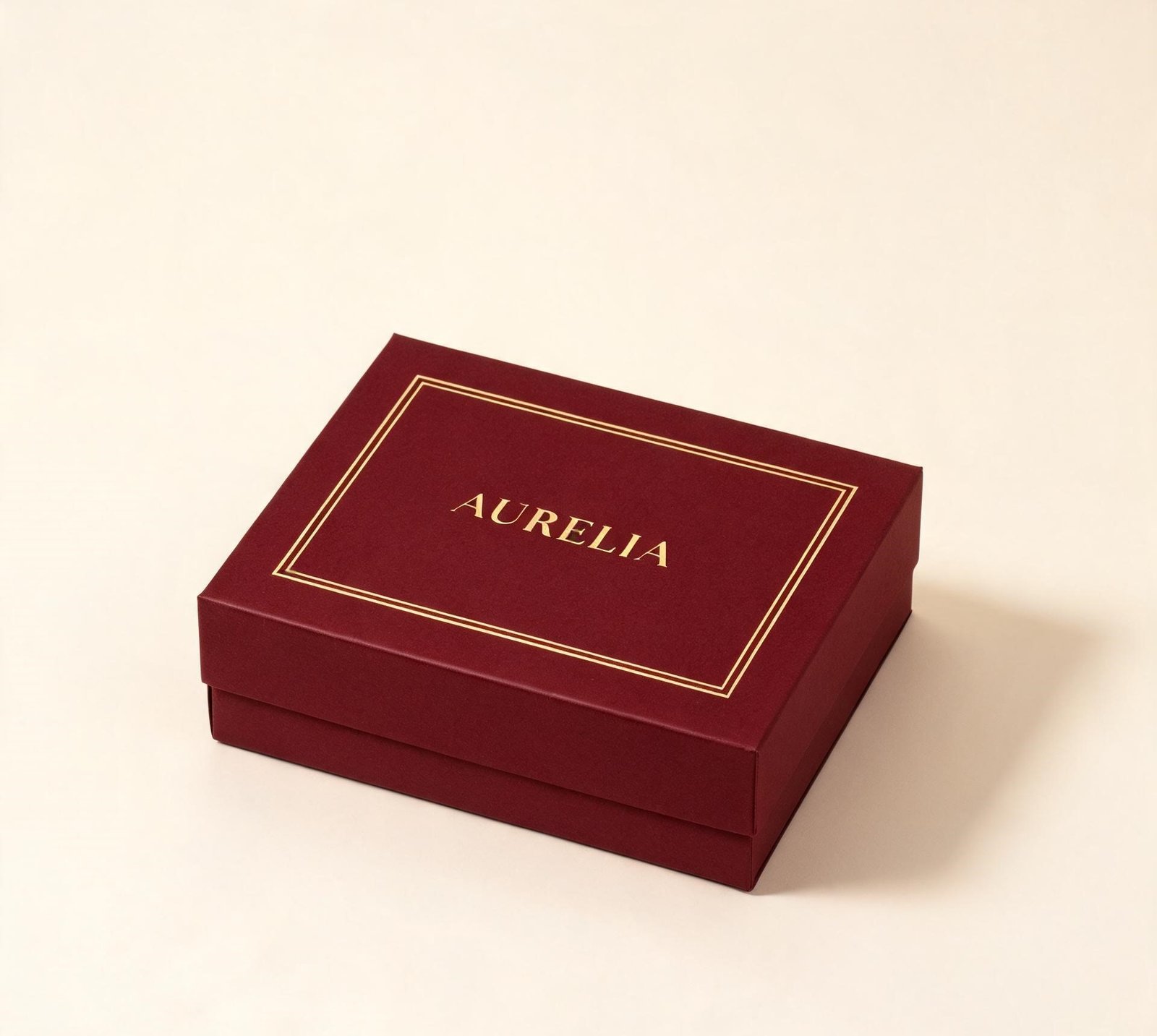
Foil stamping in gold, rose gold or silver is the single most effective premium signal on a gift set box. Foil on a dark board reads immediately as high-end and catches light on a retail shelf. Keep foil to the wordmark and a border rule rather than covering the whole lid, because large foil surfaces trap air during stamping and show uneven coverage.
Embossing and debossing add tactile depth without ink. A debossed wordmark on a soft-touch box invites the recipient to run a finger over it, extending the unboxing moment. Both techniques require a brass die and add to tooling cost, but they are one of the cheapest ways to raise perceived value.
Structure Comparison for Gift Sets
The table below compares the structures used most often for gift sets, with typical board thickness, tooling complexity and best-use cases.
| Structure | Board | Closure | Insert capacity | Best for |
|---|---|---|---|---|
| Lid and base | 1.5-2 mm greyboard | Loose lift-off lid | 1-3 items | Classic gift sets, chocolates, jewelry |
| Book-style magnetic | 2 mm greyboard | Hidden magnets | 2-5 items | Premium cosmetics, spirits, tech gifts |
| Drawer box | 1.5-2 mm greyboard | Slide-out tray | 2-4 items | Corporate gifts, stationery, tea sets |
| Ribbon-tie lid | 1.5-2 mm greyboard | Satin ribbon bow | 2-4 items | Seasonal, wedding, baby gifts |
| Hinged lid | 1.5 mm greyboard | Paper spine hinge | 1-6 items | Chocolate, tea, sampler sets |
| Clamshell | 2 mm greyboard | Magnetic front | 3-6 items | Large cosmetic and fragrance sets |
| Suitcase style | 2.5 mm greyboard | Clasp and handle | 5+ items | Luxury hampers, corporate gifts |
Cost Drivers and How to Keep Them Under Control
Gift set boxes are more expensive per unit than folding cartons because of the greyboard, the wrap and the manual assembly. The biggest cost drivers are the number of components in the insert, the finish specification and the assembly labour. A single-level paperboard insert with matte coating is roughly half the cost of a velvet-lined tiered insert with foil and embossing.
To keep cost down without losing the premium feel, standardise on one structure across your set range. Running multiple gift set sizes in the same book-style magnetic format lets you share tooling, print plates and assembly jigs. Specify foil only on the lid rather than on every panel, and choose a single insert material that works for all item sizes. Small economies at each stage add up to a meaningful per-unit saving.
For seasonal or limited-edition sets, a lower MOQ matters more than absolute unit cost. Our 500 pcs per design minimum makes a one-off holiday set viable without tying up inventory in a run you cannot sell through.
Sampling, Production and Quality Control
Because a gift set box is assembled from multiple wrapped components, a physical sample is essential before bulk production. The sample shows how the lid sits on the base, whether the insert cavities hold each item firmly and how the finish looks under real light. A digital proof cannot confirm fit.
- Free dieline and design assistance so your artwork is built on the actual structural template.
- MOQ 500 pcs per design, suitable for seasonal and limited-edition gift sets.
- Sampling in 3-5 days from an approved dieline, with the real insert and closure mechanism.
- Bulk production in 7-15 days after sample approval, depending on structure and finishing.
- Pre-shipment inspection covering wrap adhesion, lid fit, insert cavity accuracy and print registration.
- Worldwide shipping with reinforced export cartons for the heavier rigid boxes.
- FSC-certified board on request for brands that need chain-of-custody documentation.
Send your set contents and dimensions through the contact page and you will receive a dieline with the structure and insert grid marked. Our magnetic closure gift boxes and the drawer boxes range show the two most popular structures for multi-item gift sets, and both can be configured with the tiered inserts and finishes described above.
Frequently Asked Questions
What is the minimum board thickness for a gift set box?
Use 1.5 mm greyboard as the minimum for a rigid gift set box. Below that, the box loses its weight and edge sharpness, and the finish no longer sits flat. For sets with heavy or fragile contents, move to 2.0 or 2.5 mm board.
Can I combine multiple insert materials in one box?
Yes. Many gift sets pair a paperboard base with velvet-lined EVA foam cavities for the premium items. Keep the surface finishes coordinated so the inside reads as one cohesive design rather than a patchwork.
How long does a custom gift set box take from order to delivery?
Sampling takes 3-5 days from an approved dieline, and bulk production runs 7-15 days depending on structure and finish. Add transit time for your destination, and allow extra time for sample revisions before committing to the bulk run.