

Your product gets about three seconds of attention on a retail shelf, and the packaging that delivers it there has already done the hard work. A retail display box holds two jobs that pull in opposite directions: survive a distribution network of pallets, trucks and shrink-wrap, and arrive looking sharp enough to stop a shopper mid-aisle. Most display programs fail at one of those jobs, not both. This guide covers the structures, the board decisions and the cost mechanics that decide whether your display survives the journey and sells once it lands. You can compare structures in the Criio display boxes catalog as you read.
What Counts as a Retail Display Box
“Display packaging” is a family of structures, and choosing the wrong one usually comes down to misjudging where the unit will stand and who will restock it. These are the four you will actually spec:
- Counter display units (CDUs): compact board units for the checkout counter or a shelf edge, carrying 12 to 48 units of a small product and living on impulse traffic.
- Shelf-ready trays (SRPs): low-profile trays that ship stacked inside a master carton, then convert into a tray that sits directly on the shelf and presents every facing at eye level.
- Display-ready shippers: corrugated cases printed so the store removes a lid or tears away a front panel, and the shipper itself becomes the display.
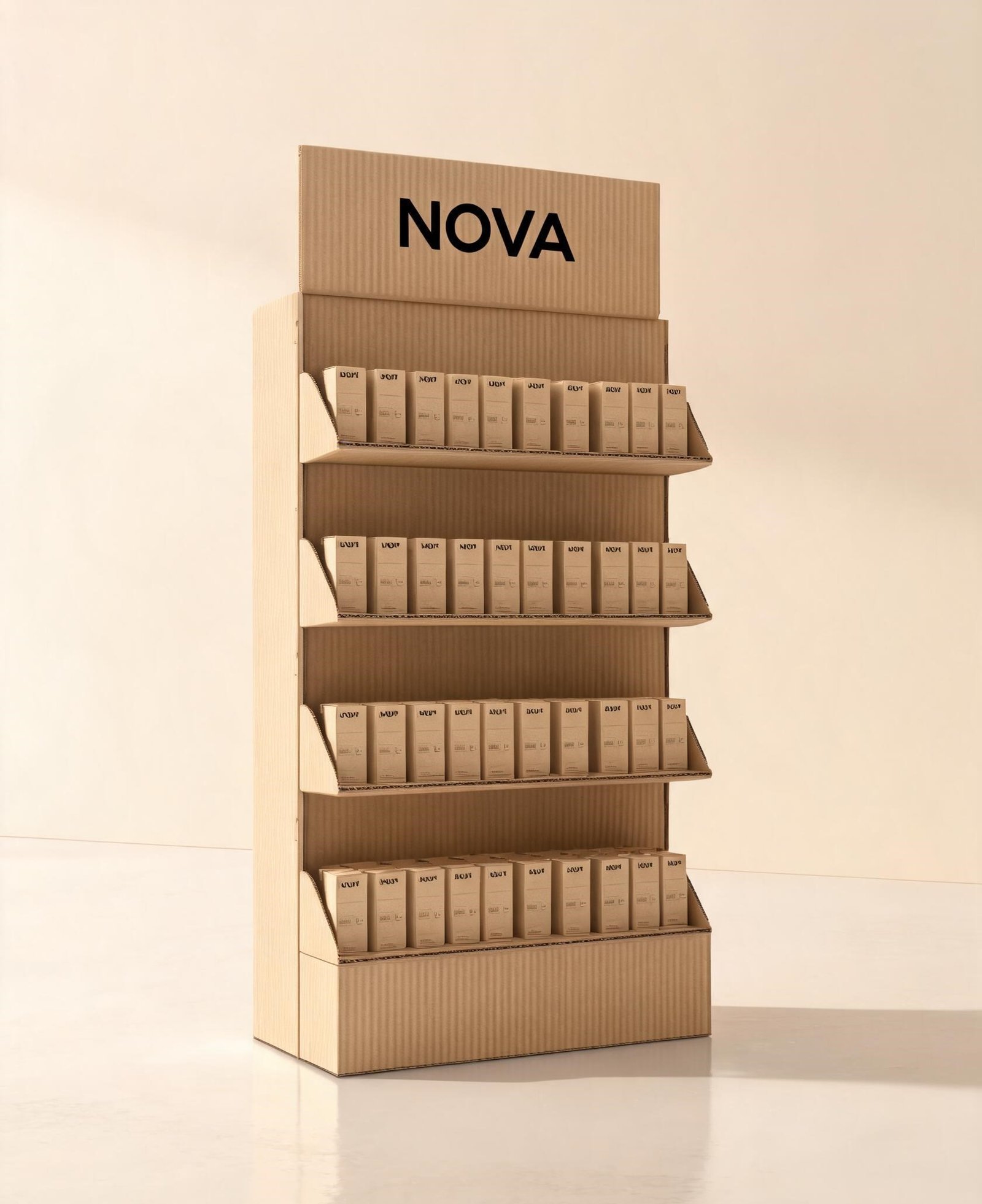
- Floor-standing units (FSDUs): corrugated towers with a base, body and header that hold 50 to 200 units in aisles or on end caps.
Each structure answers a different question about your channel. When a category buyer asks for shelf-ready packaging, they mean the tray. When a convenience chain asks for counter displays, they mean the CDU. Using the right vocabulary in your first supplier conversation saves a full round of sampling.
Design for the Distribution Chain First, the Shelf Second
A display box fails in transit long before a shopper sees it. The most common technical error is designing the shelf presentation first and discovering later that the unit cannot survive palletization. Work the problem in reverse:
- Define the pallet footprint. EU and US pallets differ, and your display base must sit inside the pallet edge with no overhang, because overhang is where corner crush starts.
- Stack-test the loaded unit. Displays sit under other cases in trucks and warehouses for weeks. Board that is too light bows, and a bowed tray reads as damaged on the shelf.
- Simulate the retail journey. A drop test on a loaded, assembled unit shows whether your product cartons and the display insert share the load correctly.
- Inspect before it ships. A pre-shipment QC pass on assembled samples catches glue gaps, mis-cut slots and print drift while they are still cheap to fix.
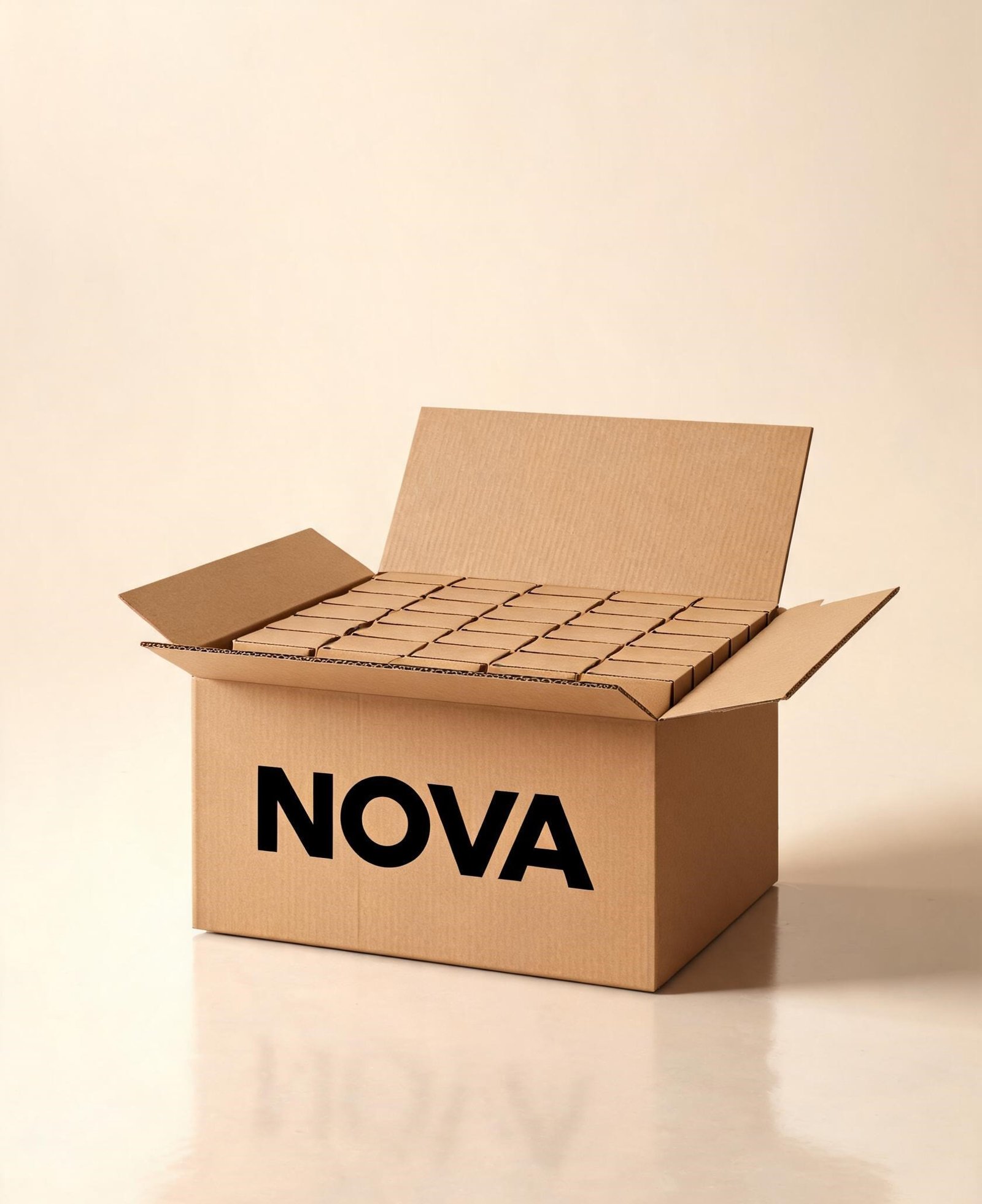
When you request quotes, ask which of these tests a supplier runs as standard. A factory that engineers displays around pallet and stacking loads will quote board grades a step heavier than a supplier who is only pricing the print. Compare an engineered option such as the display product box against your buyer’s spec sheet.
Counter Displays Versus Shelf-Ready Trays
Both structures put product in front of a shopper, but they solve different merchandising problems, and brands regularly order the wrong one.
Counter displays earn their place by being small and self-explanatory. Store staff drop them on the counter straight from the shipping carton. Your constraints: the unit must assemble in one motion without instructions, hold enough stock to survive a weekend rush, and carry a header that reads from two meters away. Anything an employee has to fold, glue or interpret ends up assembled wrong, or not assembled at all.
Shelf-ready trays earn their place by cutting labor. The working rule is that secondary packaging should convert to a display in under ten seconds, with no tools and no voids left on the shelf. That pushes you toward tear-away front panels, open trays with a retaining lip, and a board weight that keeps its shape when 60 percent of the stock has sold down.

Board, Coatings and Food-Safe Compliance
Board selection drives three variables at once: stacking strength, print quality and compliance. Display packaging typically uses one of four material routes:
- Folding boxboard (SBS): bright white and smooth, takes fine print and photography well; the default for counter units and header cards carrying dry goods.
- Kraft board: natural brown, strong per gram, with a rougher print surface and a sustainability signal grocery buyers increasingly ask for.
- Corrugated board (E- and B-flute): the structural backbone of floor units and display shippers; E-flute prints acceptably, B-flute is rougher but stronger.
- Rigid paper board: reserved for premium seasonal sets where the display base itself is part of the brand story.
| Structure | Typical board | Best suited for | Key watch-outs |
|---|---|---|---|
| Counter display unit | SBS folding boxboard | Checkout impulse sales, 12-48 units | One-step assembly; header readable at 2 m |
| Shelf-ready tray | E-flute or heavy SBS | Grocery shelves restocked from a master carton | Holds shape at 40% stock; opens with no tools |
| Display-ready shipper | B-flute corrugated | Clubs and stores with little restocking labor | Print on flute; tear line must open cleanly |
| Floor-standing unit | B/C-flute corrugated | Aisle and end-cap placements, 50-200 units | Base stability; header needs stiffening |
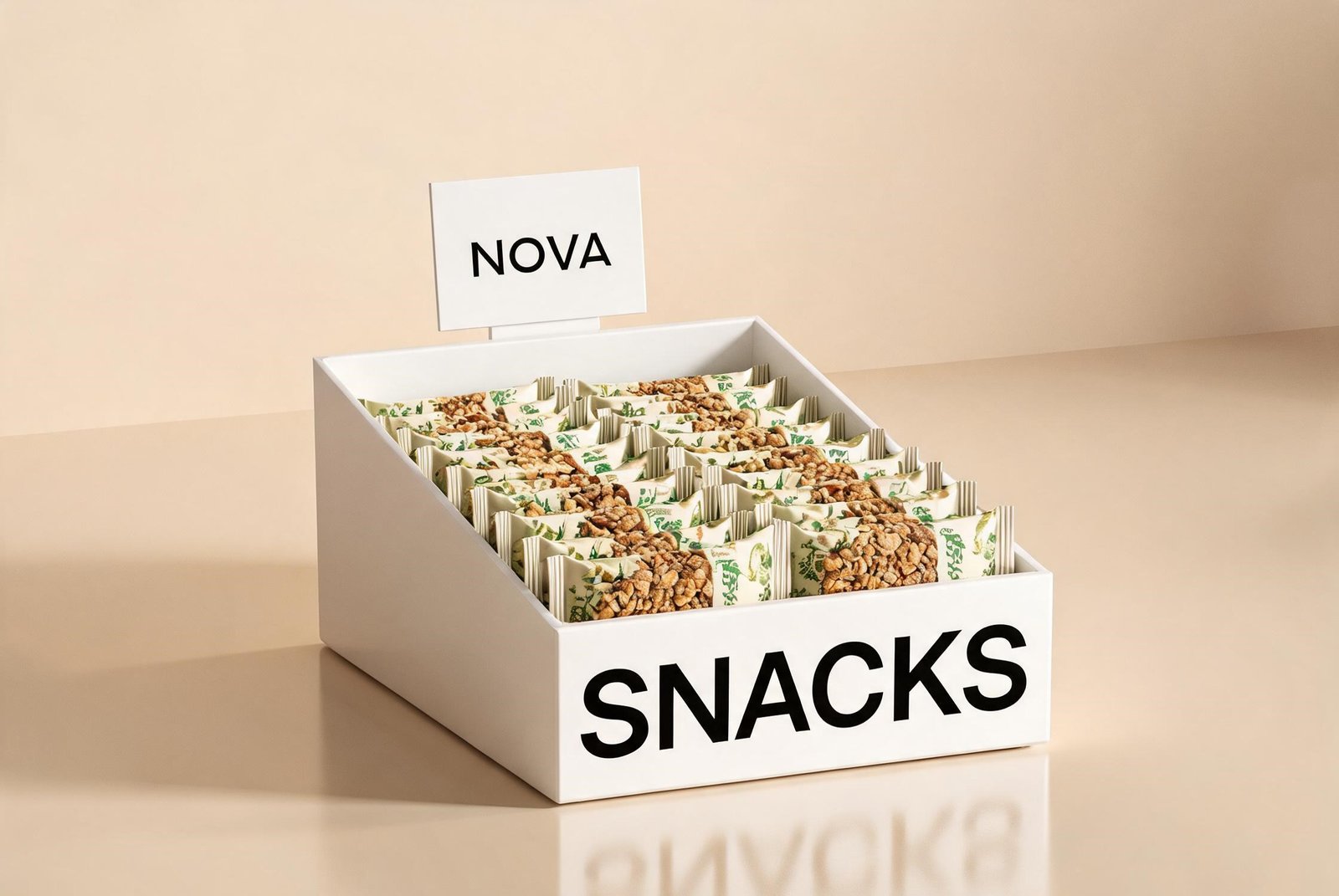
| Food counter display | Food-grade boxboard | Snacks and confectionery near checkout | Board must be certified food-grade, not coated later |
| Kraft display tray | Kraft corrugated | Natural and organic lines | Rough surface; plan bold graphics, not fine detail |
| Premium gift display | Rigid board with SBS header | Seasonal sets and high-value items | Higher unit cost; fit-check inserts with real product |
If your display touches food, or a buyer simply requires documentation, the distinction that matters is food-grade board: board manufactured under conditions that prevent contaminants migrating into dry food. That is a property of the board specification, not something a coating can retrofit. We produce display food boxes on certified food-grade board, and FSC-certified material is available on request when a retailer’s vendor manual calls for it. For the wider category, browse the food boxes catalog.
Inserts, Printing and the First Three Seconds
The structure holds the product; the details sell it. Inserts come first. A display that tips bottles forward or lets pouches slump looks half-empty by mid-week. Corrugated or board inserts with individual cell walls keep every facing upright, and they deserve the same engineering attention as the outer structure.
Printing comes second. Display graphics are read at a distance, so the design system differs from primary packaging: large claims, high contrast, a visible area for the price ticket, and brand color blocking a shopper can parse in a glance. Offset printing on boxboard handles photographic work; flexo on corrugated handles bold spot colors economically. For finishes, matte lamination kills glare under store lighting and a spot UV accent catches the eye without a full gloss panel. Heavy foil cracks on flute edges, so leave it off corrugated.
Cost and Order Planning for Display Programs
Display packaging carries unit economics that surprise brands ordering for the first time:
- Quotes are multi-component. A program usually combines a corrugated display, board header cards and product cartons. Producing every component under one roof keeps colors and finishes aligned, which is hard to match when the display comes from one vendor and the headers from another.
- Pilot quantities are realistic. You do not need a pallet-level commitment to validate a counter unit. Our minimum order is 500 pieces per design, sized so a regional test or a single chain pilot stays affordable before you scale.
- Timeline beats perfect print. Plan 3-5 days for pre-production samples of a new display structure and 7-15 days for bulk production after approval. Buyer-set launch dates leave no slack, so build sampling into the schedule rather than after it.
- Freight is a design decision. Flat-packed displays cut freight volume dramatically, but only if store staff can assemble them. Where labor is scarce, a partially pre-assembled unit ships with more air and converts faster. That trade-off is commercial, not just engineering.
A Launch Checklist You Can Hand to Your Team
- Confirm with the buyer which structure they expect: CDU, shelf-ready tray, display shipper or floor unit.
- Fix the pallet footprint and stacking height before finalizing board weight.
- Choose food-grade board wherever the display encloses food, and request FSC certification if the vendor manual requires it.
- Design headers and front panels to be readable at two meters under store lighting.
- Order pre-production samples, assemble them loaded, and drop-test one.
- Book a pre-shipment inspection on bulk before the goods leave the factory.
- Archive the dieline files and print proofs; every reorder moves faster with them on file.
Most of the risk in a display program sits in decisions made before sampling. If you want a second pair of eyes on structure, board grade or dieline files, we provide free dieline and design assistance on every order, ship worldwide, and build display programs from 500-piece minimums. Start through the contact page and tell us which retail channel you are targeting. The fastest route to a workable quote is a conversation about the shelf, not just the box.