
You have been there: the exact same jewelry box — same size, same hard greyboard structure, same gold foil wordmark — and two quotes. One factory sends you per piece for 2,000 units. The other sends you 2-3X per piece. Both renderings look identical. Both factories have a website. You cannot tell from the picture which one is wrong, and you cannot afford to pick the wrong one.
This is the question every serious jewelry packaging buyer asks at least once. The answer is not one factor — it is six, stacked on top of each other, and most of them are invisible until you hold the physical sample. Below, we break down where the difference comes from, how to read a quote without getting fooled, and what Criio includes in a price that looks slightly higher on the surface but saves you money in the long run.
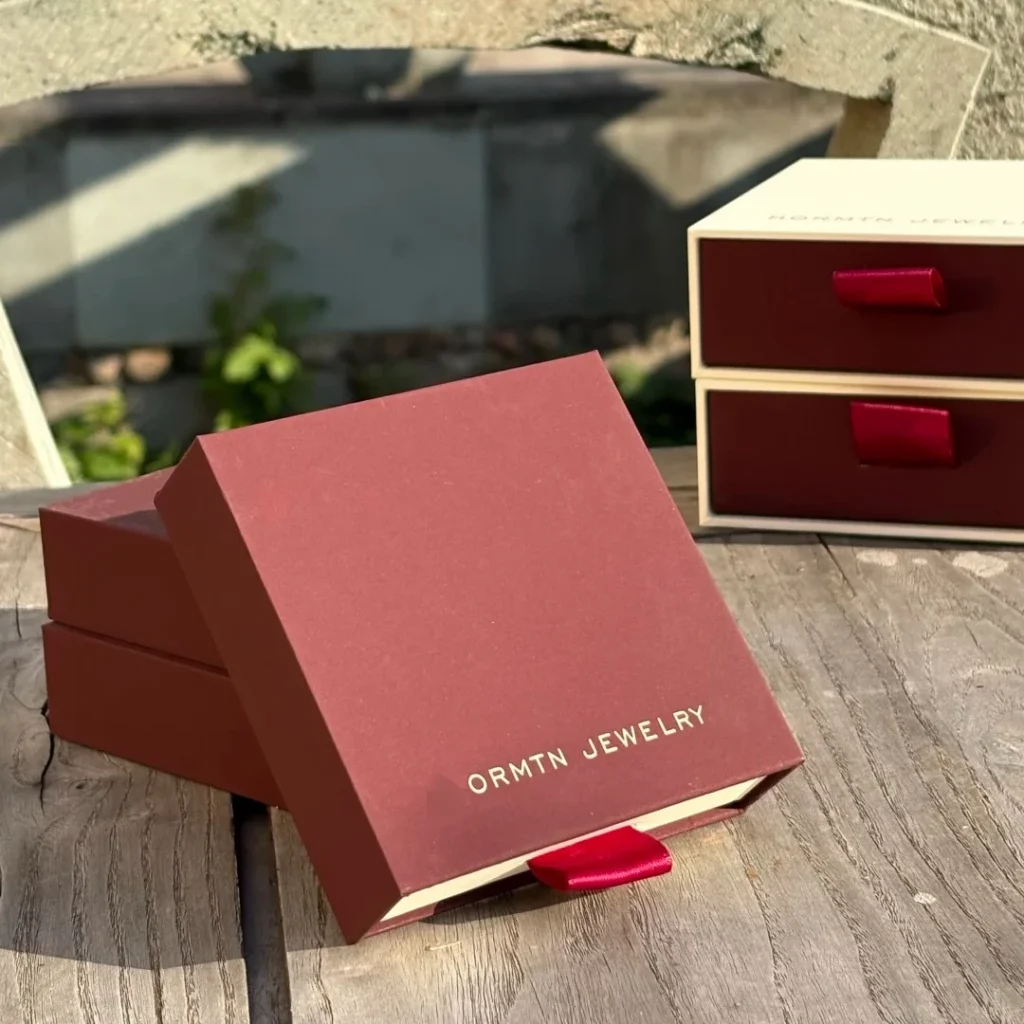
The six reasons the same box gets six prices
Every quotation for a rigid box can be broken into six cost centres, and every single one varies wildly between factories. The table below uses real numbers from the same jewelry ring box, quoted three ways in the same week.
| Cost centre | Low bid ($1.90) | Mid bid ($2.80) | High bid ($4.80) |
|---|---|---|---|
| Greyboard core thickness | 1.0 mm recycled | 1.5 mm mixed | 2.0 mm virgin SBS |
| Wrap paper | 90 gsm coated art | 128 gsm specialty | 157 gsm linen or textured offset |
| Insert cavity tolerance | ±2.0 mm | ±1.0 mm | ±0.5 mm |
| Foil stamping | Cheap gold, 1 pass | Premium gold, 1 pass | Premium gold, 2 pass with registration |
| Tooling amortisation at 2,000 | None — existing die used | Standard die, 50/unit | Precision die + jig, 250/unit |
| Inspection stage | End of run only | Mid-run sample + end of run | Every 500 units + pre-shipment AQL |
That right column is not a premium price. It is a different product. The same renders, the same brief, the same SKU name — but a box built to a completely different specification. The $1.90 box will bow after 12 months on a shelf. The insert cavity is ±2 mm wide, so rings will shift, earrings will rattle, and the foil will pull off the wrap at the edges after 30 opens. The $4.80 box holds its shape, holds its insert, and holds its finish.
Board grade: the hidden 3x gap
The greyboard core is the weight of the box, and its density varies more than any other single input. Recycled greyboard at 1.0 mm is soft, absorbs glue unevenly, and can bow visibly after three months. Virgin solid bleached sulphate (SBS) at 2.0 mm is rigid, holds registration for foil and emboss, and survives a drop test at full weight. Both are greyboard. Both are called “rigid box”. The material cost difference alone is roughly 2.5x between the two extremes.
Wrap paper varies the same way. A 90 gsm coated art paper is thin, prints cheap foil poorly, and shows crease lines after one assembly. A 157 gsm specialty offset or textured linen paper holds foil registration cleanly, resists scuffing for years, and has a hand feel the customer interprets as premium. The price gap is 2x. Almost no buyer checks both the core and the wrap before asking for a quote, and that is the single biggest reason the same box gets three wildly different prices.
Insert tolerance: the 1 mm that makes the whole box fail
The insert is the most expensive single component of a jewelry box and the one buyers forget to specify. A ±2 mm cavity tolerance means a ring can sit proud of the box by enough to catch on the lid when closing. A ±0.5 mm tolerance means it sits exactly where the render shows it. The cost difference is not the insert material — it is the tooling that cuts the cavity and the QC that measures every piece.
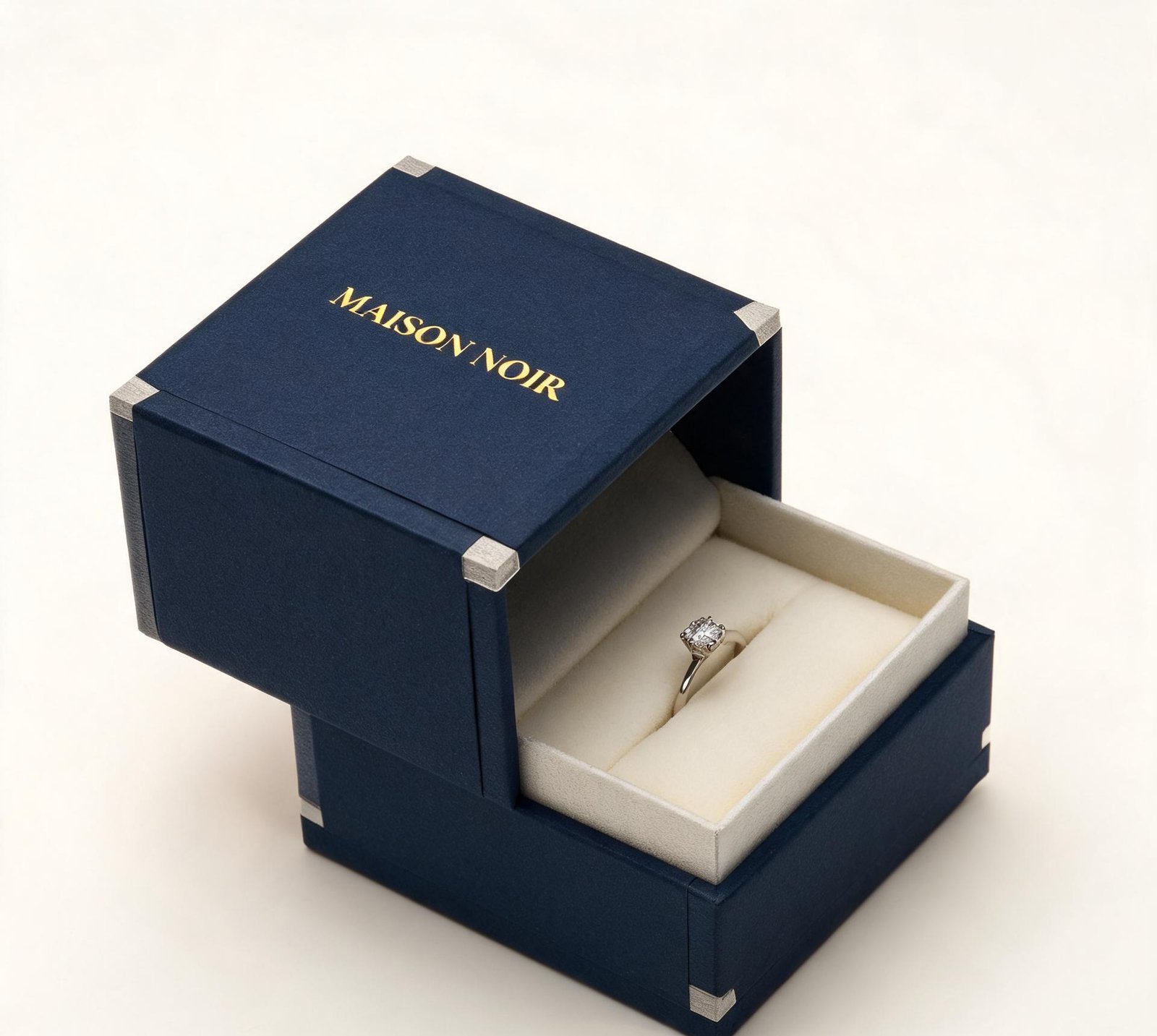
Low-price factories quote an insert cavity on a generic die that already exists. If that die cuts to ±2 mm, they save the precision tooling cost and pass nothing back to you. The result is a box that looks right in the render and feels wrong in the hand. At 2,000 units, re-tooling a cavity to ±0.5 mm costs roughly USD 200 amortised across the run — that is 0.10 per unit, or 5 percent of a $2.00 quote. A small check before you order saves you the entire re-run.
Tooling amortisation and minimum order
Every new design needs a cutting die, an assembly jig, and sometimes a foil plate. A good die lasts 50,000+ units. A cheap die lasts 5,000. A precision jig costs USD 300. A hand-assembled box with no jig costs nothing in tooling and everything in labour variation.
The gap is how the factory charges it. A low-price factory amortises tooling across 500 units and then tells you “MOQ 500” because the jig does not exist past that volume. A factory with a 2,000 unit minimum (our own MOQ at Criio) amortises the same tooling across four times as many pieces, which means the per-unit cost of that precision die is lower than a cheap factory’s die at 500 units — even though our die is better.
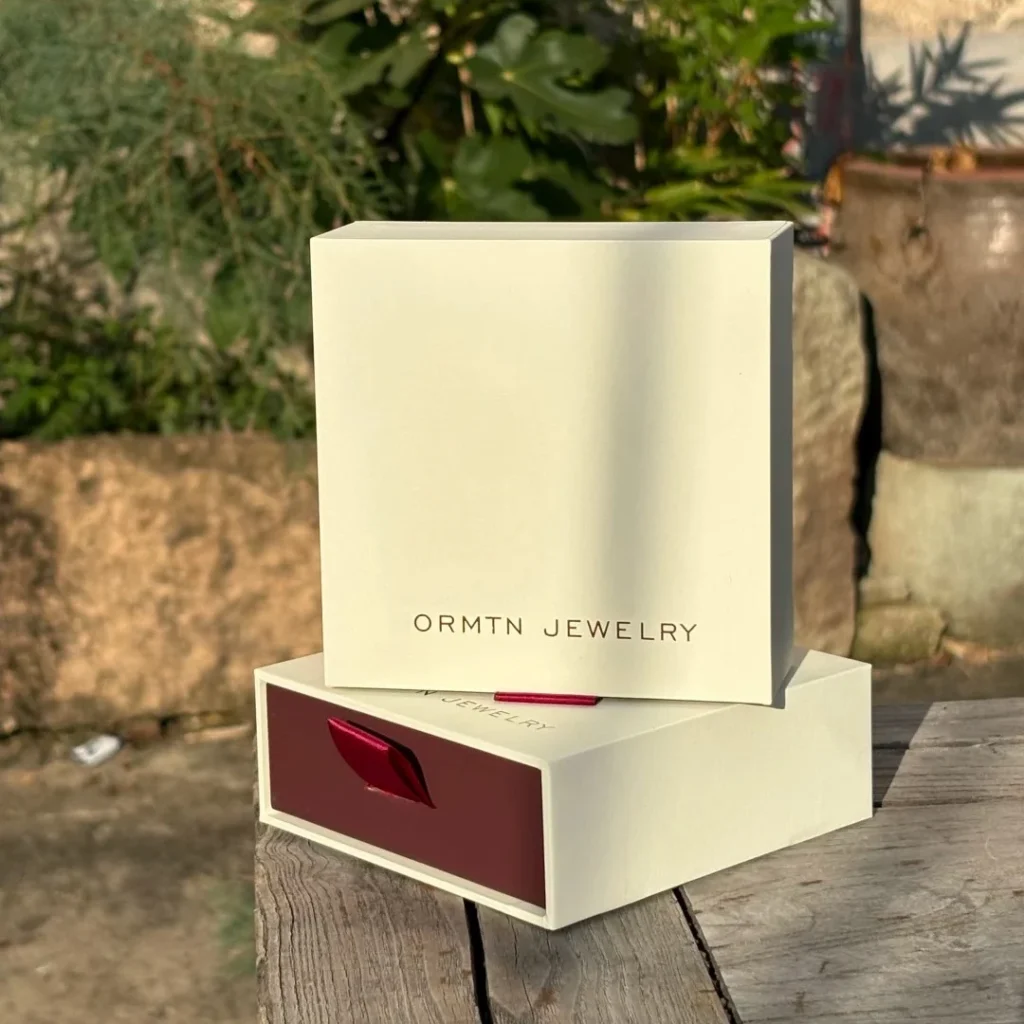
MOQ is not a barrier. It is a cost structure. A factory that will run you 500 pieces is amortising tooling across 500. A factory that will only run 2,000 is amortising better tooling across four times the volume, and the per-unit cost of the tooling is usually lower than you think.
Foil and finish: registration is the hidden line item
“Gold foil” on a quotation means very little. A single pass of low-cost gold foil with ±1 mm registration will tear at the edges of a small wordmark after 20 opens. Two passes of premium gold with ±0.2 mm registration, plate-mounted so the foil sits exactly on the flat of the wrap, will last the life of the box.
The gap is not the foil material itself — it is the plate, the press time per piece, and the inspection at the end of the run. Premium foil plates cost 2-3x to make and hold 50,000 vs 10,000 impressions. A low-price quote uses a cheap plate and skips inspection. You will see the tear on a sample and by then it is your material that was wasted.
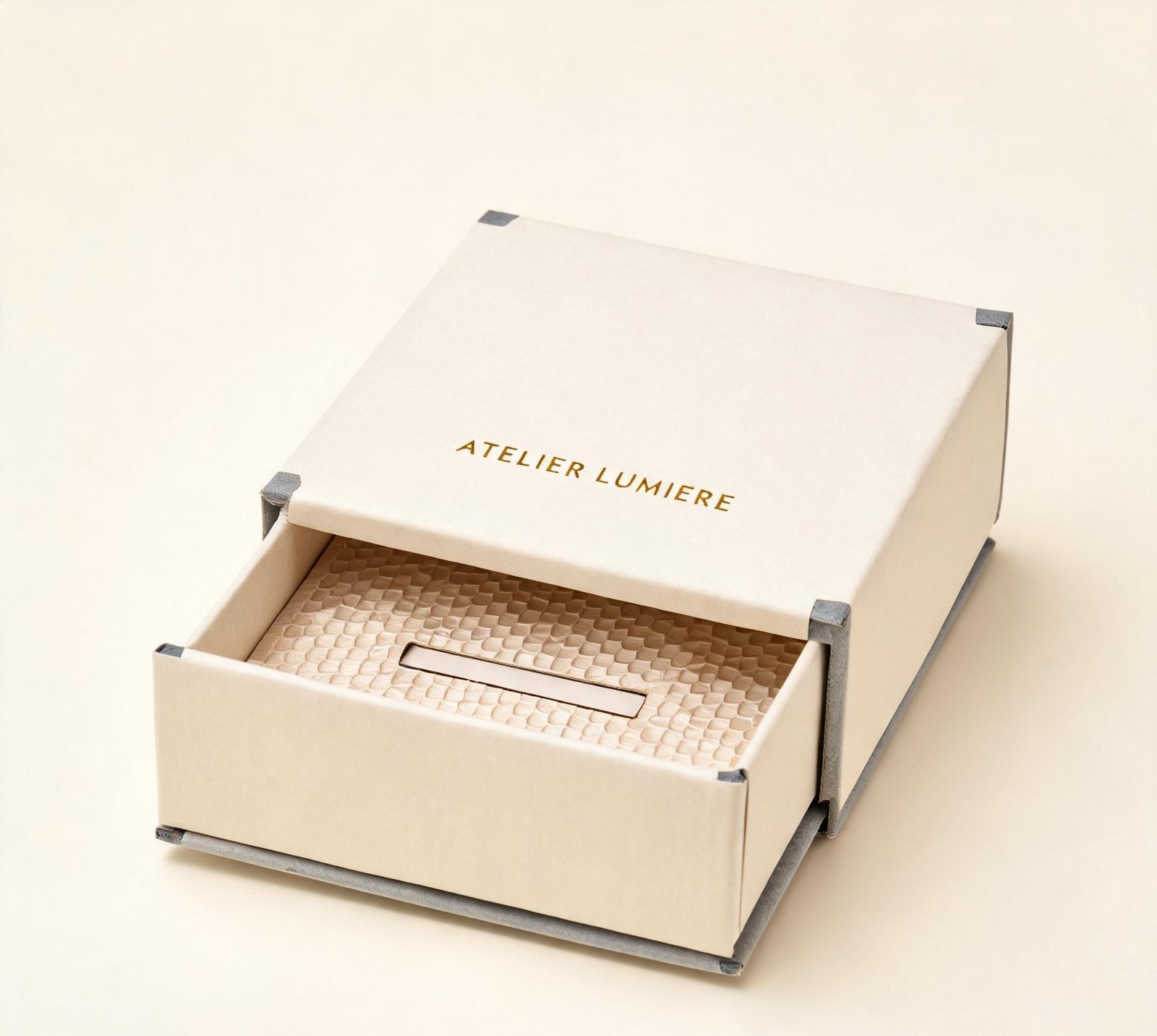
Board grade and insert tolerance carry most of the price gap, but the right rigid box wrap and finish can swing the total by another 10-15 percent depending on the foil, emboss or linen paper selected — all specifiable before you quote, none of which should be hidden in an “industry standard” fine print line.
Inspection stages and what they cost
The last line item that separates the two quotes is the inspection schedule. A factory that only checks at the end of the run has one inspector walking the line once. A factory that samples every 500 units and runs an AQL pre-shipment inspection has three checkpoints. The gap is roughly 0.30 per unit on a 2,000 piece order — a 16 percent difference on a $1.90 quote.
You only find out you needed that inspection when 200 of your 2,000 boxes arrive with bowed lids or torn foil. The cheapest quote plus a re-run is always more expensive than the right quote plus zero rework. That is not a marketing line — it is the math of a single re-run eating your margin on every box.
How to read a jewelry box quote without being fooled
Four questions before you accept any quote, answered in writing, not verbally. Send them as a spreadsheet so both factories respond to the same lines.
- Board grade and thickness, core and wrap. “1.5 mm greyboard” is not enough. “2.0 mm virgin SBS core + 157 gsm specialty offset wrap” is specific. Get the exact numbers.
- Insert tolerance and material. Specify the cavity tolerance you need before asking for a quote — ±0.5 mm for rings, ±1.0 mm for necklaces. Get confirmation in the quote text.
- Foil or emboss registration tolerance. Specify ±0.3 mm as your target. If the factory says they cannot hold that, ask why — the answer will tell you more about their press than anything else.
- Inspection stage and AQL. Ask for the inspection schedule (start, mid, end) and the acceptance level used at pre-shipment. No answer = no inspection = re-run risk.
Send both quotations to the right factory and ask them to quote a “like-for-like” comparison. Most buyers assume the price difference is all labour. It is usually 80 percent material and tooling specification.
What Criio includes in a quote
Our minimum order is 2,000 pieces, not 500. That is a number we chose because it is the volume where precision tooling pays for itself: the cost of a 0.5 mm tolerance die and assembly jig amortised across 2,000 is lower than the cost of a cheap die across 500. Every quote we send breaks out board grade, wrap, insert tolerance, foil specification, inspection schedule and amortised tooling — every one of the six cost centres above. No hidden numbers, no “industry standard” jargon.
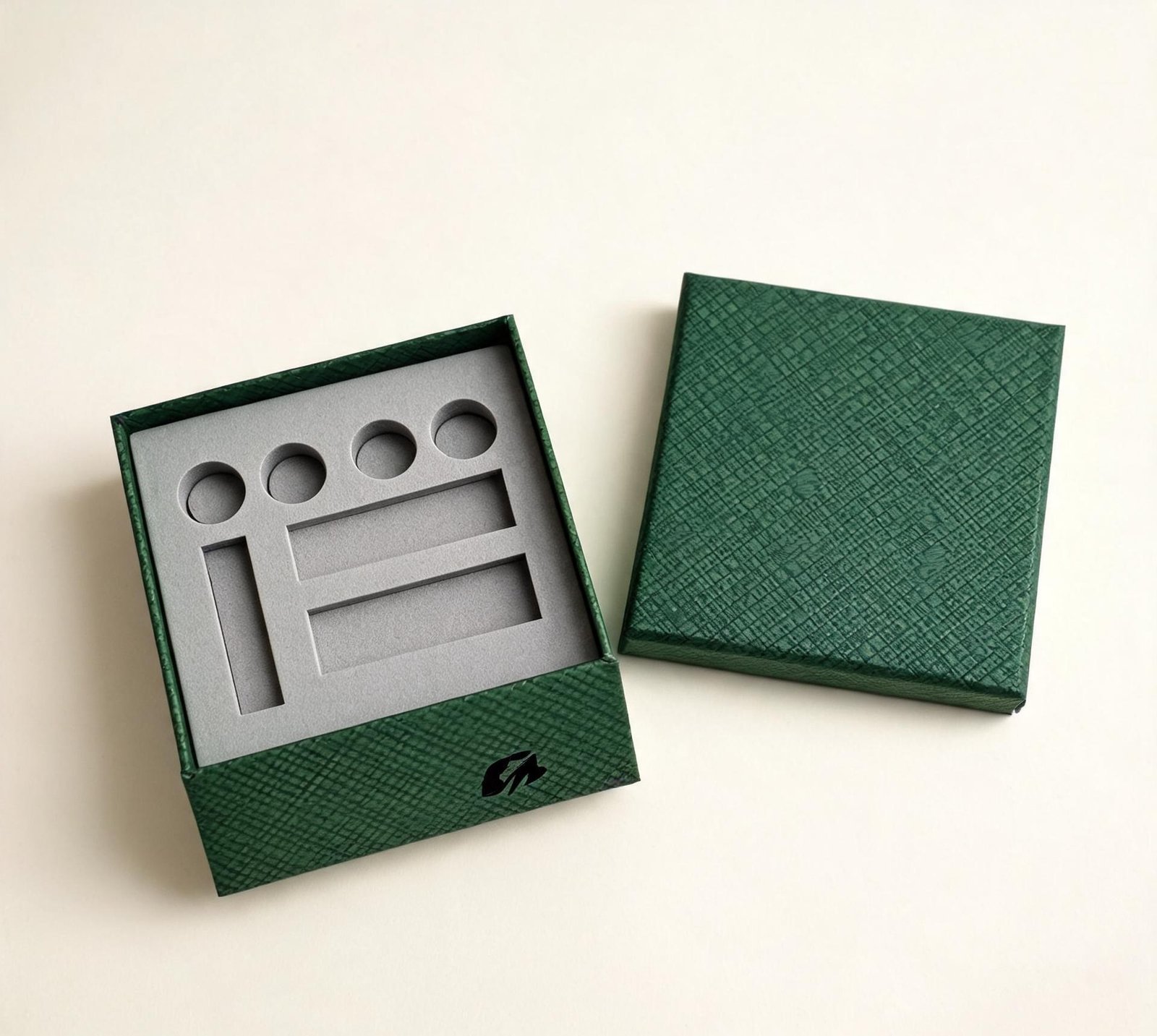
We also run a pre-production sample on the exact board and tool you will receive, typically 3-5 days, and we will adjust tolerances, cavity size or board grade before bulk if the sample tells us to. Our sample fee is refundable against the bulk when you confirm. Lid-and-base and drawer structures are both regular runs at Criio — the quote you get for either one should break out every material line item, not bury it.
Conclusion
The highest price is not the most expensive box. The most expensive box is the one you cannot put into production without a re-run. When two quotes look too similar on the surface, the numbers you are not reading are the numbers that matter: board thickness, insert tolerance, foil registration and inspection stage. Ask for them explicitly, write them into your brief, and get both factories to quote against the same specification. The answer you receive will tell you exactly why the prices differ.
See our jewelry box catalog or request a like-for-like quote — send us your brief, and we will break down every cost centre so you can compare it honestly.