
Kitchenware packaging sits at an interesting crossroads. Your customer buys a product they will handle daily, from wooden spoons and metal whisks to ceramic salt shakers and silicone spatulas. When they open the box, what they find inside matters just as much as the tools themselves. The packaging needs to protect during transit, communicate value on the retail shelf, and leave a lasting impression that reinforces why they chose your brand over a competitor. For kitchenware brands launching new collections or expanding into DTC shipping, getting the box right can mean the difference between a one-time purchase and a loyal customer who returns for every kitchen upgrade.<\/p>
At Criio, we help kitchenware brands move beyond generic brown cartons. Whether you are designing window boxes for retail display, rigid gift sets for premium product launches, or mailer cartons for e-commerce fulfillment, every structural choice impacts how your product arrives, how it looks on shelf, and how customers feel about unwrapping it. In this guide, we break down the key design decisions that separate average kitchenware packaging from packaging that actively supports your brand.<\/p>
Why Kitchenware Packaging Needs More Than a Basic Box<\/h2>
A plain folding carton might work for a product nobody inspects closely, but kitchenware receives constant handling. Customers feel the weight of a wooden spoon, run their fingers along the edge of a silicone spatula, and assess the quality of stainless steel tongs before they ever use them. Your packaging needs to protect these tactile products while creating anticipation for what sits inside.<\/p>

Kitchenware also faces unique challenges that other consumer products do not. Consider these factors when selecting your packaging structure:<\/p>
- Weight distribution:<\/strong> A set of stainless steel utensils tips the scale at several times the weight of a cosmetic palette. Your box board and flute need to handle that stress without bulging or tearing.<\/li>
- Protruding components:<\/strong> Whisk handles, grater surfaces, and ladle bowls all create irregular shapes that standard rectangular boxes do not accommodate well.<\/li>
- Resealing expectations:<\/strong> Customers who buy a four-piece utensil set often want to store it in the original box. A one-time tear-away carton wastes that opportunity for ongoing brand exposure.<\/li>
- Retail visibility:<\/strong> In a crowded kitchen aisle, your box needs to communicate what it contains in a split second. A printed description on the front panel may not work as effectively as letting customers see the actual tools.<\/li>
<\/ul>For brands exploring their options, our folding carton boxes catalog<\/a> offers a range of stock structures that can be customized for kitchenware specifications, while our rigid paper boxes collection<\/a> suits premium product lines and gift sets.<\/p>
Window Carton Design: Slotted vs Full-View Windows<\/h2>
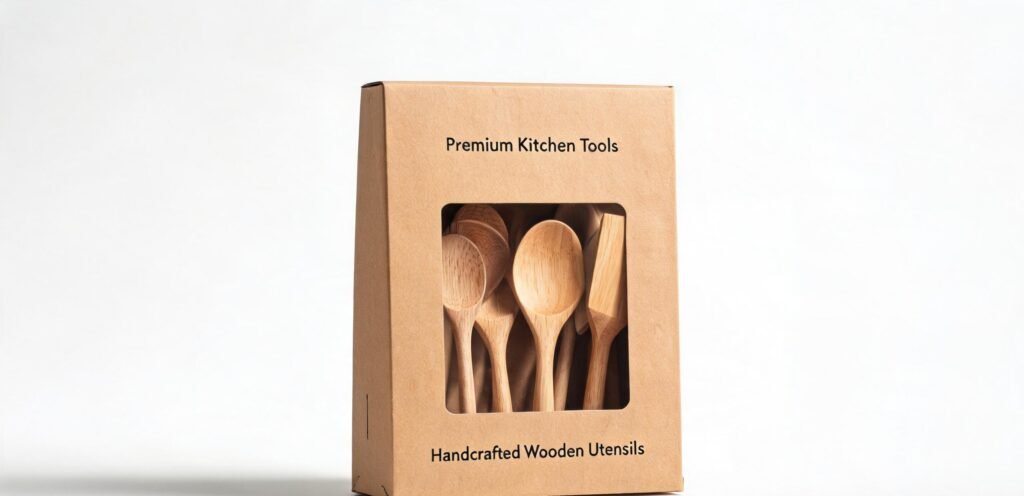
Window cartons remain the most popular choice for kitchenware packaging, and for good reason. They address the core problem of selling kitchen tools in retail: customers want to see what they are buying. But not all windows serve the same purpose, and the shape, size, and placement of your cutout directly affects shelf appeal and structural integrity.<\/p>
Window Type<\/th> Best For<\/th> Structural Impact<\/th> Design Cost<\/th>
<\/tr>
<\/thead>Full front panel window<\/td> Tool sets with multiple visible items<\/td> Moderate – reduces top flap strength<\/td> Standard die-cut cost<\/td>
<\/tr>Slotted narrow window<\/td> Single utensils or slender tools<\/td> Minimal – preserves box structure<\/td> Low – simple die pattern<\/td>
<\/tr>Corner window<\/td> Premium gift sets with partial reveal<\/td> Low – strategic placement<\/td> Standard die-cut cost<\/td>
<\/tr>Two-sided windows<\/td> Display cartons for shelf positioning<\/td> High – weakens both panels<\/td> Higher – dual die-cut setup<\/td>
<\/tr>Top viewport window<\/td> Stackable retail cartons<\/td> Moderate – affects stacking strength<\/td> Standard die-cut cost<\/td>
<\/tr>
<\/tbody>
<\/table>The slotted window remains our most requested variation for kitchenware. A narrow rectangular cutout positioned vertically lets customers see the tool handles without compromising the box’s ability to stack or display on shelves. Our slotted window folding carton boxes<\/a> ship with pre-applied clear film covering and can accommodate tool lengths up to 14 inches.<\/p>
For premium kitchenware lines that deserve a more generous reveal, a full front panel window with framed borders creates an elegant presentation that highlights the product without making the box feel flimsy. The key is specifying the right board grade – 300gsm or 350gsm kraft board handles window cutouts better than thinner grades and maintains a premium feel even when the customer knows they are looking through paper.<\/p>
Insert Support: Protecting Fragile Handles and Thin Components<\/h2>
The box structure matters, but the insert inside determines how well your product survives shipping and how it feels when a customer removes it. Kitchenware inserts serve two critical functions: they prevent rattling and scratching during transit, and they position each piece so the first impression is intentional and organized.<\/p>

Molded pulp inserts cradle each utensil securely while remaining fully recyclable.<\/figcaption><\/figure> Three insert types dominate kitchenware packaging:<\/p>
- Paper pulp molded trays:<\/strong> The most sustainable option, molded pulp trays create custom cavities for each utensil. They offer excellent cushioning for delicate handles and eliminate the need for plastic components entirely.<\/li>
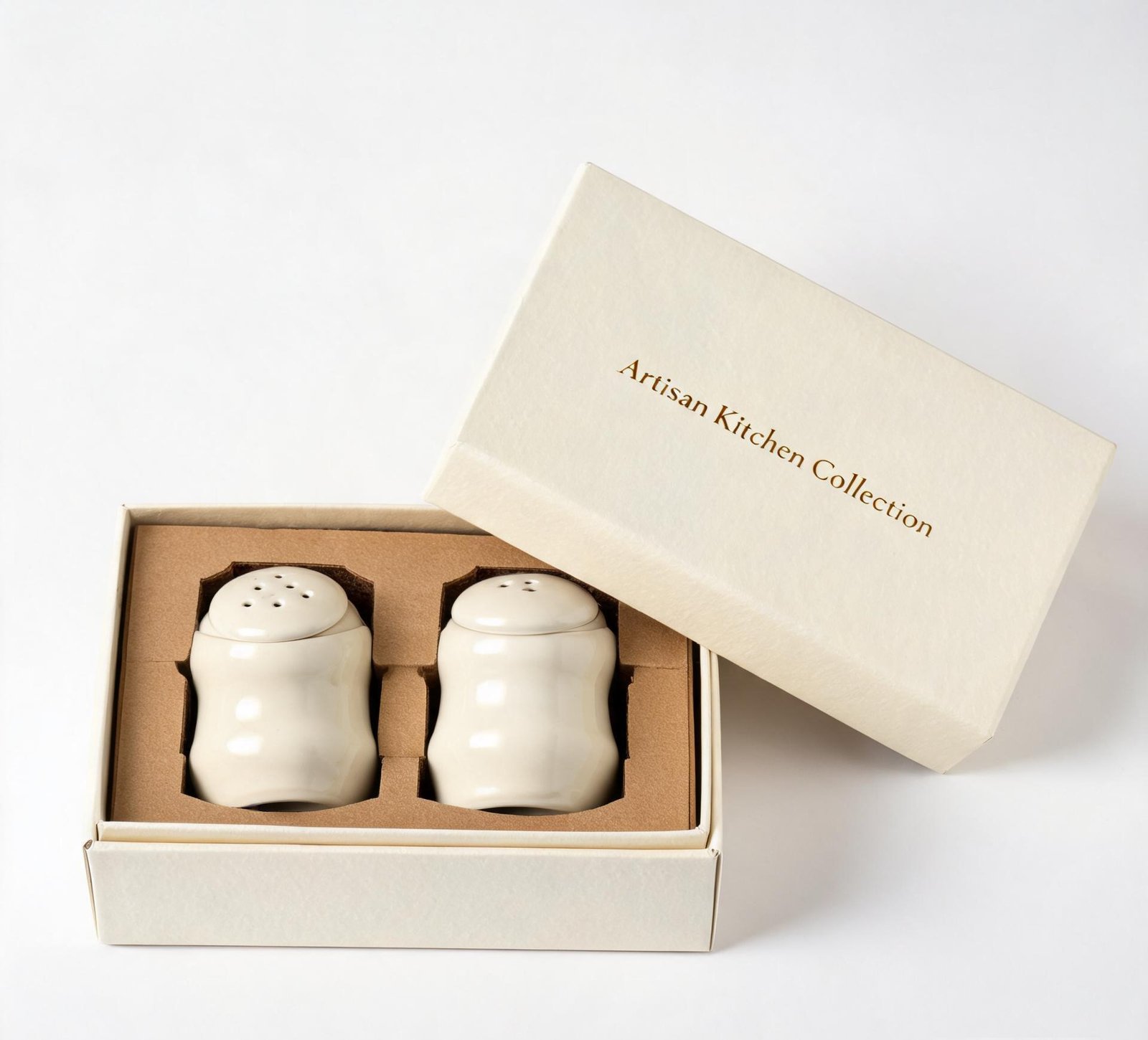
- EVA or foam inserts:<\/strong> Perfect for premium gift sets where the product sits flush in a protective cradle. EVA foam resists scuffing on polished metal surfaces and holds its shape through repeated use.<\/li>
- Corrugated or chipboard dividers:<\/strong> Low-cost option for utensil sets. Interlocking chipboard dividers create individual compartments without requiring custom tooling.<\/li>
<\/ol>For brands shipping kitchenware through e-commerce channels, molded pulp inserts combined with our corrugated mailer boxes provide protection that survives multiple courier transfers. The pulp naturally absorbs minor shocks while keeping each utensil separated, and when the customer finishes with the box, both components go into the same recycling bin.<\/p>
For premium presentations, our lid and base cardboard boxes<\/a> pair exceptionally well with foam or molded pulp inserts. The rigid structure adds a premium feel, and the insert sits flush against the box walls to eliminate shifting during transit.<\/p>
Retail Shelf Performance: Design That Sells Before the Box Opens<\/h2>
Retail shelf real estate is precious. When a customer walks down the kitchen aisle, they scan dozens of boxes in seconds. Your packaging needs to signal three things immediately: what the product is, why it is better, and whether it fits their kitchen aesthetic.<\/p>

Shelf-ready cartons make kitchenware visible from a distance and stand out against competing displays.<\/figcaption><\/figure> Several design decisions directly impact how well your box performs on shelf:<\/p>
- Panel proportions:<\/strong> A 2:1 height-to-width ratio reads as premium in kitchenware categories. Boxes that are too square feel bulky, while overly tall boxes look unstable.<\/li>
- Window placement:<\/strong> Position the window in the upper half of the front panel. Shoppers eye level lands there first, and the tool shapes create instant recognition.<\/li>
- Color choice:<\/strong> Natural kraft signals eco-consciousness and quality. Solid colors work for themed collections, but test them in actual retail lighting – fluorescent store lights can wash out darker shades.<\/li>
- Edge finishing:<\/strong> A simple score and fold creates a clean edge, but rounded corners or die-cut top flaps add visual interest that catches peripheral vision.<\/li>
<\/ul>For brands launching new kitchenware lines or refreshing existing SKUs, we recommend requesting shelf mockups during the sampling phase. Our design team creates photorealistic shelf composites that show how your box sits among competitor packaging, helping you spot visibility issues before committing to a production run.<\/p>
Sustainability Considerations for Kitchenware Packaging<\/h2>
Kitchenware buyers increasingly consider packaging when making purchase decisions. A survey of home goods shoppers found that 68 percent would pay more for kitchen tools packaged in fully recyclable materials, and 42 percent actively search for FSC-certified board options when comparing products.<\/p>
At Criio, we offer FSC-certified board on request for any folding carton or rigid box structure. Our standard materials portfolio includes:<\/p>
- Recycled kraft board with minimum 30 percent post-consumer content<\/li>
- Unbleached virgin pulp for premium white box applications<\/li>
- Water-based inks for all print work, eliminating solvent emissions<\/li>
- Window film made from recycled PET<\/li>
<\/ul>All of these options fit within our standard lead times. Our minimum order quantity starts at 500 pieces per design, with samples available in 3 to 5 days and bulk production completing in 7 to 15 days depending on complexity. Every box undergoes inspection before shipping, and we offer worldwide delivery to kitchenware brands across North America, Europe, and Asia.<\/p>
Working with us also means access to free dieline and design assistance. Our in-house packaging engineers create production-ready dielines from your sketch or product dimensions, and we provide unlimited revisions on structural design before any tooling charges apply.<\/p>
Making Your Kitchenware Packaging Work Harder<\/h2>
Great kitchenware packaging does not just hold your product. It tells a story about your brand, protects what matters during transit, and creates the kind of unboxing moment customers remember. Whether you are designing folding cartons for retail shelves, rigid boxes for premium utensil sets, or mailer cartons for direct-to-customer fulfillment, every structural choice adds up to a better customer experience.<\/p>
If you are planning a new kitchenware launch or updating your existing packaging, contact our team<\/a> to discuss your requirements. We provide free dieline and design assistance, competitive pricing starting at 500 pieces per design, and global shipping to wherever your customers shop. Let us help you create packaging that protects your tools and presents them the way they deserve.<\/p>
- Window placement:<\/strong> Position the window in the upper half of the front panel. Shoppers eye level lands there first, and the tool shapes create instant recognition.<\/li>
- EVA or foam inserts:<\/strong> Perfect for premium gift sets where the product sits flush in a protective cradle. EVA foam resists scuffing on polished metal surfaces and holds its shape through repeated use.<\/li>
- Protruding components:<\/strong> Whisk handles, grater surfaces, and ladle bowls all create irregular shapes that standard rectangular boxes do not accommodate well.<\/li>