

A wine bottle is heavy, fragile and carries real perceived value. The box around it has three jobs: protect the glass through shipping, signal the quality of the liquid inside, and sit comfortably on a retail shelf or gift bag. For wine and spirits brands, the packaging decision is rarely about the cheapest carton. It is about matching structure to distribution channel, price point and the unboxing moment you want the customer to remember.
This guide breaks down the main wine packaging boxes used by wineries, importers and direct-to-consumer brands, compares their protection and cost, and shows how to specify inserts, materials and finishes that survive transit without diluting your brand. Whether you ship single bottles, double packs or full cases, the right structure lowers breakage, reduces returns and makes your product feel more expensive than it is.
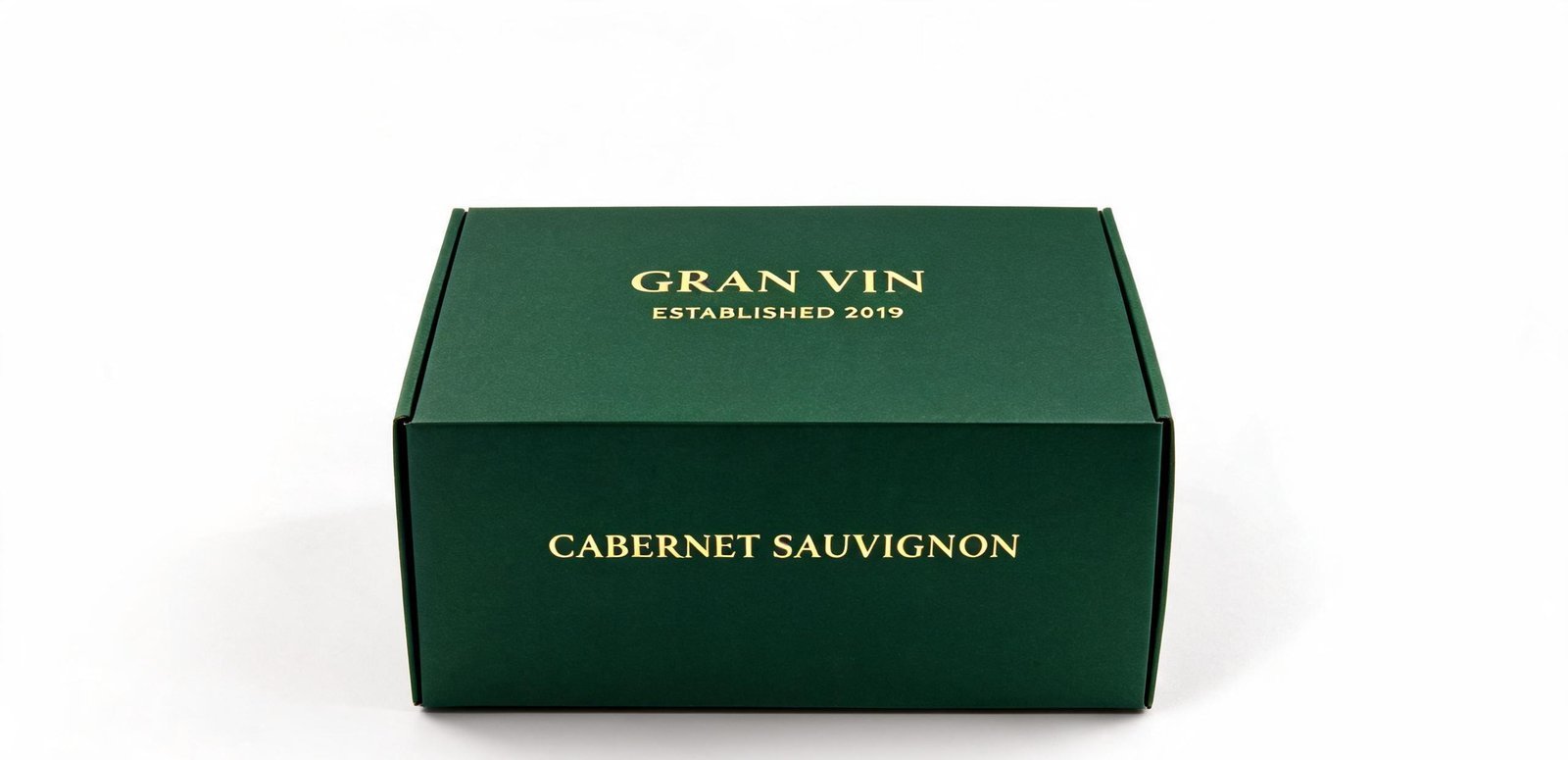
Why Wine and Spirits Packaging Demands a Rigid Build
Wine bottles weigh between 500 g and 1.2 kg each, and the glass concentrates stress at the punt, shoulder and neck. A folding carton can hold a bottle, but it cannot absorb the point loads that occur when a courier drops a parcel onto concrete. Rigid boxes, built from wrapped grey board or dense corrugated, form a protective shell that distributes impact across the walls and keeps the bottle suspended away from outer surfaces.
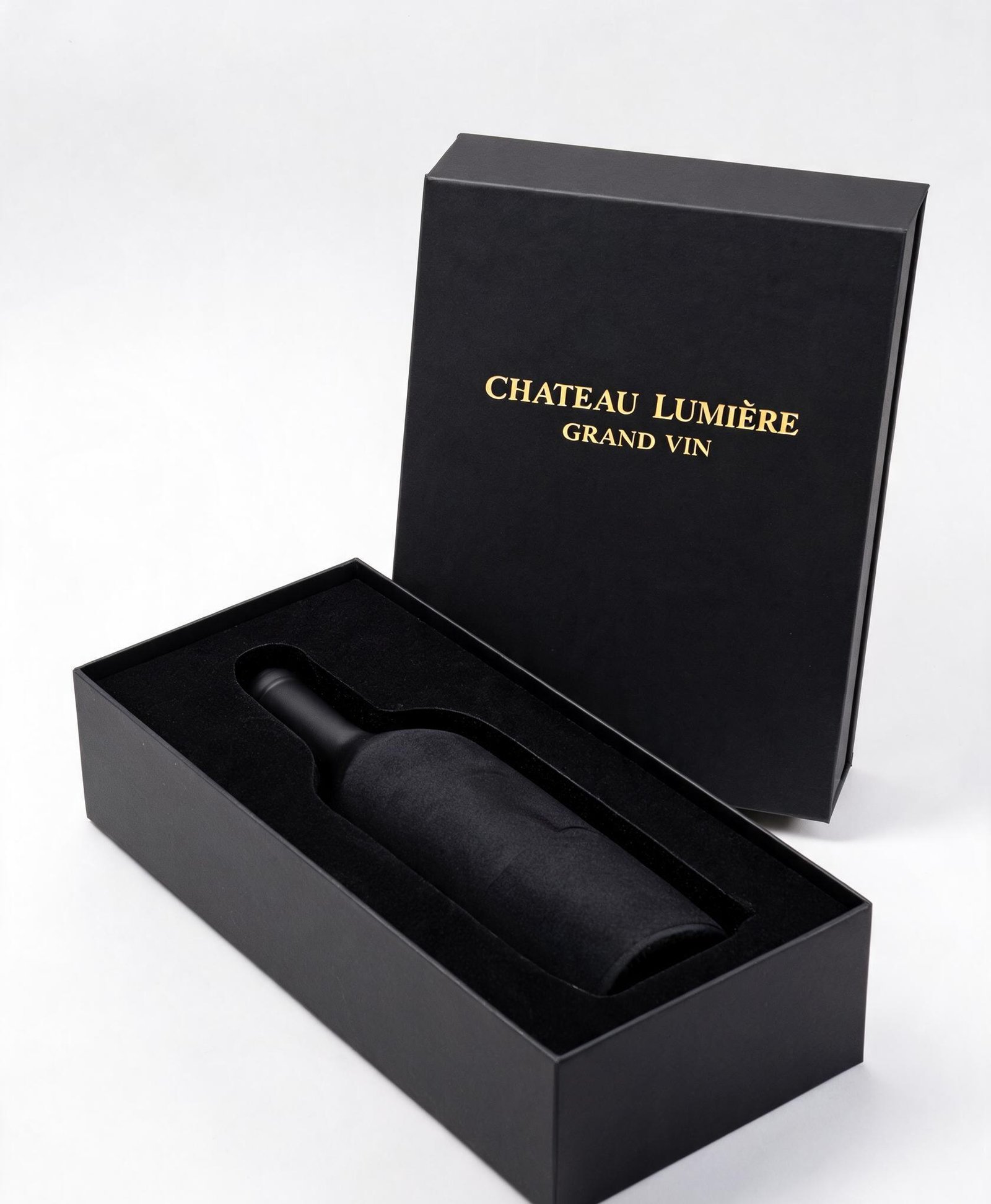
Rigid construction also supports a better unboxing experience. The walls stay square, the lid opens cleanly, and the interior can be lined with foam, velvet or molded pulp that holds the bottle in position. For premium wines and corporate gifts, that first touch is part of the product. A flimsy carton says the bottle is ordinary; a rigid box says it is worth keeping. The structure should follow the channel; the table below compares the common formats.
Rigid Gift Box Structures for Premium Wine
For single-bottle and double-bottle gifts, the rigid gift box is the default. It uses 1.5 to 3 mm grey board wrapped in printed or textured paper, with a separate lid, hinged lid or magnetic flap. The opening style changes both perceived value and production cost.
A lid-and-base box is the most economical rigid format. The lid lifts off to reveal the insert, and the walls can be wrapped in the same paper as the exterior. It is easy to assemble in volume and works well for mid-premium wines. Explore our lid and base boxes range for standard sizes and finishes.
A magnetic closure box adds a hidden steel strip and magnet in the lid, so it closes with a soft snap. It costs a little more but feels more premium, and the lid stays shut in transit. For wine clubs and seasonal releases, the magnetic box often earns its cost in shared unboxing content.
Inside, the bottle sits in a custom cavity cut from EVA foam, vacuum-formed plastic, molded pulp or die-cut corrugated. EVA foam gives the quietest, most luxurious feel; molded pulp is the most recyclable; die-cut corrugated is the cheapest. Match the insert to your price point and sustainability claims rather than defaulting to foam.

Browse our rigid paper boxes catalog for premium constructions, and the rigid wine gift boxes product page for single and double bottle cavities with several insert options.
Carriers and Multi-Bottle Formats for Retail and Gifting
When the pack holds two, three, four or six bottles, the structure changes. A rigid gift box for six bottles becomes heavy and expensive, so brands move to carriers, corrugated shippers or hybrid formats that balance protection with cost.
A paperboard carrier with a die-cut handle is the classic format for two or four bottles. It is lightweight, cheap to print and easy to brand, but offers almost no impact protection. Carriers work for in-store carry and short local deliveries, not parcel shipping. If you ship carriers by courier, nest them inside a corrugated outer with dividers or the bottles will clink together and break.
Corrugated shippers with die-cut bottle dividers are the workhorse of wine logistics. A 12-bottle shipper with reinforced corners and dividers survives multiple drops, and the format is standard across couriers and fulfilment centres. For DTC brands shipping single bottles, a single or two-bottle corrugated mailer with a moulded pulp or foam insert gives the best protection-to-cost ratio.

For gift multi-packs that still need to feel premium, a rigid carrier with a handle and a magnetic or tuck closure bridges the gap. It is heavier and pricier than paperboard, but survives delivery and looks good enough to keep. The rigid wine and beer carrier boxes page shows handle and shoulder-carry options for two to four bottles.
Bottle Protection, Inserts and Transit Testing
The insert is what actually stops the bottle from breaking. A beautiful box with a loose insert is a breakage claim waiting to happen. Specify the insert around the bottle, not around the box.
Start from the bottle dimensions: base diameter, body diameter, shoulder height, neck length and overall height. The insert cavity should hold the bottle with less than 1 mm of lateral play, and the bottle should not touch the lid or base when closed. For unusually shaped bottles, a two-piece EVA insert that clamps body and neck separately is more reliable than a single cavity.
Transit testing is the only way to prove the pack works. Run a drop test from 1 m onto each face, corner and edge, and a vibration test simulating a courier journey. Check for label scuffing, not just breakage, because a scratched label is still a customer return.
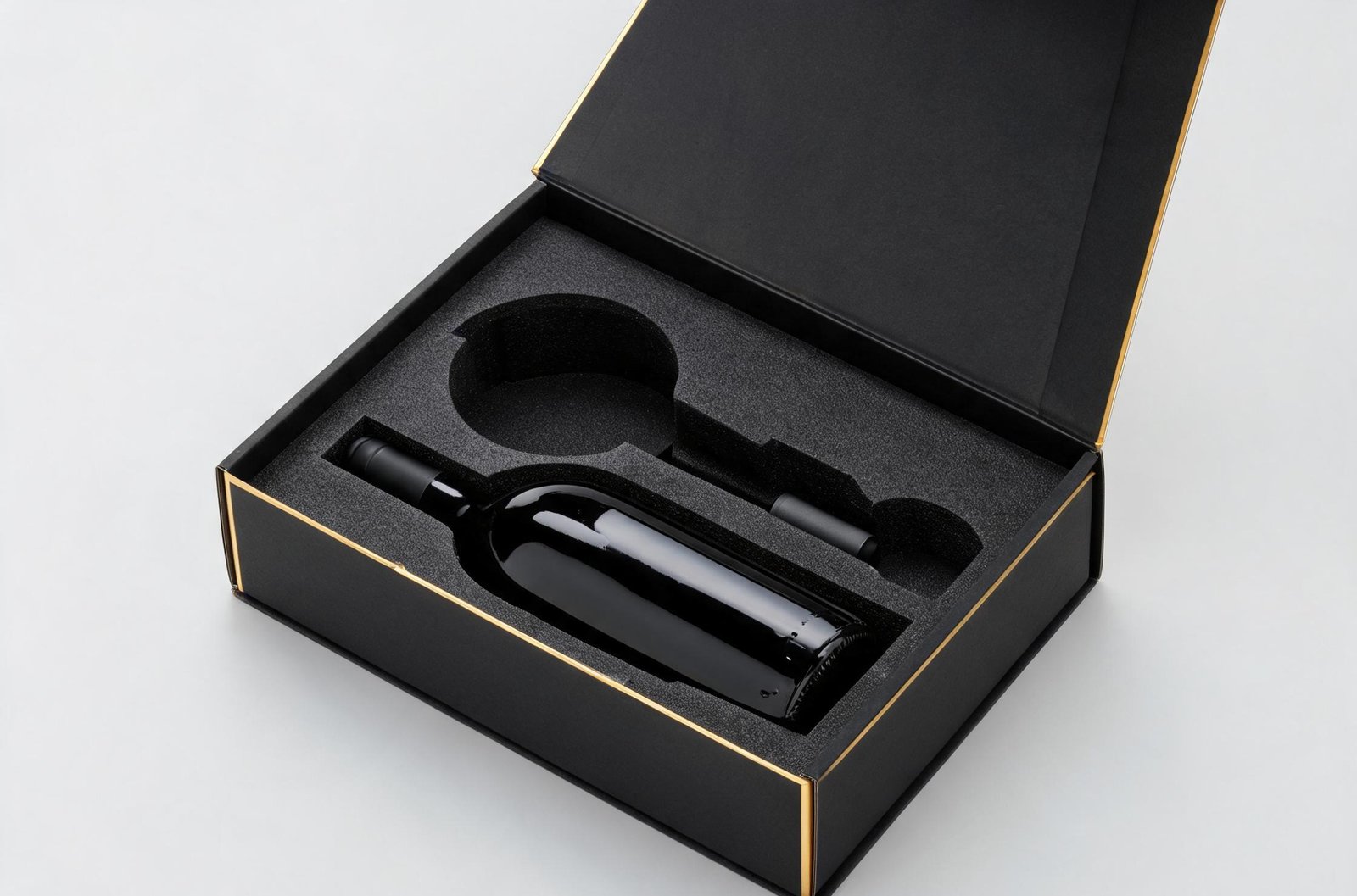
For sustainable brands, molded pulp inserts from recycled newspaper or bagasse match EVA foam protection at a lower environmental cost, though slightly heavier. Die-cut corrugated inserts are the lightest and cheapest, working well for everyday wines where premium feel is less important.
Materials, Finishes and Compliance for Wine Packaging
The board and paper you choose affect durability, print quality and food contact compliance. Wine boxes are not directly food contact in most markets, but the interior lining and any insert touching the bottle should be food-safe and free of inks that transfer onto the glass.
For rigid boxes, 2 mm grey board wrapped in 120 to 157 gsm coated art paper is standard. For corrugated shippers, use E-flute or B-flute for single and double packs, BC-flute for six and twelve packs. Kraft liners give a natural, recyclable look; white-top kraft gives a cleaner print surface for full-colour branding.
Finishes create the premium signal. Soft-touch lamination feels like velvet and resists fingerprints, but is not recyclable in standard streams. Gloss is cheaper and more vibrant; matte sits between the two. Spot UV on the logo or varietal name adds a highlight. Hot foil stamping in gold, rose gold or silver is the classic wine finish and reads as luxury. Embossing and debossing add texture at a modest extra cost.
On compliance, confirm the paper and board are food-grade if the interior touches the bottle, and that inks are low-migration. For the EU, check that packaging complies with the Packaging and Packaging Waste Regulation on recyclability. FSC-certified board is available on request.
Comparing Wine Packaging Box Formats
The table below summarises the most common wine packaging boxes so you can shortlist structures for your project.
| Format | Best For | Protection | Perceived Value | Typical Use |
|---|---|---|---|---|
| Rigid magnetic gift box | Premium single & double bottle gifts | High with EVA insert | Very high | Wine clubs, limited editions, corporate gifts |
| Lid-and-base rigid box | Mid-premium single bottle | High with fitted insert | High | Reserve wines, seasonal releases |
| Rigid carrier with handle | Two to four bottle gift packs | Medium to high | High | Retail gift sets, festival packs |
| Paperboard handle carrier | In-store two or four pack | Low | Medium | Supermarket carry, local delivery |
| Corrugated mailer with insert | DTC single & double bottle shipping | High | Medium | Online orders, wine club shipments |
| Corrugated shipper with dividers | Six and twelve bottle logistics | Very high | Low to medium | Wholesale, distribution, bulk DTC |
| Folding carton | Budget single bottle retail | Low | Low to medium | Everyday table wine, promo packs |
Use the table as a starting point, then adjust the insert and board grade to the weight and shape of your specific bottle.
Cost, Lead Time and How to Start Your Wine Box Project
Cost depends on structure, board grade, insert, finish and volume. A folding carton is the cheapest, a corrugated mailer sits in the middle, and a rigid magnetic gift box with EVA foam and foil stamping is the most expensive per unit. Volume is the biggest lever: at 500 pieces the unit price is several times higher than at 5,000, because tooling and setup are amortised over fewer units.
Criio works from a minimum order of 500 pieces per design, low enough for limited editions and wine clubs while still allowing efficient production. Sampling takes 3 to 5 days once the dieline is confirmed, and bulk production runs 7 to 15 days depending on the finish and insert complexity. Every order goes through a pre-shipment inspection so you can confirm structure, print and insert fit before the goods leave the factory, and we ship worldwide.
If you do not have a dieline, our team provides free dieline and design assistance. Send us your bottle dimensions, the structure you want and your artwork, and we return a dieline and a 3D mock-up for approval before sampling. FSC-certified board and recyclable inserts can be specified at no extra lead time.
To discuss your wine packaging boxes, request a quote through our contact page and attach a photo or drawing of your bottle. We will reply with structure options, a price range and a sampling timeline within one business day.