
Bakery packaging is not simply a vessel for carrying pastries from store to customer’s kitchen. It is a structural challenge, a marketing tool, and a critical quality control layer between your freshly baked goods and the hands that buy them. Every decision, from the board grade you choose to whether you add a die-cut window, directly impacts how your product arrives, how it looks on the shelf, and how much you can confidently promise your customers.
If you are scaling a bakery brand, launching a patisserie line, or refreshing your retail packaging, three questions sit at the core of every design brief: Will the box resist grease for the full shelf life? Will the structure stack without crushing what lives inside? And will it make the customer pick yours first?
This article breaks down those questions into practical packaging decisions. We cover grease barrier science, window carton strategy, stacking strength engineering, and the box structures that work best for specific bakery categories. Whether you are wrapping individual cupcakes or shipping a dozen macarons across the country, Criio has built bakery packaging solutions for more than 500 bakery and patisserie brands worldwide.
Grease Barriers That Actually Work
Grease is the unrelenting enemy of every bakery box. Butter, oil, and fatty fillings migrate through paper fibers over time, leaving unsightly stains that make even a perfect croissant look stale before the customer opens it. A proper grease barrier is not a decorative coating; it is a formulation decision tied directly to the shelf life you need.
There are four primary grease barrier technologies used in modern bakery packaging, each with tradeoffs in cost, recyclability, and performance:
- Polyethylene (PE) laminate ??The most common solution. A thin film of food-safe PE is laminated to one side of the board. It stops grease completely but is not recyclable in standard paper streams. Good for 7-10 day shelf life.
- Extrusion coating ??Similar to lamination but applied as molten polymer directly onto the paper. Slightly thinner and more cost-effective for high-volume runs.
- Mineral-based coatings ??A newer generation using calcium carbonate or kaolin clay binders. Fully recyclable and compostable while achieving ASTM F119 grease resistance. More expensive but increasingly specified by sustainable bakery brands.
- Wax coating ??Traditional waxed paper and boards. Effective for short-term use and fully compostable, but wax can transfer to products in hot environments.
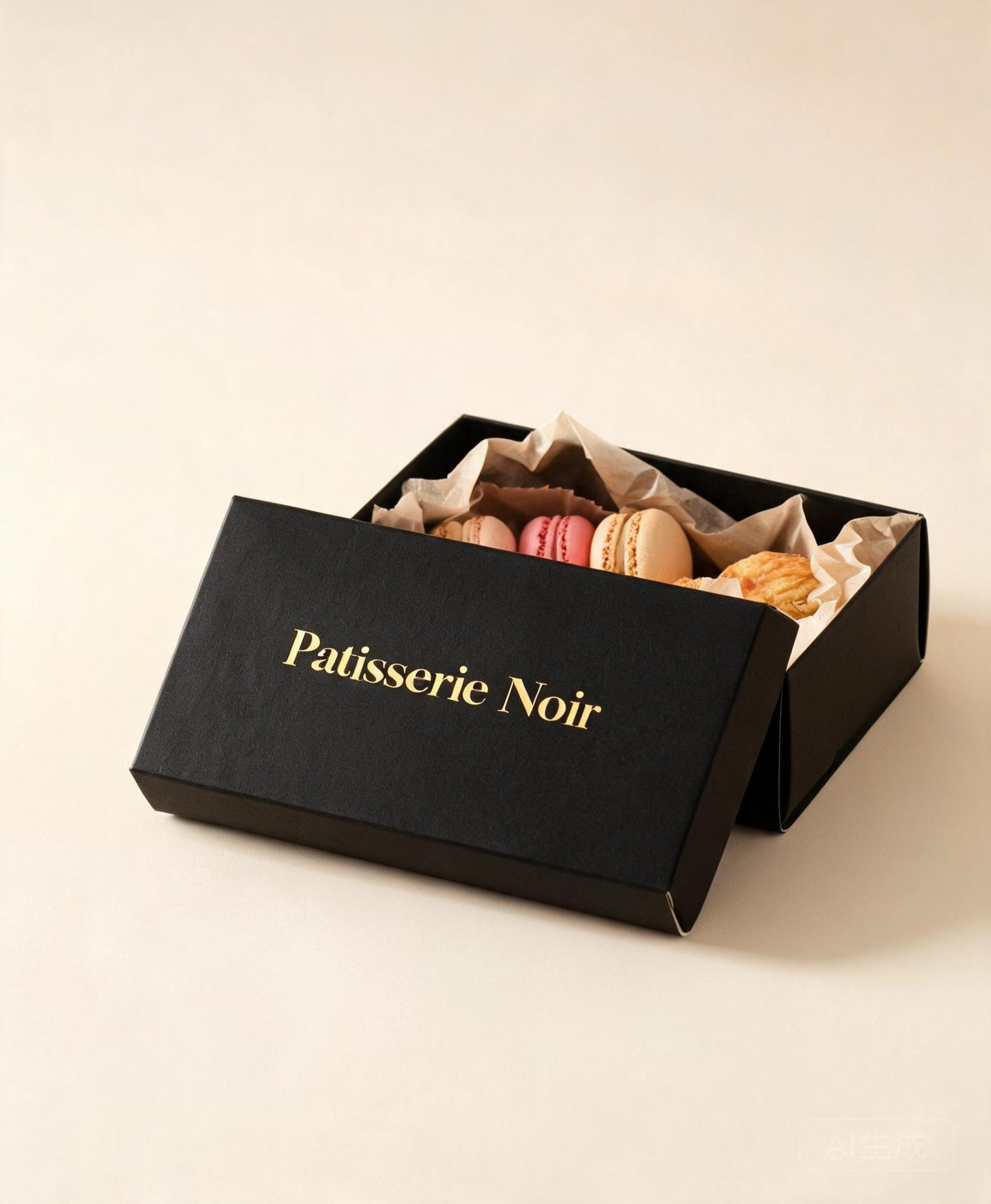
For most mid-range and premium bakeries, specify PE-laminated or extrusion-coated board for folding cartons that directly contact greasy items. If sustainability is a brand priority, mineral-based coatings are ready for production runs starting at 500 pieces per design. Criio provides free dielines and board swatches so you can test barriers with your actual products before committing to volume.
A common mistake is treating all bakery products the same way. A cookie with low butter content may only need a waxed inner sleeve, while a cream-filled eclair carton needs full PE lamination on every interior panel. The right barrier is always matched to the specific product, not applied as a one-size-fits-all cost cut.
Window Cartons ??When Transparency Sells
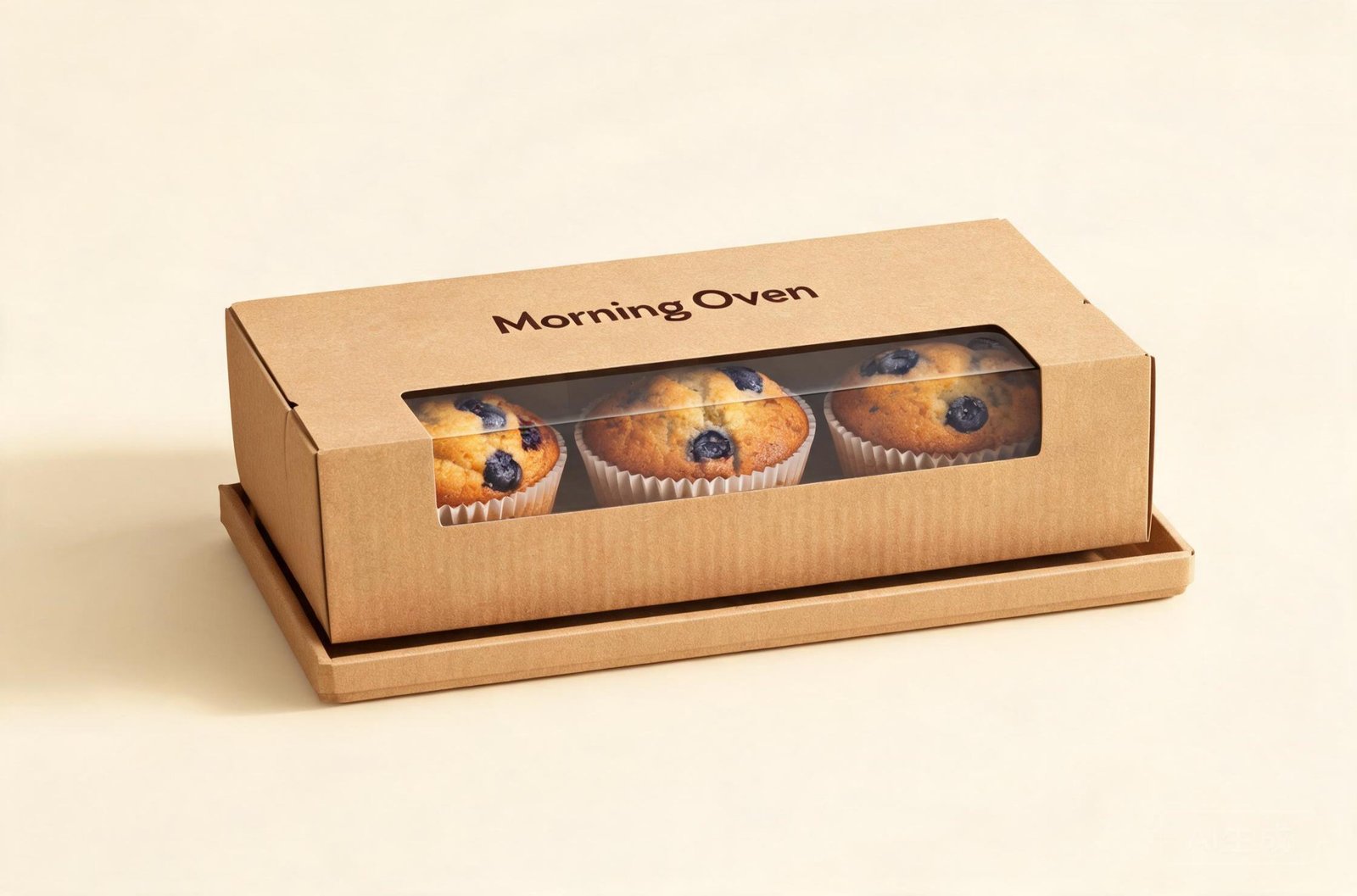
Few packaging decisions have as much impact on in-store conversion as the humble die-cut window. A well-executed window carton transforms a box from a hidden container into a silent salesperson. Customers see the product before they buy it, and for visually appealing items like cupcakes or macarons, that visibility directly correlates to higher pickup rates.
But window cartons are not right for every bakery product. Here is how to decide:
| Product Category | Window? | Reasoning | Shape |
|---|---|---|---|
| Cupcakes | Strong yes | Frosting and color drive purchase | Round top window |
| Cookies | Yes | Shows texture and piece count | Rectangular front panel |
| Macarons | Yes, premium | Color variety is the selling point | Full top with insert |
| Whole Cakes | Sometimes | Decorated cakes benefit most | Side or partial top |
| Breads & Rolls | Rarely | Texture better in hand | None preferred |
| Donuts | Yes, with barrier | Glaze visibility drives flavor choice | Round individual panel |
| Assorted Pastries | Yes | Lets customers pick favorites | Wide window with dividers |
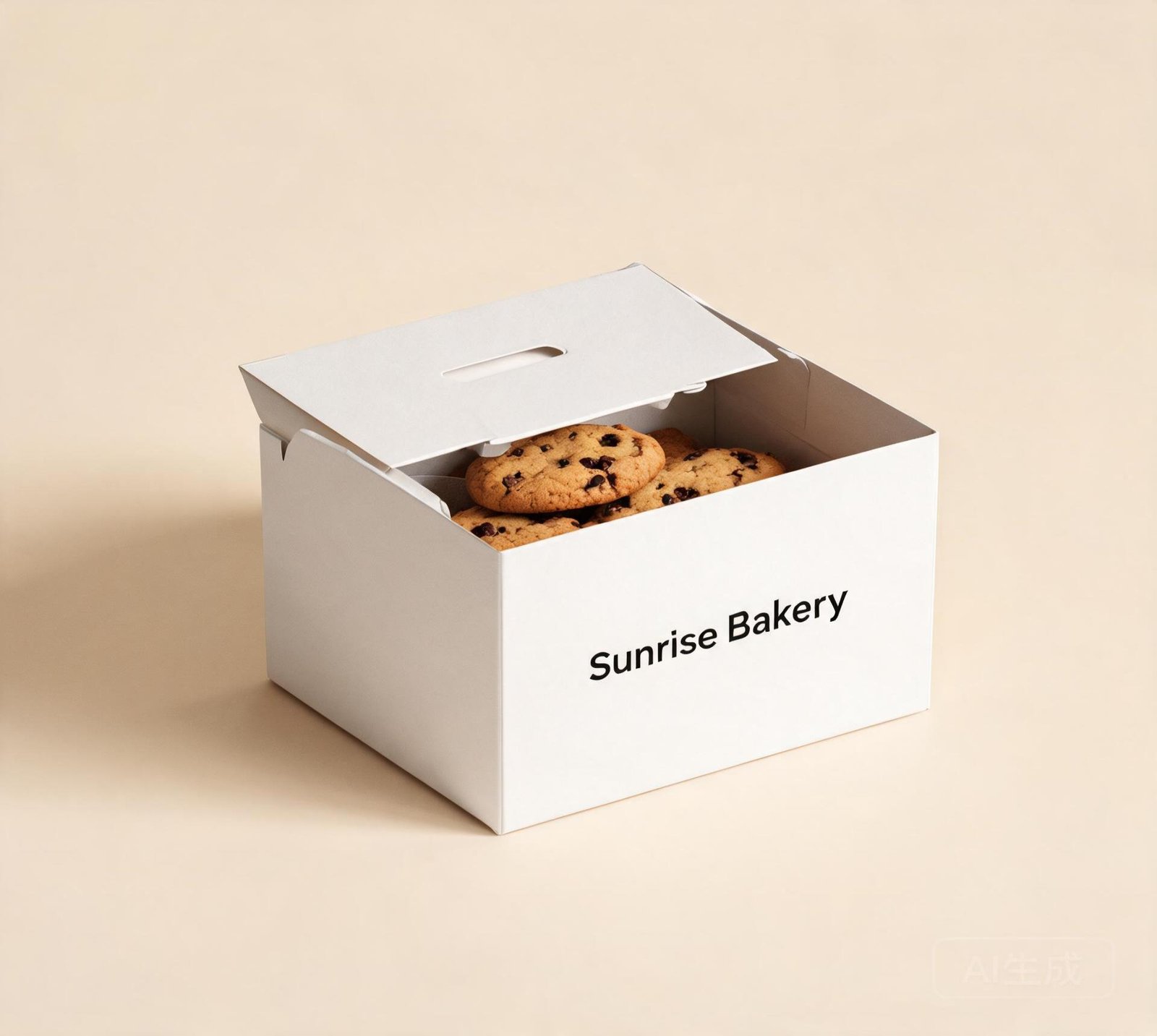
From a manufacturing perspective, window cartons require a PET or PVC film heat-sealed to the board during production. The window die-cut must account for the film’s expansion rate, and the seal must be uniform to prevent grease or moisture penetration. Ordering from a single source like Criio’s folding carton production ensures your die, board, and film are all matched in the same facility.
For premium patisseries, rigid magnetic closure boxes with a full top window are increasingly popular. These offer a luxurious unboxing experience and can incorporate custom tray inserts holding macarons in place. Explore our folding carton food boxes for standard sizes or request a custom dieline.
Stacking Strength and Structural Integrity
A bakery box that arrives crushed is worse than no box at all. Stacking strength is measured in two ways: top-to-bottom compression and edge-to-edge board rigidity. Both matter, and both are affected by your board grade and box structure choice.
The board specification is the single biggest factor in stacking performance. Most bakery cartons use board between 250 and 400 gsm. These are the four most common board types:
- Solid bleached sulfate (SBS) ??The premium choice. SBS board has high tear resistance and uniform density, producing clean creases and sharp graphics. Best for macaron boxes and premium patisserie cartons.
- Natural kraft board ??Increasingly popular for artisanal and sustainable brands. Good stacking strength, fully recyclable, and natural fiber look fits rustic bakery aesthetics.
- White lined kraft (WLK) ??The workhorse of mid-range bakery packaging. Natural kraft outer with smooth white inner surface that accepts grease barriers well. Very cost-effective.
- Corrugated B-flute ??Used primarily for shipping and counter display boxes. Excellent compression strength but less common for direct product packaging.
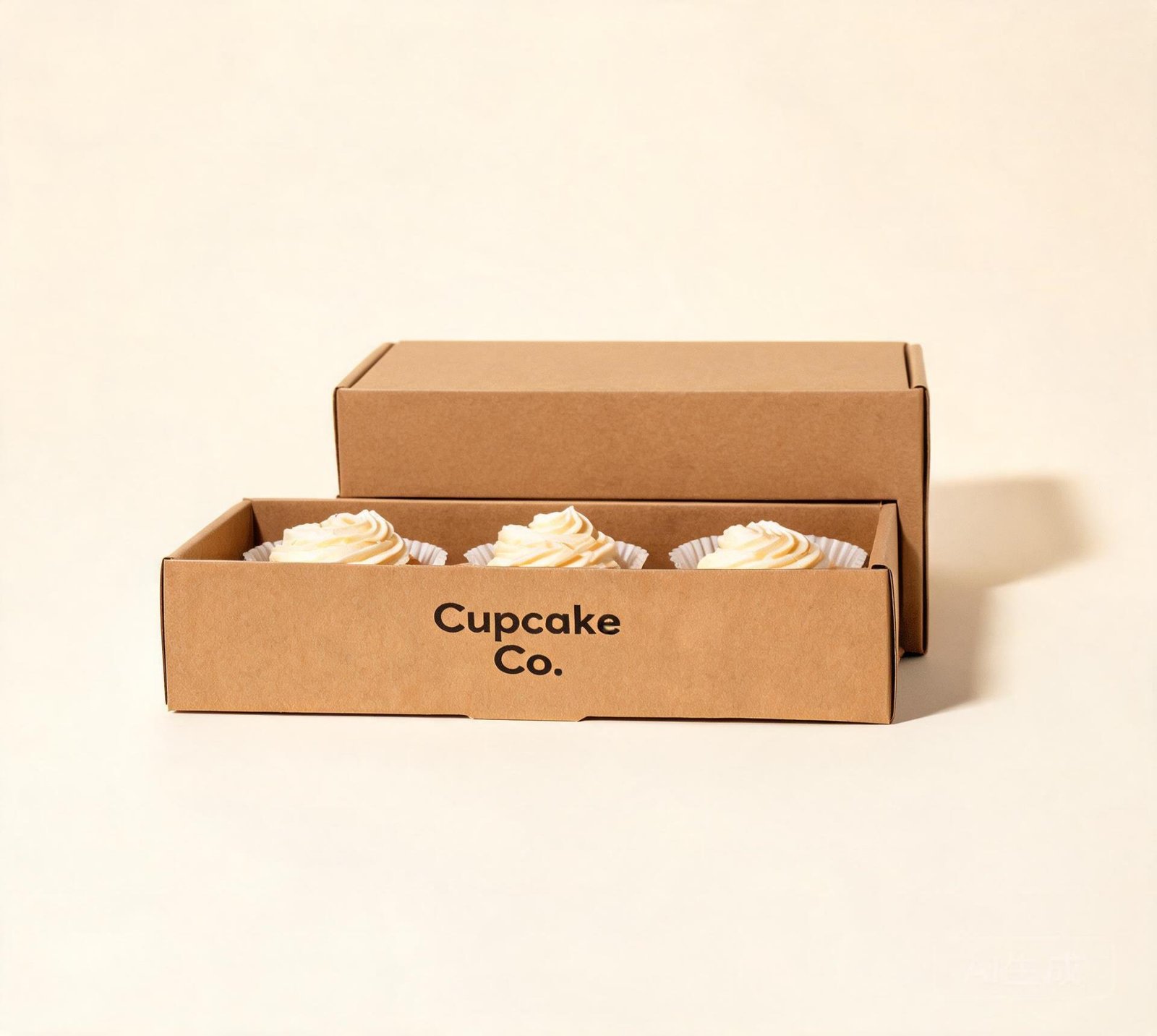
For structure, these three box types perform best under stack pressure:
- Regular slotted carton (RSC) ??The standard folding carton with tuck-top and bottom flaps. Good for light items. Can stack 4-6 layers on 300 gsm SBS board.
- Lock-bottom carton ??Interlocking bottom flaps create a rigid base that resists bulging. Recommended for heavier items like filled pastries or cupcake carriers. Adds 5-10% cost but significantly reduces crush damage.
- Rigid setup box ??Glued board shell with separate lid and base. The strongest structure available for bakery packaging. Can support 12+ stacked layers. Used for premium gift sets and wedding cake boxes.
Standard folding cartons ship in 7-15 days for bulk orders. Rigid setup boxes typically take 12-20 days. Criio offers sample turnaround in 3-5 days so you can validate stacking performance with your actual product before committing.
Counter Displays and Shelf Impact
Every bakery packaging decision is ultimately a retail decision. Counter display boxes and shelf-ready packaging turn your packaging into part of the retail environment itself, carrying the brand story while the individual boxes inside are designed for customer self-service.
- Include a reinforced handle ??Staff needs to move displays from prep area to counter. A reinforced handle prevents tearing.
- Specify a grease-resistant base ??The bottom sits in contact with potentially oily bakery boxes for hours. A PE-laminated base prevents staining.
- Use stock shelf standards ??Most bakery counters have shelf heights between 12 and 18 inches. Design for two units side-by-side.
- Add shelf-ready tear strips ??For grocery placements, tear strips let staff slide the display directly onto the shelf.
Criio produces both counter displays and shelf-ready packaging for grocery chains, specialty bakeries, and supermarket bakery departments. Explore our display food boxes range for stock counter display structures. If you need FSC-certified board for your sustainable line, we can source that on request. Reach out through our food boxes catalog to see available structures.
Final Checklist for Bakery Packaging
When requesting a quote or dieline from Criio, have these specifications ready:
- Board grade and gsm
- Grease barrier specification (PE laminate, mineral-based, etc.)
- Window dimensions and film type (PET or PVC)
- Structure type (RSC, lock-bottom, rigid, drawer)
- Stacking test requirement (layers and conditions)
- Print method and finish
- FSC or certification needs
Our minimum order quantity is 500 pieces per design. Every production batch includes a QC inspection before shipping, and we offer worldwide shipping to support bakeries across Europe, North America, Asia, and Oceania.
If you are ready to discuss a bakery packaging project, visit our contact page and tell us what you are packaging and where you need it. We will pair you with a packaging specialist who can recommend the right grease barrier, suggest the best structure for your category, and send sample dielines within 3-5 days.
The best bakery box is not the most expensive one on the shelf. It is the one that keeps your product fresh, looks inviting at retail, and arrives at your customer’s door exactly as beautiful as the day it left your oven. Start with the right grease barrier, choose a structure that matches your stacking needs, add a window if your product benefits from visibility, and you have a bakery packaging foundation that scales from a small neighborhood patisserie to a national brand.