
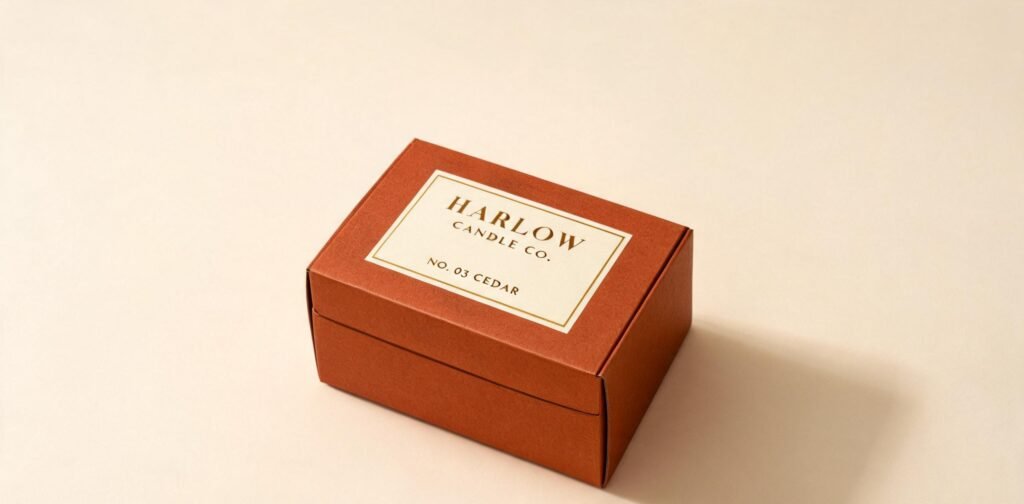
Glass is the heaviest and most fragile part of most candle programs, and the box has to absorb both problems at once. A carton that looks right in a render can still fail once a 300 g jar starts moving inside it. This guide covers how to specify candle packaging boxes around the vessel you already use: board grade, insert geometry, closing style and the shipping step that decides whether the jar arrives intact.
Start With the Vessel, Not the Box
Most candle packaging problems start with a dimension copied from a supplier datasheet instead of measured on a filled jar. Measure production samples for the widest diameter including the rim, the overall height including the lid, and the filled weight. Then repeat on a second batch: glass tolerances vary by mould and supplier, and a 2 mm spread is normal on a 90 mm jar.
Build the box around the largest sample you measured, not the average. If the diameter range is 88 to 91 mm, design the cavity at 92 mm with a 1.5 mm clearance ring. That keeps the jar from wedging against the board without letting it rattle, and small deliberate clearance beats a press fit: glass squeezed by paperboard under vibration can chip at the base.
- Measure the rim, not the body; the rim is usually the widest point.
- Weigh a filled jar with the lid on, then add 10 percent for wax shrinkage variance.
- Record the wick height; a lid that contacts the wick will bend it in transit.
- Confirm whether the jar is straight-walled or tapered before drawing the dieline.
Board, Flute and Coating Choices That Carry Weight
For a single 8 oz jar, a 300 to 350 gsm solid bleached sulphate folding carton is enough if the insert carries the load. For a 400 g three-wick jar sold as a gift, move to a rigid box on 2 mm greyboard with a printed wrap, which does not flex under weight. When the same product ships in a parcel, add an E-flute corrugated mailer around the primary pack instead of thickening the carton: corrugated absorbs impact energy, a heavy carton transfers it.
Coatings matter more on candles than on dry goods, because wax and fragrance oils soften paperboard. Matte lamination resists scuffing and blocks light, aqueous coating is cheaper where the pack is not handled heavily, and soft-touch film earns its cost only on rigid gift boxes opened by hand. Keep foil to small flat areas; heavy coverage on a wrapped rigid box cracks along the hinge.
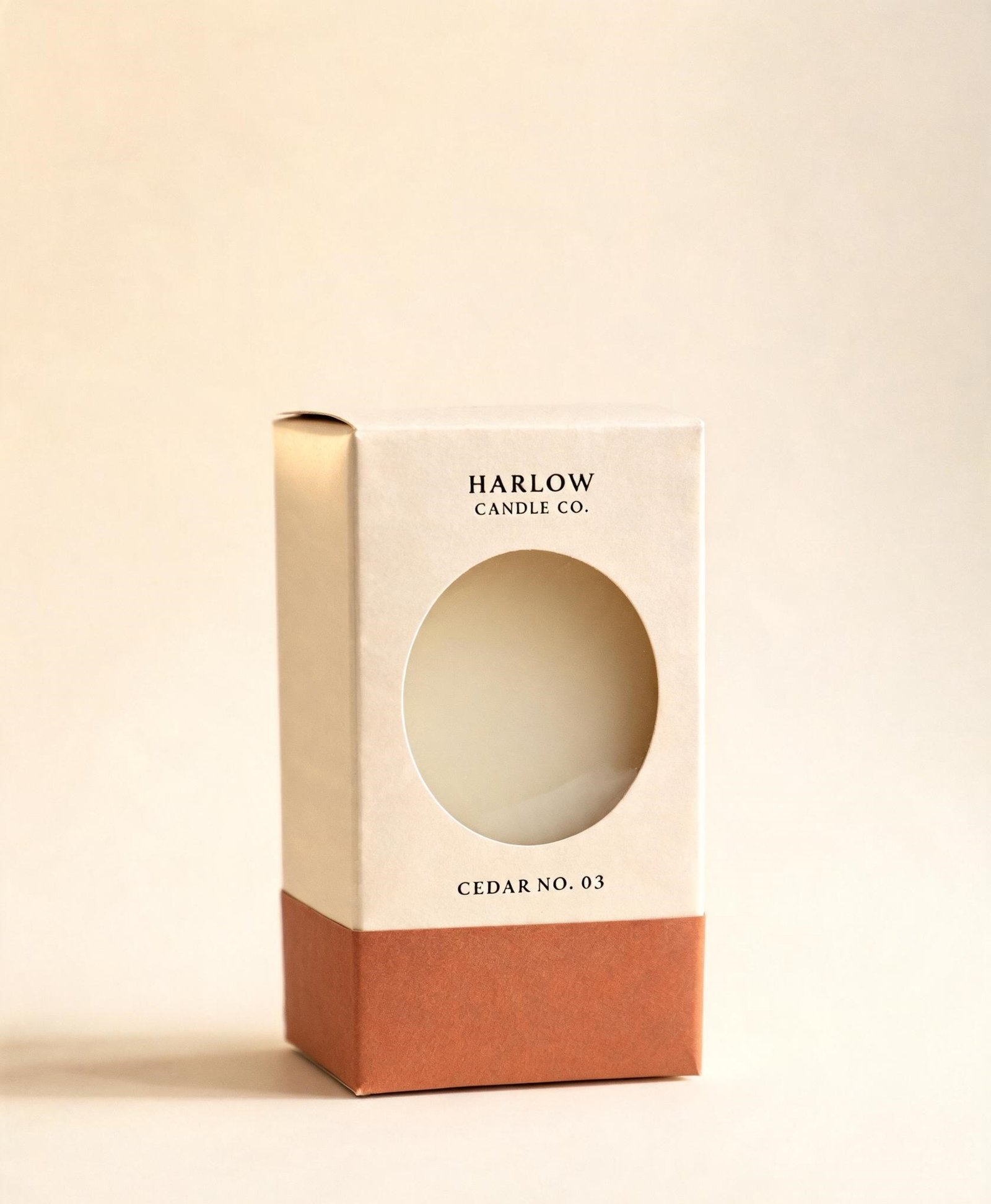
Recycled board is fine for the shipping outer but not for the primary pack, where post-consumer fibre mottles light coatings. FSC-certified stock is available on request for the carton, the insert or both, without changing the structure.
Insert Design Is the Load-Bearing Element
The outer box protects the print and the shelf story; the insert protects the glass. In most candle programs the insert is where the cost and the engineering sit, and it is the part buyers under-specify. Four options cover most briefs, each solving a different failure mode.
- Moulded pulp: the best default for a 200 to 500 g jar. A wet-press pulp tray with a cavity 2 mm deeper than the jar base spreads load across the full circumference and is recyclable in the paper stream.
- EVA or PE foam: needed when the jar is heavy, tapered or irregular, or when the box is reused as a gift case. Foam is stable but contaminates paper recycling, so specify it only where the drop height demands it.
- Die-cut corrugated: the right choice inside a mailer, where the flute direction should run vertically to resist compression.
- Paperboard platform: cheap and fine for light jars, but it collapses under repeated handling and offers little lateral support.
Whatever the material, verify three points on the first prototype: cavity depth relative to the jar base, the clearance ring at the widest diameter, and the gap between jar lid and box lid. Under 2 mm transfers every knock to the wick; over 6 mm lets the jar abrade the print.
Closing Styles and the Unboxing Sequence
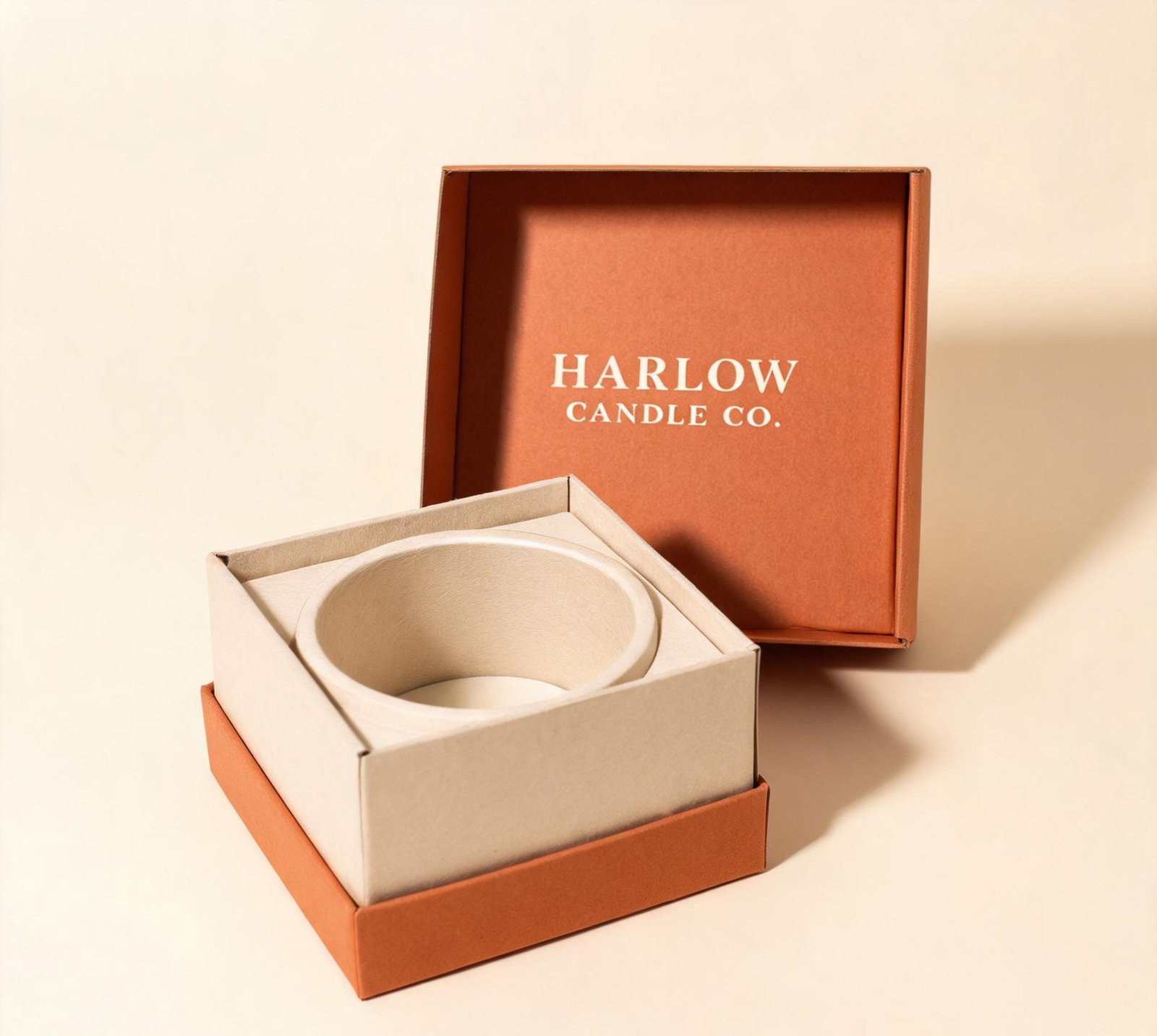
Closing style is a cost and experience decision. A magnetic closure rigid box reads as a gift and opens flat, which is what most premium candle brands want for the first impression. A lid-and-base box is cheaper to assemble, stacks better in storage and is safer when the jar is heavy enough that a magnetised lid could release in transit. A tuck-end carton packs fastest but gives you one front panel and no interior space for a message.
Decide the unboxing order before you approve artwork. If the jar should be revealed from above, the lid needs a full-bleed top panel and the insert must sit low enough that the jar does not peek over the rim. If it should slide out, you need a drawer and a ribbon or thumb notch to start the motion. Plan insert removal too: a pulp tray that has to be prised out by a fingernail will be dropped. A magnetic closure gift box with a low-friction insert is the combination most brands settle on for a first launch.
When a Cylinder Tube Beats a Folding Carton
A paper tube is a strong option for a tall single jar. There are no corners to crush, the print wraps the full circumference without a seam gap, and the lid reveal reads well on camera. The constraints are geometric: the tube needs a diameter that matches the jar plus a clearance ring, and any tolerance change means new tooling. Tubes cost more per unit at low volume, so they make sense when the jar is the hero and the print is the differentiator.
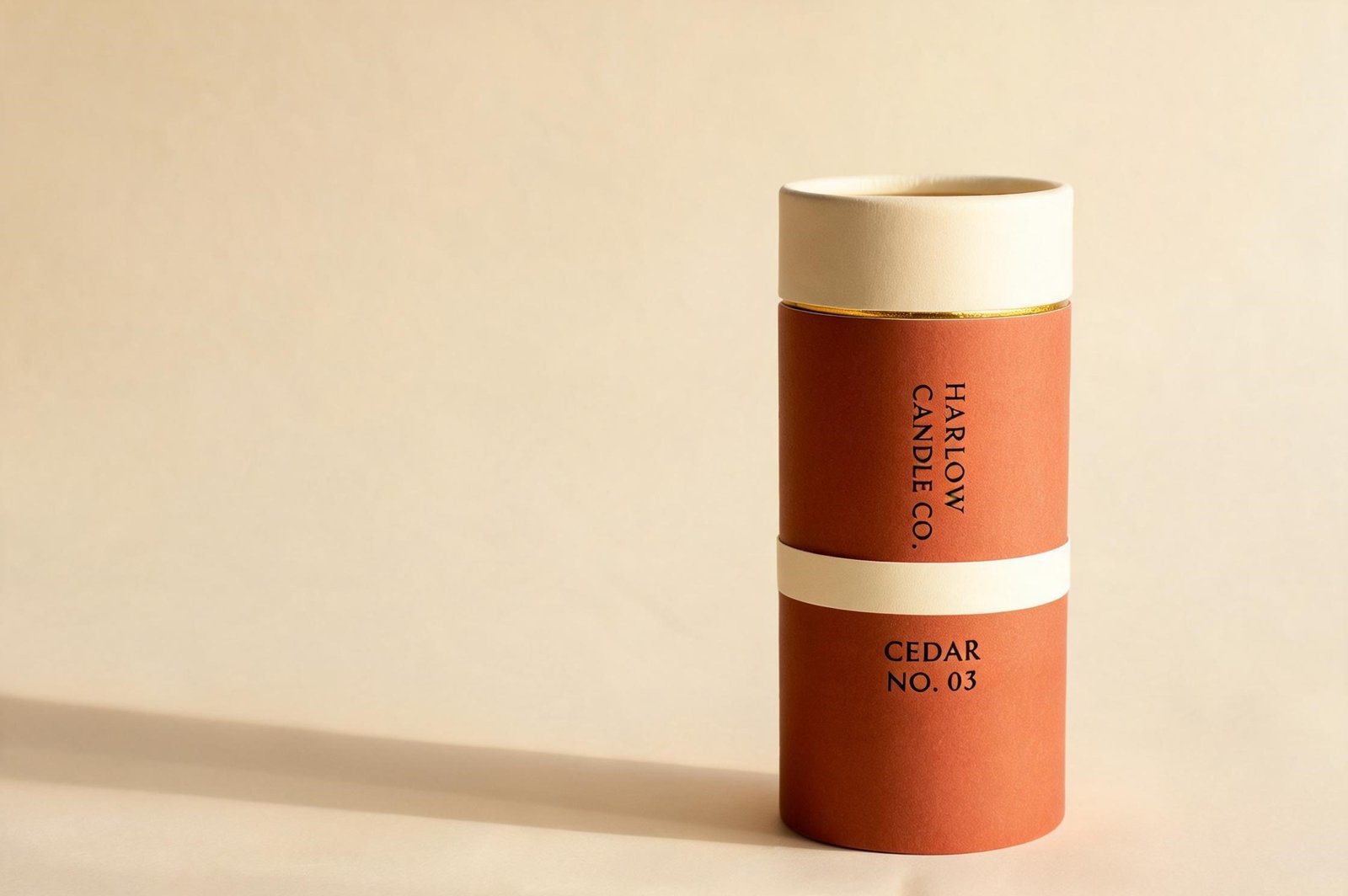
Inside the tube, use a pulp ring or a paperboard collar rather than a full tray. The walls already provide lateral support; the jar needs vertical cushioning at the base and a lid liner that keeps the wick clear.
Protective Shipping for Direct-to-Consumer Orders
The primary pack is not a shipping container. Once a candle enters a parcel network it will be dropped, stacked and compressed, so the primary box cannot survive alone. A corrugated mailer with 15 to 20 mm of void on each side is the standard solution. Use a die-cut corrugated insert rather than loose fill: paper void fill settles in transit, and a jar that starts centred can end up against a wall.
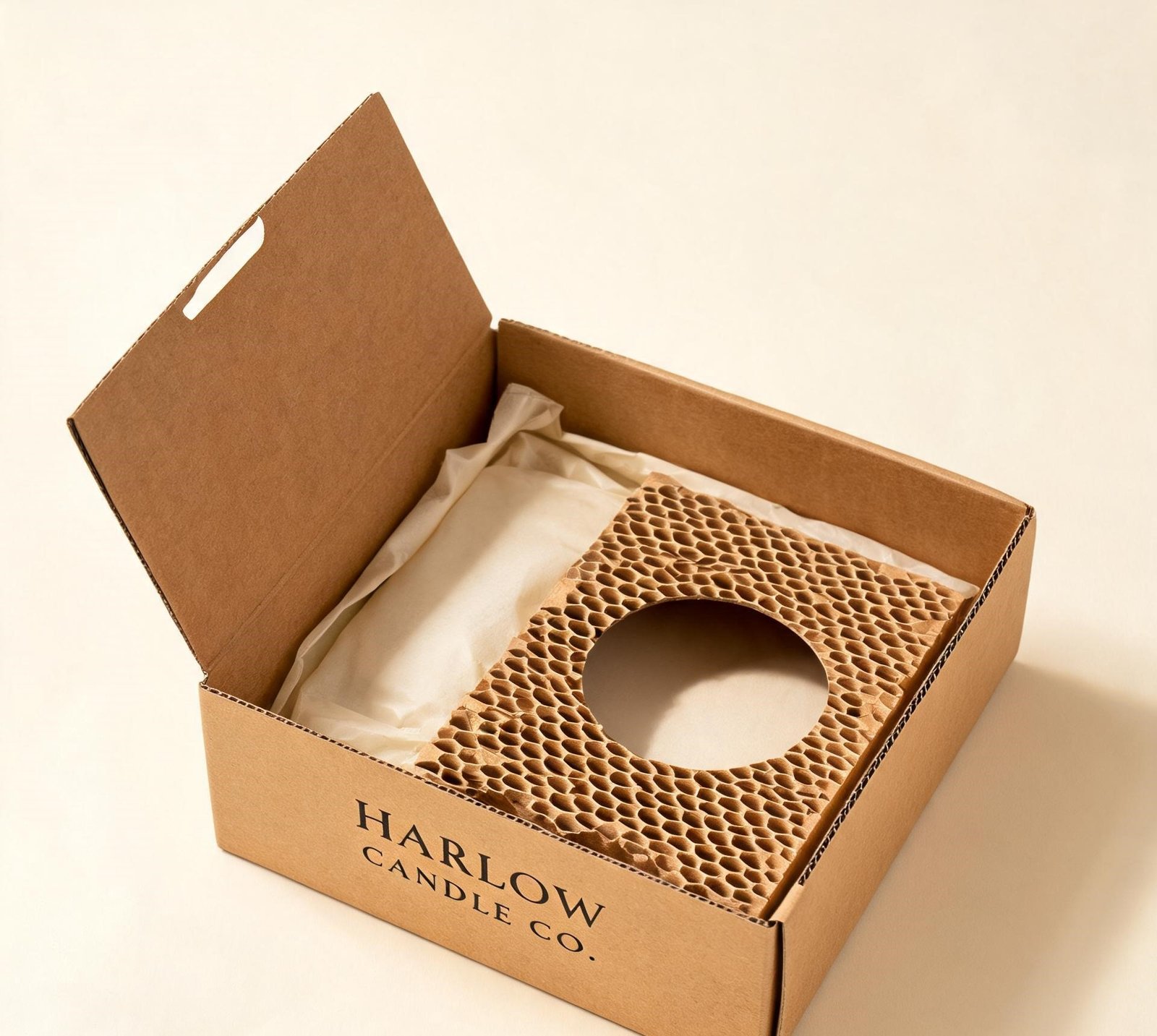
- Flute direction vertical on the insert, so the board resists compression instead of shearing.
- No gap over 20 mm in any direction; if the primary pack is small, the insert takes up the difference.
- Test the packed configuration to ISTA 3A before you commit to a print run, not after.
- Keep the mailer unprinted or one-colour so shipping cost stays low and focus stays on the primary pack.
For DTC programs, pair a printed primary carton with a kraft corrugated mailer. Review the options in our mailer box range and match them to a corrugated e-commerce mailer sized to the candle pack.
Candle Box Structures at a Glance
| Structure | Best for | Glass weight it carries | Insert | Typical finishing | Relative cost |
|---|---|---|---|---|---|
| Rigid magnetic box | Gift sets, premium SKUs | 200 to 500 g jar | Moulded pulp or EVA | Matte lamination, foil keyline | Highest |
| Rigid lid-and-base | Boutique retail, heavy three-wick | 400 to 900 g jar | EVA or deep pulp | Printed wrap, spot UV | High |
| Folding carton with window | Single 8 to 10 oz jar at retail | Up to 300 g | Paperboard platform | Aqueous coating, window film | Low |
| Cylinder tube | Tall single jar, print-led brand | 200 to 500 g | Pulp ring or collar | Full circumferential wrap | Medium |
| Corrugated mailer | DTC shipping outer | 300 g jar with insert | Die-cut corrugated | One or two colour flexo | Low |
| Sleeve over rigid base | Refill and seasonal programs | 200 to 400 g | Moulded pulp | Offset sleeve, uncoated base | Medium |
| Two-piece telescoping with tray | Multi-jar gift sets | Two 200 g jars | Divided pulp tray | Lamination, emboss | Medium to high |
Read this as a constraint table, not a catalogue. Structure follows from jar weight, sales channel and drop height, in that order; print and finish come once those three are fixed. Structural options for this category sit in our candles and home fragrance packaging range, where the same board grades run across box types.
Sampling, MOQ and Production Timeline
Before any tooling is cut, you get a free dieline and design assistance: send the jar dimensions, artwork and drop height, and the structural drawing comes back dimensioned to your vessel. White samples arrive in 3 to 5 days so you can test the fit with a real jar, and printed bulk production runs 7 to 15 days after artwork approval. The minimum order is 500 pieces per design, which covers a first launch without committing to a year of inventory.
Every order is inspected before shipment, including a fit check on a production sample and a print check against the approved proof, and shipping is arranged worldwide. FSC-certified board is available on request. If the jar is not final, send the measurements through our contact page and we will confirm the cavity design before you spend anything on artwork.