
Vape and CBD products arrive at the packaging stage with three problems already built in: a regulatory label footprint that keeps expanding, a device or cartridge that is fragile in transit, and a retail channel that judges the pack in under two seconds. A folding carton has to solve all three at once, at a unit cost that still works when you ship thousands of units a month. That is why vape packaging boxes are rarely a catalogue item you can pick off a shelf.
This guide covers the structural, material and print decisions that decide whether a vape or CBD carton passes compliance review, survives a parcel network and still looks worth its price on a counter.
Why Compliance Comes Before Design
Start with the mandatory copy, not the logo. Nicotine and CBD products are regulated at pack level in most markets, and the required elements consume a fixed share of every panel. If you design first and fit the warning block afterwards, you end up shrinking type below the legal minimum or wrapping the statement around a crease where it becomes unreadable.
Map the requirements for each market you sell into before you draw anything:
- Health warnings with a defined minimum font size, contrast ratio and position on the principal display panel.
- Ingredient and strength statements in a fixed order, including nicotine concentration and fill volume.
- Batch and expiry coding in a legible field that survives lamination and handling.
- Manufacturer or importer identity plus a physical address, not just a web domain.
- Child-resistant access where the jurisdiction requires it, which is a structural obligation rather than a printed claim.
Build a compliance matrix for your top three markets and design to the strictest one. A single artwork that satisfies the tightest rule set lets you run one print job instead of three, and that is usually the difference between a viable carton price and an unworkable one. Our folding carton boxes range is built around this approach, with panel layouts that reserve the warning zone from the start.
Child-Resistant Structures That Still Open Cleanly
Child-resistant packaging fails in two directions. It either opens too easily for a determined four-year-old, or it is so stiff that an adult with limited hand strength cannot get in. The structures that pass senior-friendly testing share one principle: resistance comes from a deliberate two-step motion, not from friction or tight tolerances.
The two most reliable formats are the push-and-slide sleeve, where the inner tray only releases when a tab is pressed, and the locking tuck with a secondary catch that must be lifted before the flap unfolds. Both can be produced as a one-piece die-cut carton in 350-400 gsm solid board, which keeps the pack in the folding carton category instead of pushing it into rigid box tooling and cost.
Three production details decide whether the mechanism works at scale. Crease depth matters: a shallow crease leaves memory in the board and the catch springs open in the mailer. Board grain must run parallel to the fold that carries the locking tab. Tray tolerance has to hold at roughly ±0.5 mm so the slide stays firm without binding. Ask for a physical prototype and test it with a small user panel before committing to production.
Board, Barrier and Lamination Choices
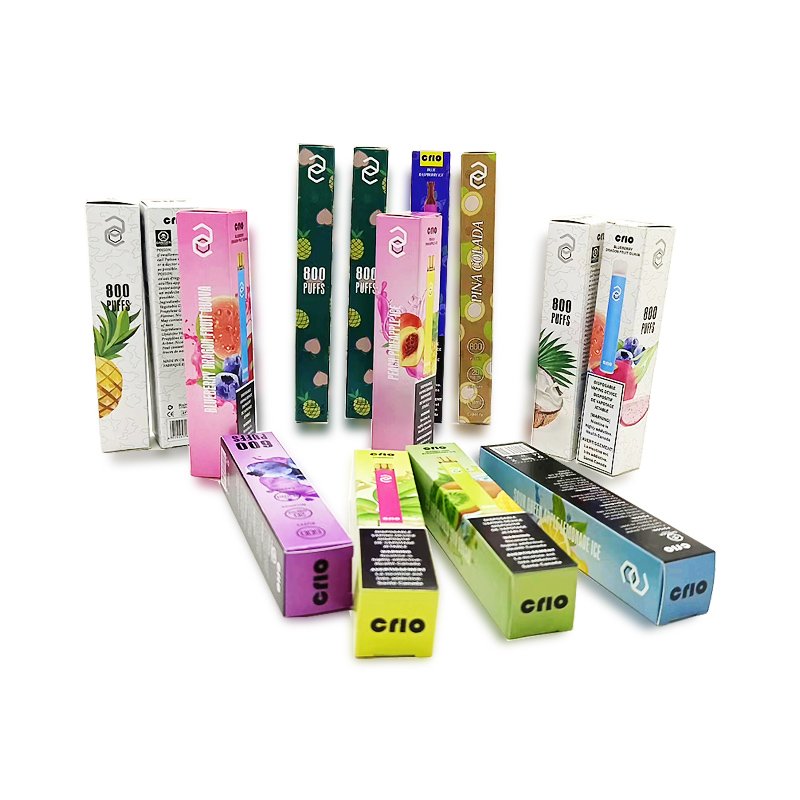
For most vape and CBD cartons, 350-400 gsm FSC-certified solid bleached sulphate board gives the best balance of stiffness, print quality and fold accuracy. Thinner stock saves money until the pack bows on a shelf or the locking tab loses its spring. Heavier stock is only worth it when the carton replaces a rigid box and has to carry the perceived value on its own.
Barrier requirements depend on what is inside. Sealed devices and glass cartridges mainly need mechanical protection and a moisture-resistant surface, which a matte or soft-touch lamination supplies. Loose-leaf CBD flower and pouched product need an aroma and moisture barrier, which usually means a metallised liner inside the carton rather than a coated outer board. A coated carton is a print surface, not a barrier.
The table below compares the structures we run most often for this category, with realistic tooling and protection profiles.
| Structure | Board | Tooling | Protection | Best for |
|---|---|---|---|---|
| Straight tuck end | 350 gsm SBS | Die-cut only | Basic | Single cartridges, low weight |
| Reverse tuck end | 350-400 gsm SBS | Die-cut only | Basic plus | Disposable devices with a leaflet |
| Child-resistant slide | 400 gsm SBS | Die-cut plus validation | High | Nicotine and CBD regulated markets |
| Sleeve and tray | 350 gsm board, 1.5 mm greyboard | Two dies, hand assembly | High | Premium starter kits |
| Book-style magnetic | 1.5-2 mm greyboard | Rigid box tooling | Very high | Gift sets and limited editions |
| Drawer box | 1.2-2 mm greyboard | Rigid box tooling | High | Multi-piece device kits |
| Corrugated mailer | E-flute, 1.5 mm | Die-cut only | Shipping grade | Direct-to-consumer orders |
Labeling: What Has to Appear on the Pack
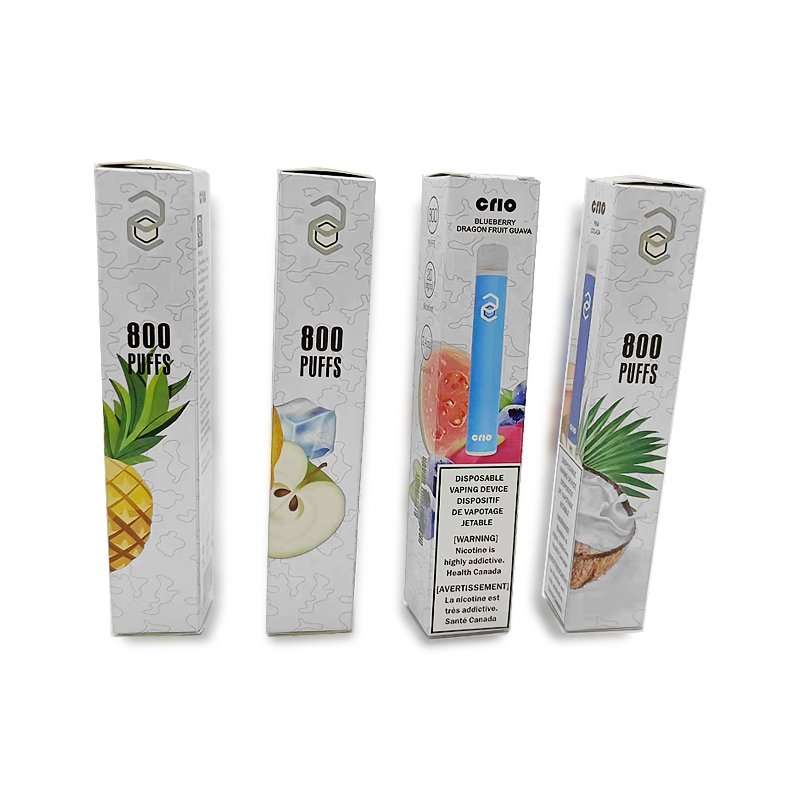
Treat the back panel as a data field with a fixed hierarchy. The warning statement occupies the top band, the ingredient list and nicotine strength sit directly beneath it, and the batch and expiry codes close the block.
Practical rules that prevent reprints: set the smallest permitted warning type and check it at 100 percent scale on the actual board, not on screen. Keep a 2 mm clear zone around every text block so a slight print shift does not clip a character. Specify black or a single dark spot colour instead of a four-colour build, because registration drift on small type is the most common reject at inspection.
QR codes now carry digital compliance files, batch traceability and age verification. Print them at a minimum of 12 mm square on a matte area, never across a crease or a lamination seam, and scan test them on the finished carton before the run is released.
Insert Design for Devices and Cartridges
Most transit damage in this category is not a crushed carton; it is a device that moved. A cartridge that shifts 5 mm inside its cavity arrives with a scratched finish or a cracked mouthpiece, and the customer blames the product, not the pack.
For a single device, a die-cut paperboard platform with a shallow recess and two retaining fingers is usually enough, provided the recess is set 1-2 mm tighter than the device body. For glass cartridges and small bottles, a folded paperboard cell or a moulded pulp tray cushions better without adding plastic. EVA foam is worth the cost only when the item is heavy or has a protruding mouthpiece that must not bear load.
Validate with a rattle test and a 1.2 m drop on each face. If the device moves audibly when the closed carton is shaken, the insert is too loose, and no amount of outer board stiffness will fix it.
Finishes That Survive the Channel
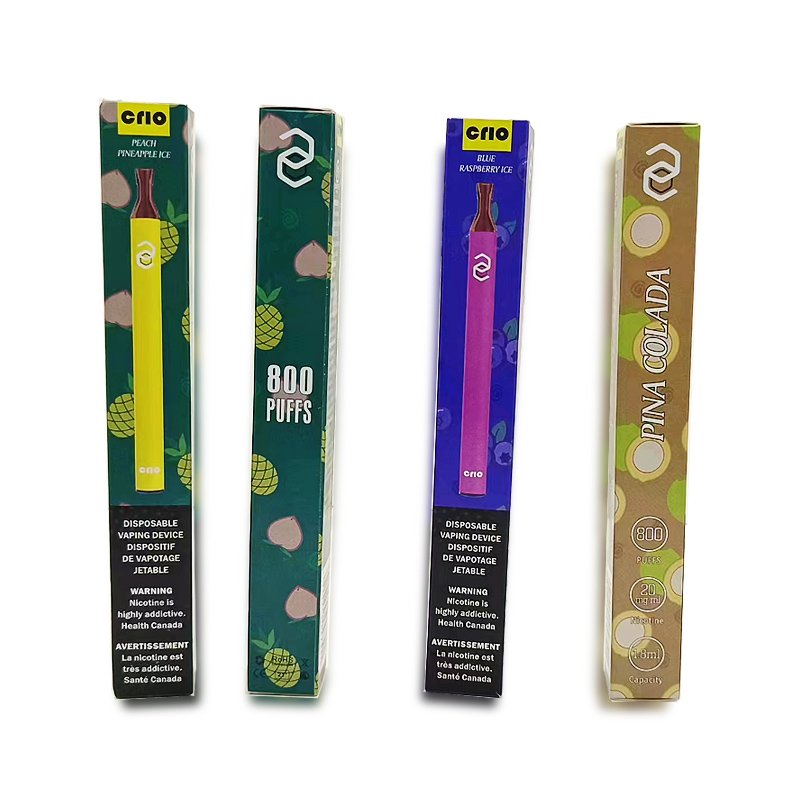
Soft-touch lamination reads as premium and hides minor scuffs, but it marks easily with oily fingers and does not accept thermal transfer coding well. If you need variable data on a soft-touch panel, leave an uncoated window for it. Matte aqueous coating is cheaper and more scuff-resistant, though it reflects less light and looks flatter on shelf.
Keep foil to the wordmark and one rule line; foil over a large area curls the board and slows the die-cutting line. Spot UV works well as a contrast layer on a matte background, but it should not sit over the warning block, because the gloss reduces legibility under angled light. If counterfeiting is a risk, add a holographic strip or a serialised QR field rather than a printed seal, which is trivial to copy.
Sampling, MOQ and Quality Control
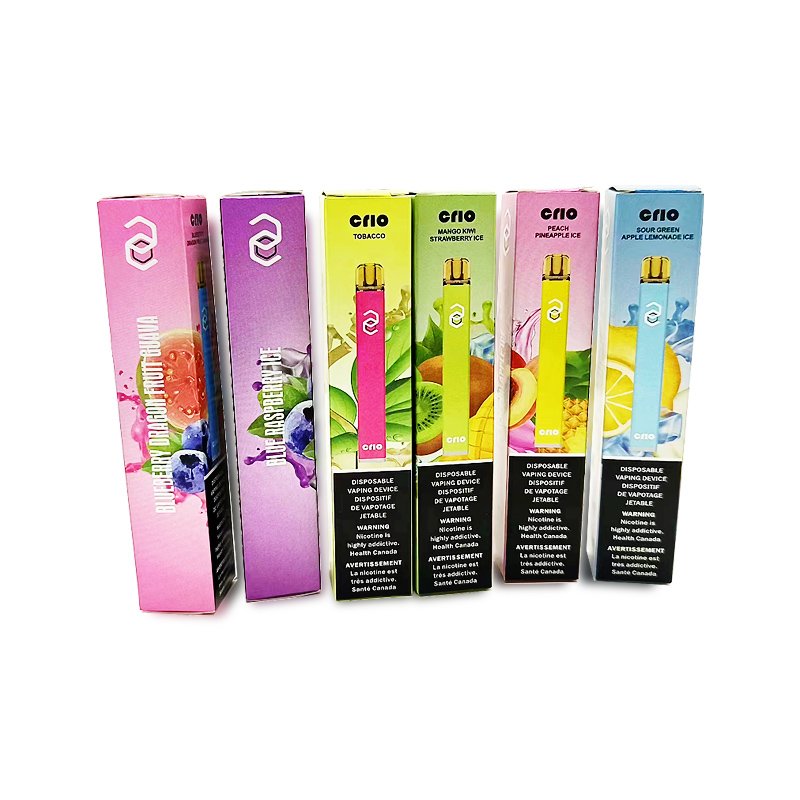
Because the structure carries a compliance function, never approve a vape or CBD carton from a digital proof alone. A physical sample shows how the locking tab feels, how the warning block sits after lamination and whether the insert actually holds the device.
- Free dieline and design assistance so your artwork is built on a structure that already meets the panel requirements.
- MOQ 500 pcs per design, which keeps a market test or a limited flavour run commercially sensible.
- Sampling in 3-5 days from an approved dieline, with the locking mechanism assembled.
- Bulk production in 7-15 days after sample approval, depending on finishing.
- Pre-shipment inspection covering print registration, colour, fold accuracy, mechanism function and insert fit.
- Worldwide shipping with export cartons specified for the route.
- FSC-certified board on request for brands that need chain-of-custody documentation.
Send your artwork and device dimensions through the contact page and you will get a dieline with the panel grid marked, so compliance copy, print and structure are resolved together rather than fixed at proof stage. Our book-style folding cartons and folding carton vape boxes show the two structures most often specified here, and the personal care boxes range covers the adjacent topical formats that ship alongside.
Frequently Asked Questions
Can a folding carton be genuinely child-resistant?
Yes. A press-and-slide locking tab or a two-step catch in 400 gsm board passes recognised child-resistant protocols when the crease and tray tolerance are controlled. It has to be validated as a physical sample, not assumed from the drawing.
Which board weight should a disposable device carton use?
350 gsm handles single devices and cartridges well. Move to 400 gsm when the carton includes a locking mechanism, a heavier insert or a multi-piece kit, because the extra stiffness is what keeps the catch engaged.