
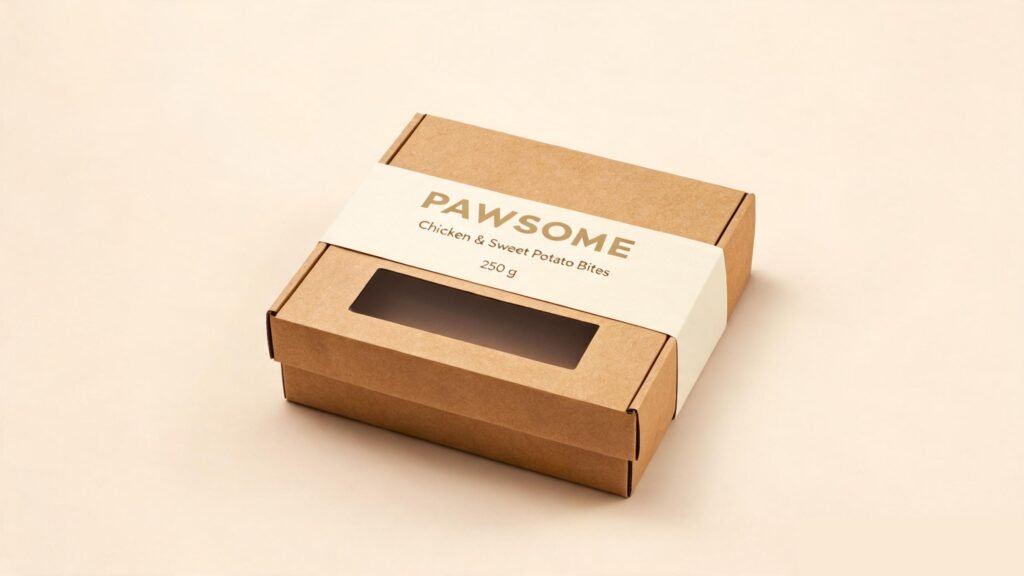
Pet products are bought on trust. An owner reads a treat carton the way they read an ingredient label: fast, a little suspicious, with an animal already waiting at their feet. Packaging has to carry that trust before the product is opened, and it has to survive a warehouse, a courier van and a kitchen counter without turning a twelve-dollar bag of bites into crumbs.
That combination is why pet packaging boxes sit in an awkward middle ground. They share the food-safety obligations of confectionery, the shelf demands of a supermarket category and the durability requirements of e-commerce shipping. This guide covers the decisions that actually change cost, protection and shelf performance, and the specification details worth settling before you request a quote.
What Pet Packaging Has to Solve Before Anything Else
Start with the three failure points, because every structural decision traces back to one of them. The first is the product itself: kibble, soft chews, rawhide, powders and liquids all behave differently under compression and humidity. The second is the retail environment, where a carton may sit on a shelf for months under bright light and be handled by shoppers who open flaps to look inside. The third is the parcel network, where the same carton is dropped, stacked and squeezed with no regard for what is inside.
A box that only looks good fails at two of those three. A box that only protects is expensive to produce and impossible to sell. The work is finding the cheapest structure that satisfies all three, then spending the remaining budget on print quality where the customer actually looks.
Board, Barrier and Grease Resistance
For dry treats, a 350 to 400 gsm folding carton board in SBS or coated recycled grade is the standard choice. It folds cleanly, prints well and holds its shape on a shelf. Below 300 gsm the carton starts to flex in the hand, and shoppers read flex as cheap. Above 450 gsm you gain stiffness you probably do not need and lose the ability to run efficiently on high-speed folder-gluers.
Grease is the detail most first-time buyers miss. Oven-baked treats and anything with a fat content will wick oil into uncoated board within days, leaving translucent patches around the base and a carton that smells like the product. Two fixes work. Either specify a grease-resistant liner or a polyethylene-free dispersion coating on the inside face, or move to a barrier bag inside a standard carton. The bag approach is usually cheaper at low volume and gives you a better moisture barrier, but it adds a packing step and a piece of plastic that conflicts with plastic-free claims. If you plan to market the pack as recyclable in a single stream, the dispersion coating is the cleaner route. You can review board and coating options on the folding carton boxes category page.
For soft chews with a higher moisture content, expect the carton to see humidity swings in transit. A coated board plus a sealed inner liner keeps the texture stable, and the carton itself should be sized with a little headspace so the product does not press against the walls and wick oil into the seams. A food-grade folding carton food box built for direct food contact removes most of this risk in one step.
Window Patches, Inserts and Structural Fit
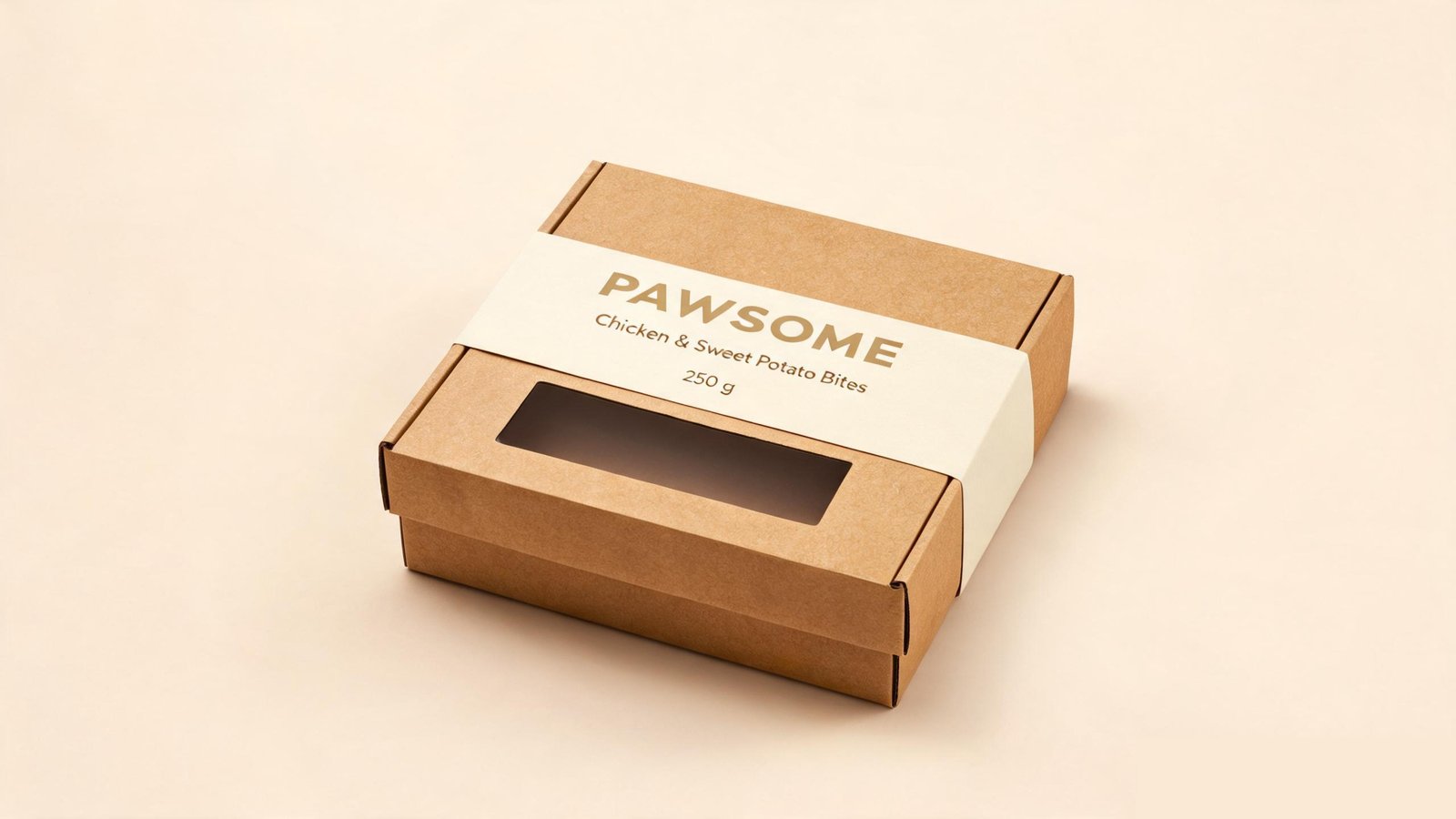
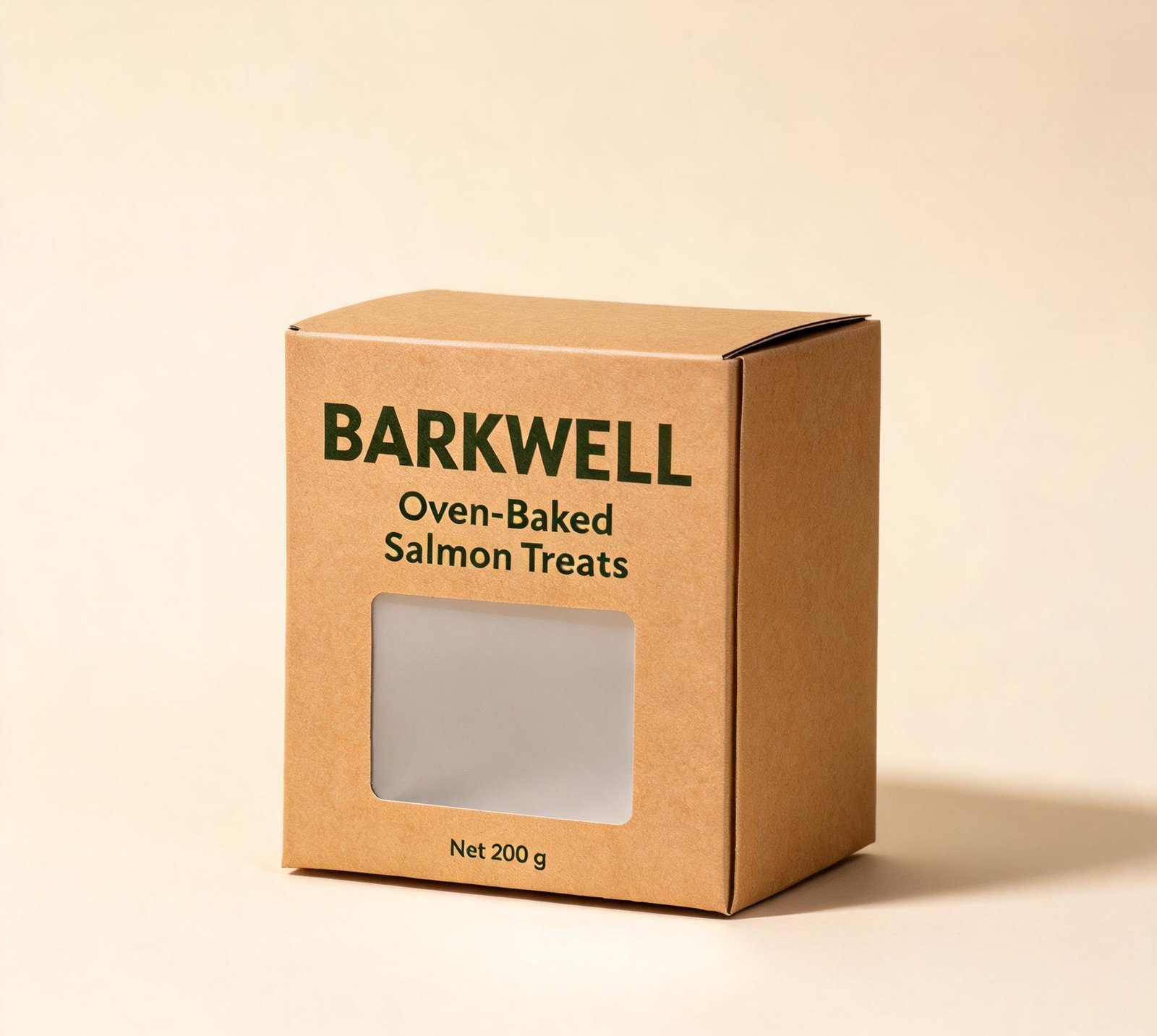
Window patches sell treats. Shoppers want to see the product, and a clear rectangle raises conversion more reliably than any illustration. The trade-off is structural: cutting a hole removes board stiffness, so a windowed carton needs either a heavier board or a patch film laminated across the opening. Use 12 to 15 micron PET film for clarity, and specify a matt or anti-glare finish if the carton will sit under strong retail lighting. Place the window so the product fills it. A window half-filled with empty space reads as underweight.
Inserts matter more than most buyers expect. A treat carton with loose product will rattle, and rattle is the sound of a cheap pack. A simple die-cut corrugated or greyboard platform holds the product in place, keeps the window filled and prevents the carton from collapsing when stacked. The insert is also where you hide the barrier bag, which keeps the outside of the carton clean and grease-free.
Use the table below as a starting point for structure selection. It is not a substitute for a dieline test, but it narrows the conversation quickly.
| Structure | Best for | Typical board | Protection level | Main trade-off |
|---|---|---|---|---|
| Straight tuck carton | Dry treats, single-unit retail | 350 gsm SBS | Medium | Low stiffness once windowed |
| Window patch carton | Visible product, shelf sales | 400 gsm coated | Medium | Extra film and lamination step |
| Rigid lid-and-base | Gift sets, premium treats | 1200 gsm greyboard | High | Highest unit cost, hand assembly |
| Drawer sleeve box | Chew bundles, sampler packs | 1000 gsm greyboard | High | Slower packing line speed |
| Corrugated mailer | Subscription and DTC shipping | E-flute corrugated | High | Weaker shelf presence |
| Counter display unit | Impulse treats, checkout aisles | B-flute corrugated | Medium | Bulkier freight, needs assembly |
| Cylinder carton | Powders, single-origin treats | 400 gsm wrap | Medium | Limited print area on the curve |
Shelf-Ready Displays and Retail Performance
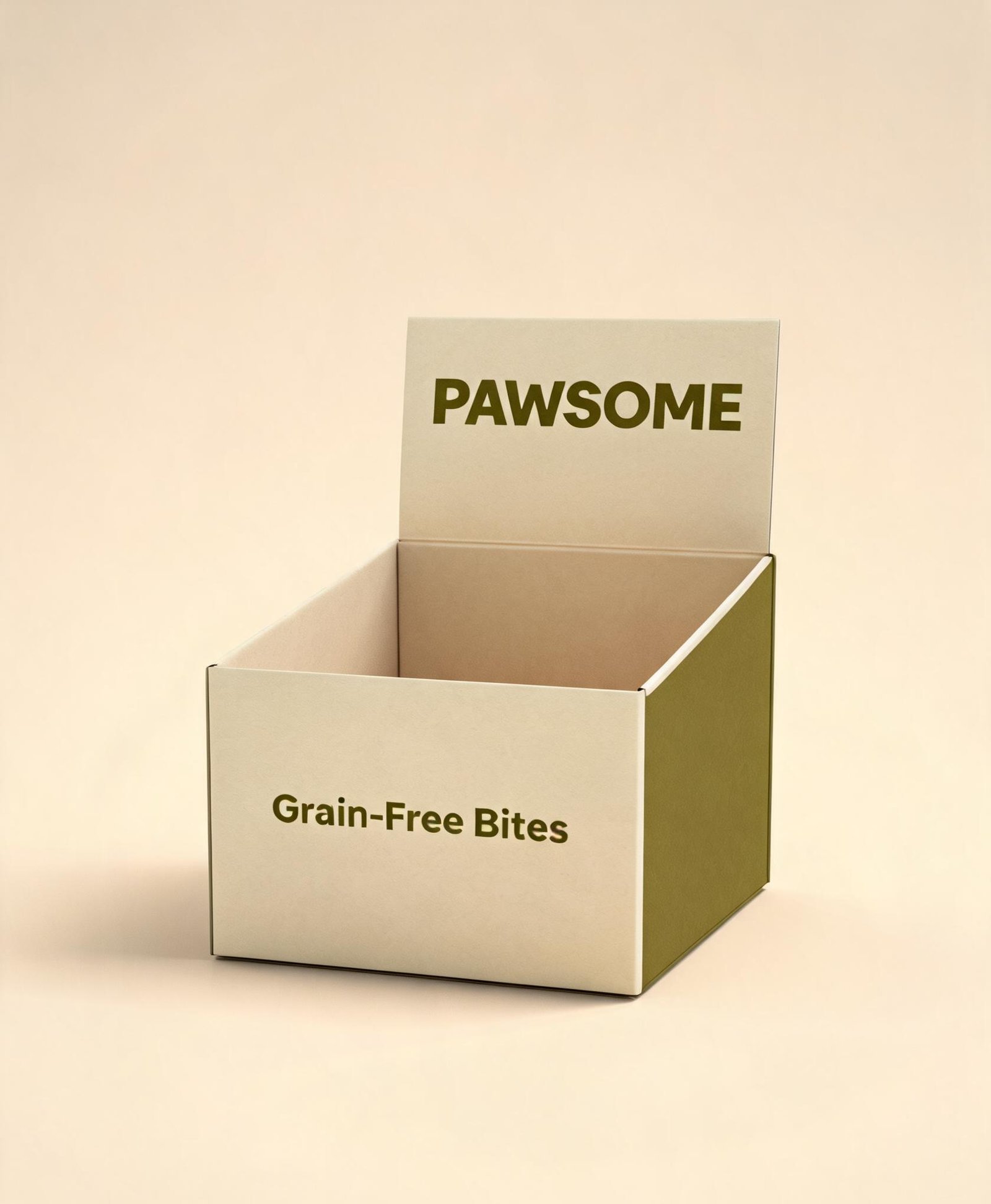
If you sell through independent pet shops or a checkout aisle, the display unit often decides whether you get stocked at all. Buyers want a unit that arrives flat, assembles in under a minute without tools and holds enough product to justify the shelf space. Design for a footprint that fits a standard 400 mm shelf depth, keep the header panel under 300 mm so it does not block the neighbouring brand, and print the header with the product name large enough to read from two metres.
Corrugated displays need to carry weight, not just look good. B-flute handles most treat loads, but a display holding jars or cans should move to a heavier flute or a double-wall base. Add a die-cut locking base rather than relying on glue, because a base that fails mid-promotion takes the whole display down. Our display boxes range covers counter units and floor stands built this way, and the display product box specification shows the locking base and header geometry in detail.
Supplement and Chew Cartons: Compliance and Tamper Evidence
Pet supplements sit closer to the pharmaceutical category than to treats, and the packaging has to acknowledge that. Label space for active ingredients, feeding guidance, batch number and best-before date is not optional, and regulators in most markets require the net weight and the manufacturer’s address in a legible minimum type size. Plan the dieline around the copy, not the other way round. Trying to fit a mandatory panel into a carton designed for a logo is how brands end up with stickers on the back.
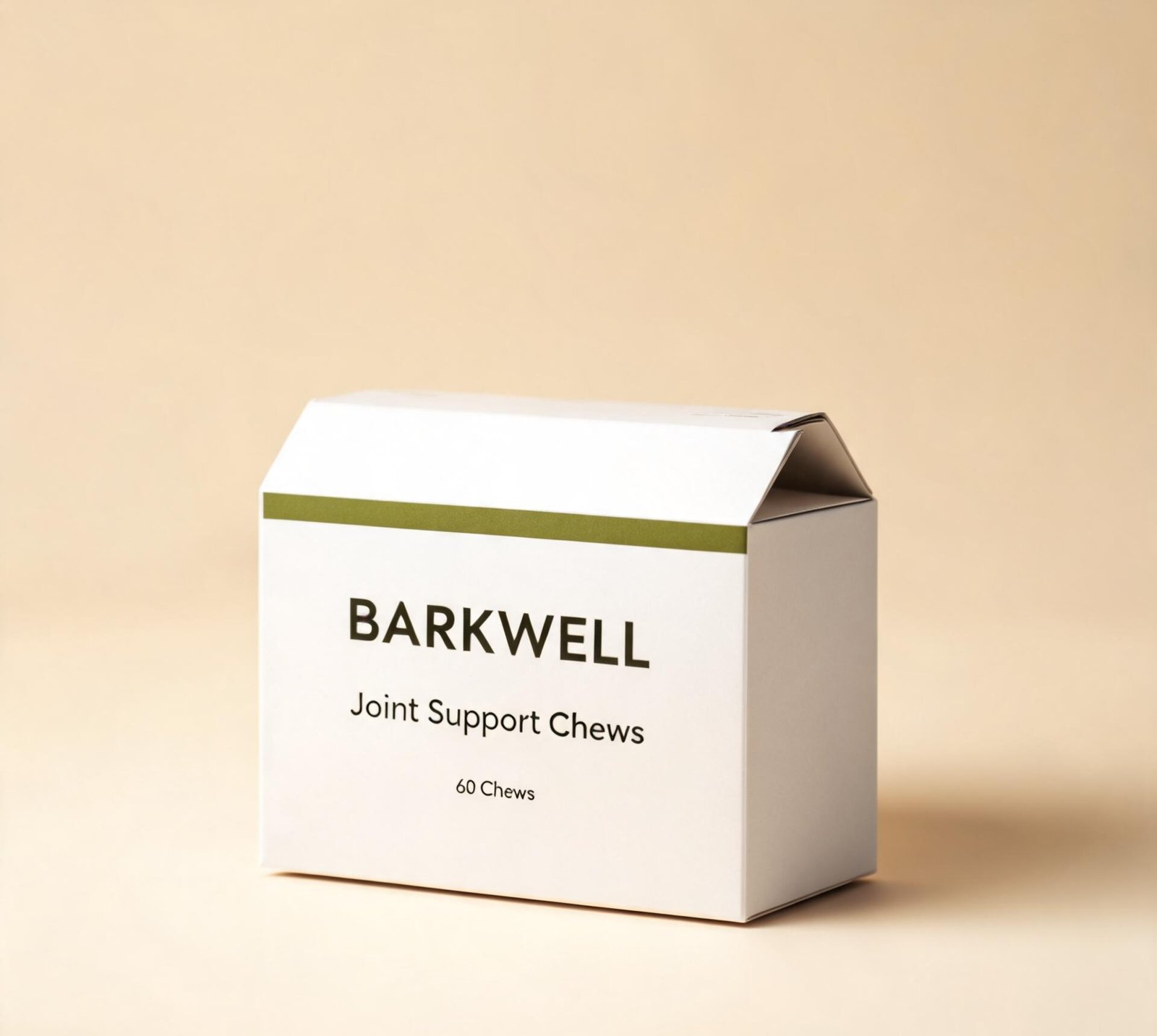
Tamper evidence is the other pressure point. A tuck flap with a tamper seal is the cheapest credible option, but a perforated tear strip or a security label across the flap reads as more serious to a buyer comparing two supplement brands. If the carton holds a bottle, add a neck-fit insert so the bottle cannot rotate and scuff the print during transit. Soft-touch lamination helps here as well; it resists scuffing better than an uncoated surface and makes the carton feel like a premium product in the hand.
MOQ, Sampling and Production Timeline
Most pet brands start smaller than they expect, so the minimum order quantity matters as much as the unit price. Criio runs a 500 pcs minimum per design, which is low enough for a first production run and high enough to keep offset printing economical. Below that threshold digital printing is usually the better route, but the per-unit cost climbs quickly.
- Free dieline and design assistance before you commit to a structure.
- MOQ 500 pcs per design, per size.
- Sampling in 3 to 5 days, including a physical white sample for fit testing.
- Bulk production in 7 to 15 days after sample approval.
- Pre-shipment QC inspection with a written report before the cartons leave the factory.
- Worldwide shipping by air or sea, with FSC-certified board available on request.
Ask for a white sample before you approve artwork. A physical carton reveals problems that a digital proof cannot: a window that sits too low, an insert that rattles, a flap that does not close flush. Approving a dieline on screen is the most common cause of a costly reprint.
The Spec Sheet to Send a Supplier
A vague brief gets a vague quote. Send these details and you will get comparable numbers back from every supplier you approach.
- Product dimensions, weight and whether the pack is retail-ready or ship-ready.
- Structure type and whether a window patch is required, with the window position.
- Board grade and gsm, plus any barrier, grease-resistant or food-contact requirement.
- Print process, number of colours and any foil, emboss or spot UV areas.
- Insert type and the internal clearance needed around the product.
- Order quantity, target ship date and destination port or warehouse.
- Certification requirements, such as FSC chain of custody or recyclability claims.
Get the dieline and the sample right and the rest of the project follows. Pet packaging rewards brands that treat the carton as a protective structure first and a marketing surface second, because the customer sees both at the same moment. If you are weighing two structures, send us your product dimensions and we will return a dieline, a board recommendation and a cost comparison before you commit to a print run.