
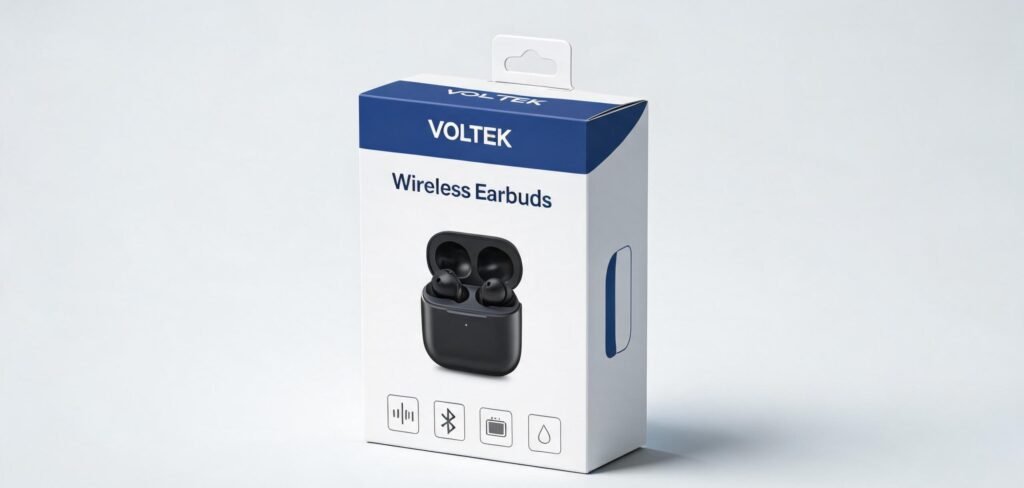
Electronics products fail in two ways: they break in transit, or they sit unnoticed on the shelf. Your packaging has to prevent both. Unlike candles or cosmetics, a power bank, a router or a pair of earbuds carries circuit boards that react badly to drops, vibration and static discharge. At the same time, a buyer comparing three similar products on a peg hook will judge yours by the carton before reading a word. This guide walks through the decisions that matter when you specify electronics packaging boxes: the board and structure, the insert that holds the product, static control, and the finishing choices that move a carton off the shelf.
What Electronics Packaging Boxes Have to Get Right
Consumer electronics packaging is a system, not a single sheet of board. Before you pick a style, be clear about the four jobs the box has to do at the same time:
- Physical protection. Devices are dense, with hard edges and protruding connectors. The carton and insert must absorb drops and stop the product from migrating inside the box.
- Static control. A discharge you cannot see or feel can damage a PCB. Packaging materials must either dissipate charge or shield the contents from it.
- Presentation. Small electronics are impulse purchases. The carton has to communicate the product, the brand and three key features in about two seconds.
- Compliance and information. Regulatory marks, barcodes, serial numbers and multilingual copy all compete for space on a very small carton.
A box that nails protection but ignores shelf impact will underperform in retail. One that looks good but lets the product rattle will drive returns. Plan for both from the first dieline, because retrofitting either one later costs more than designing it in.
Choosing the Board and Structure
Most small and mid-size electronics ship in one of three structures, and the right choice depends on product weight and where the box sells:
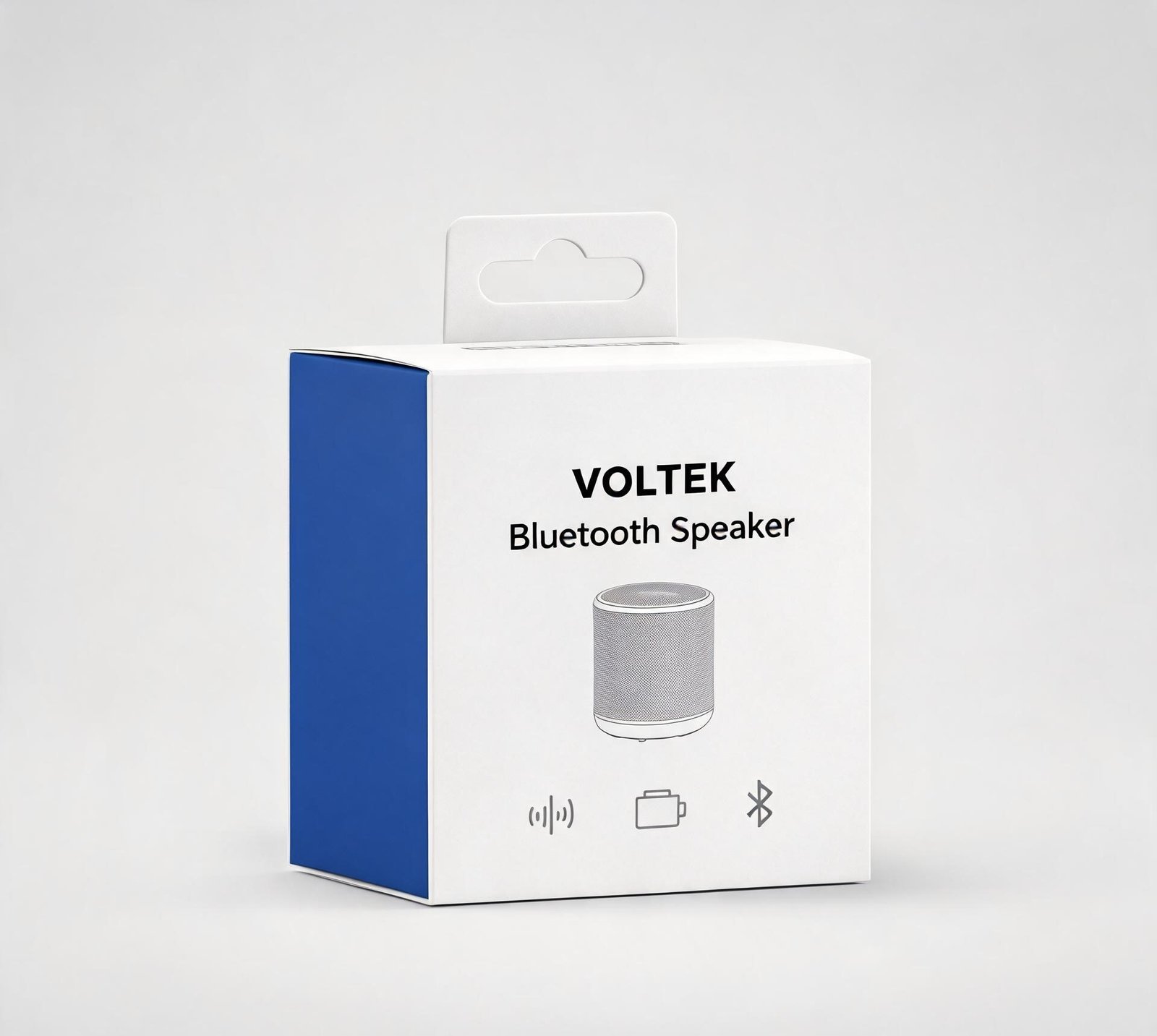
- Folding carton (300–400 gsm SBS or kraft). The default for earbuds, cables, adapters and accessories up to roughly 500 g. It prints beautifully, runs fast on automated lines and carries a euro hang tab for peg-hook retail. See our folding carton boxes for the full range.
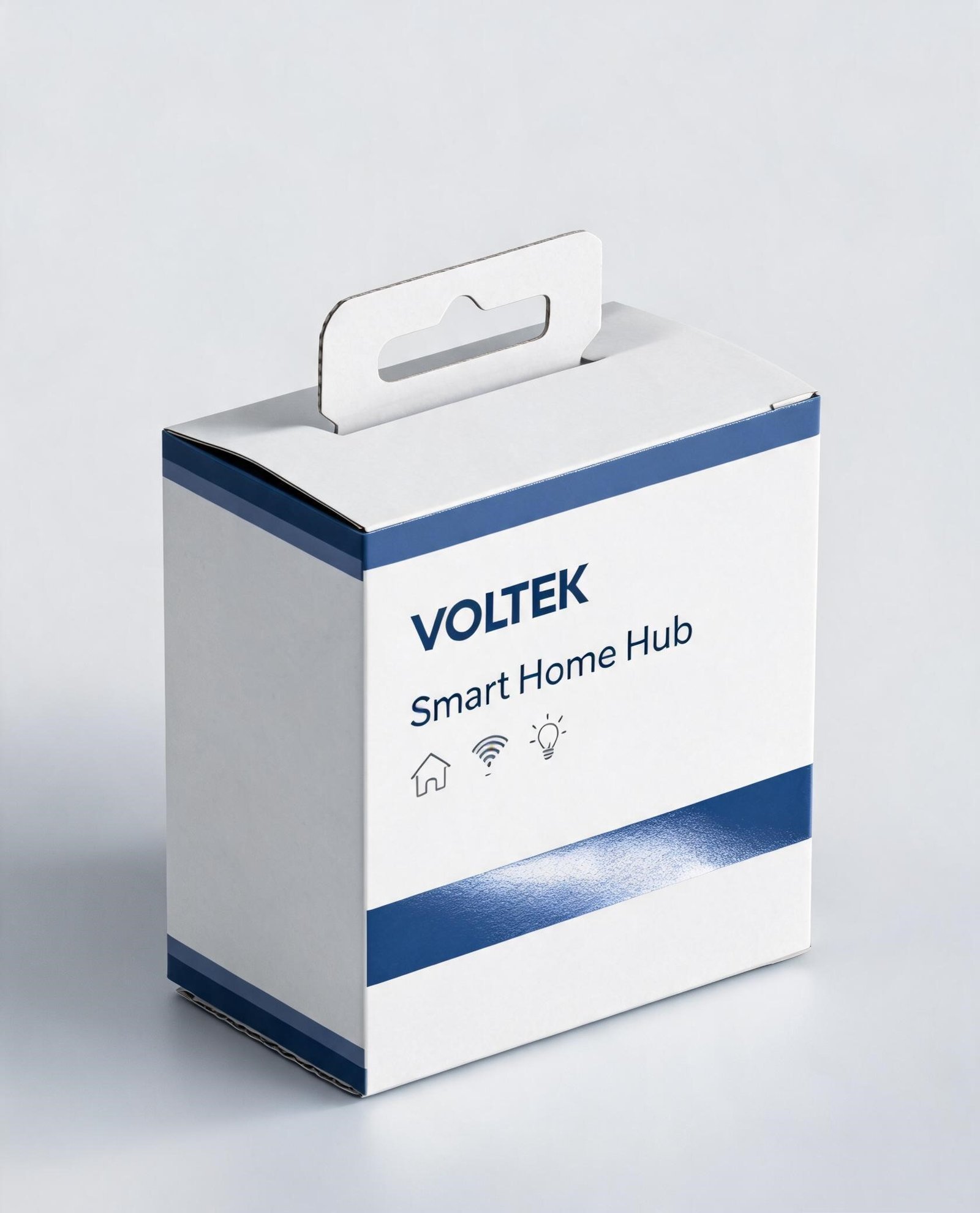
- Rigid box. For flagship products and gift situations — headphones, smart home hubs sold as presents — where the unboxing moment carries the brand.
- Corrugated mailer. When the same box travels from factory to doorstep, e-flute or b-flute corrugated replaces the carton and must carry the retail print too.
If your product sits between two options, weight and drop height decide. Anything over 500 g, or anything that ships without an outer master case, should move to corrugated or add a rigid component. Board choice also affects your sustainability story: recycled kraft and FSC-certified board are both available on request, and both run well with standard electronics layouts.
Print quality also behaves differently across these boards. Coated SBS holds fine text and dense icon rows crisply, which matters when regulatory marks have to stay legible at small sizes. Kraft has a warmer, natural look but softens fine detail, so keep type larger on it. Whatever board you choose, ask for a printed proof of the actual panel size — a layout that reads well on an A4 sheet can crowd badly once it is scaled down to a 90 mm carton.
Insert Design That Holds Components Steady
The insert does more work than the carton. It stops movement, isolates the product from hard surfaces and presents accessories in a fixed order so the unboxing feels deliberate. Five steps get it right:
- Map the product geometry first. Send a sample or a 3D file and we return a free dieline with the cavity sized to the device, not to a generic block.
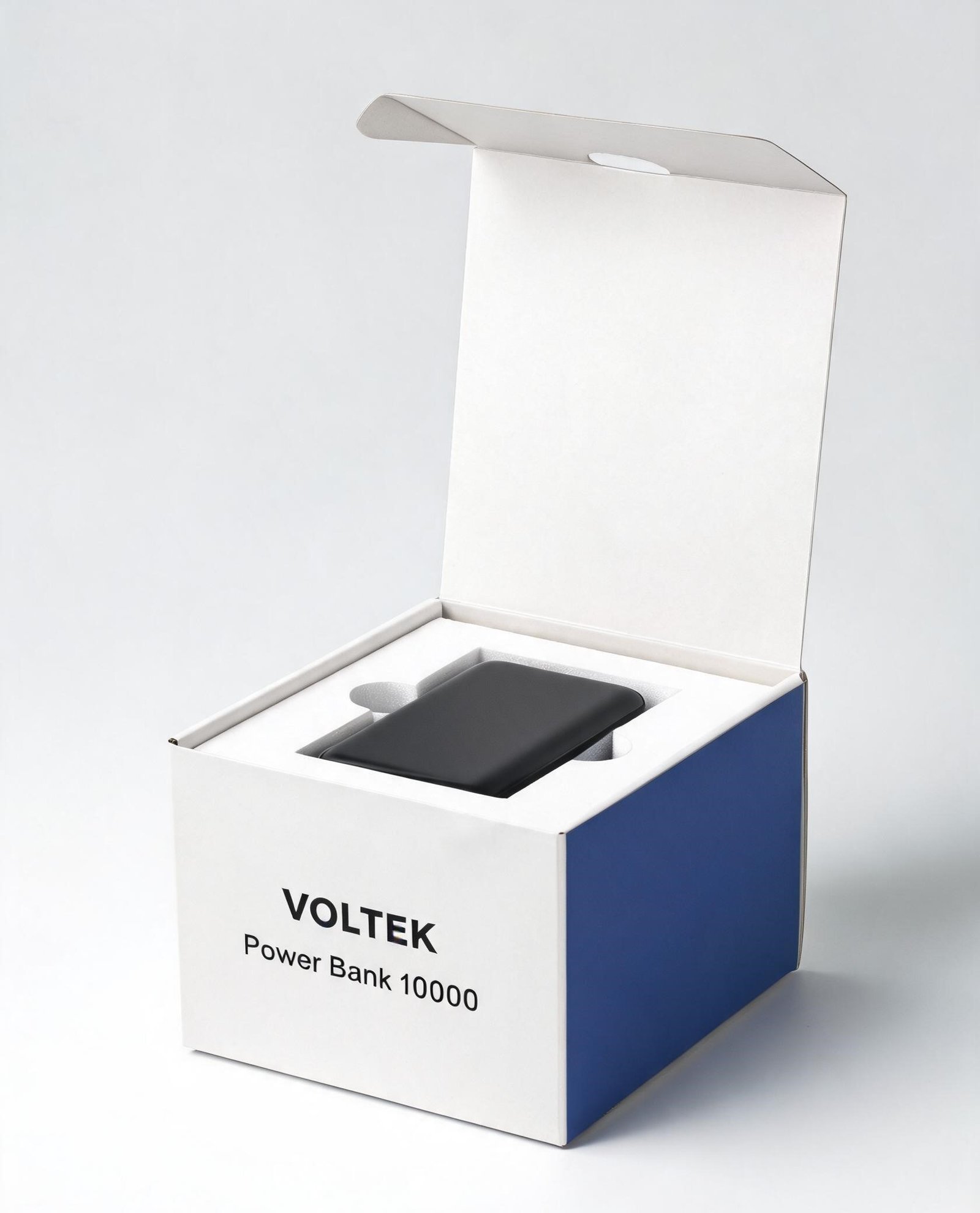
- Pick the insert material for weight and fragility: die-cut corrugate for light accessories, ESD-safe polyethylene foam for boards and dense devices, molded pulp when you want a sustainable story.
- Reserve a channel for cables and documents. A dedicated path stops the cable from scratching the device surface in transit.
- Plan the lift. Thumb cutouts or a ribbon pull make removal easy; a product that has to be shaken out feels cheap.
- Test with real drop orientations. A box that survives a flat drop can still fail edge-first. Check both before you sign off.
Fixture samples of the insert usually take 3–5 days to cut and assemble, which is fast enough to validate cavity fit before any tooling commitment.
Static Protection: Matching the Material to the Risk
Static damage is invisible, intermittent and expensive, and it does not respect good looks. The material science is settled, so the real task is matching the material class to how sensitive your product is. Anti-static materials prevent the packaging itself from generating charge. Static-dissipative materials bleed charge away slowly and safely. Conductive materials route charge instantly, and shielding materials, such as metallized bags, block external fields entirely — the closest thing to a Faraday cage you can fold into a box.
| Material | ESD behavior | Cushioning | Best used for |
|---|---|---|---|
| Anti-static corrugated | Dissipative surface | Moderate | Inner boxes, dividers and layer pads |
| Conductive corrugated | Conductive, sheds charge | Low | Faraday-style inner enclosures for PCBA |
| ESD polyethylene foam | Dissipative | High | Direct contact with boards and displays |
| Conductive foam | Conductive | High | Sensitive ICs and connector trays |
| Molded pulp | Neutral, pair with shielding | Moderate | Sustainable inserts for light accessories |
| Static-shielding bag | Full field shielding | None | Bagging boards before they enter the box |
| Die-cut corrugated insert | Neutral, pair with shielding | Moderate | Retail cartons where foam is not wanted |
Humidity changes the math as well. Dry winter air raises static risk dramatically, while high humidity reduces it, so products shipping through dry climates deserve the stricter material class even if the spec sheet looked fine in summer.
Two rules keep it simple. Anything with an exposed PCB gets an ESD-safe insert or a shielding bag inside the box. And never let ordinary poly bags touch sensitive boards — the surface-resistance classes exist because they do different jobs.
Retail Shelf Impact: Finishes That Do the Selling
On a peg hook or a shelf, your carton fights for attention against three or four near-identical boxes. Finishing is where you win that fight without changing the structure:
- Soft-touch lamination reads as premium the moment a shopper picks the box up. The texture does the selling before the artwork does.
- Spot UV builds gloss contrast over a matte surface; a single stripe or logo panel is usually enough.
- Foil stamping works best on dark boards for brand marks and stays affordable on small areas.
- Window patching shows the actual product — highly effective for cables and accessories where the product itself is the argument.
Keep the front panel disciplined: product name, one hero image or window, three icons maximum. The back panel absorbs the regulatory and multilingual copy. A carton that tries to say everything says nothing.
When to Step Up to Drawer and Rigid Structures
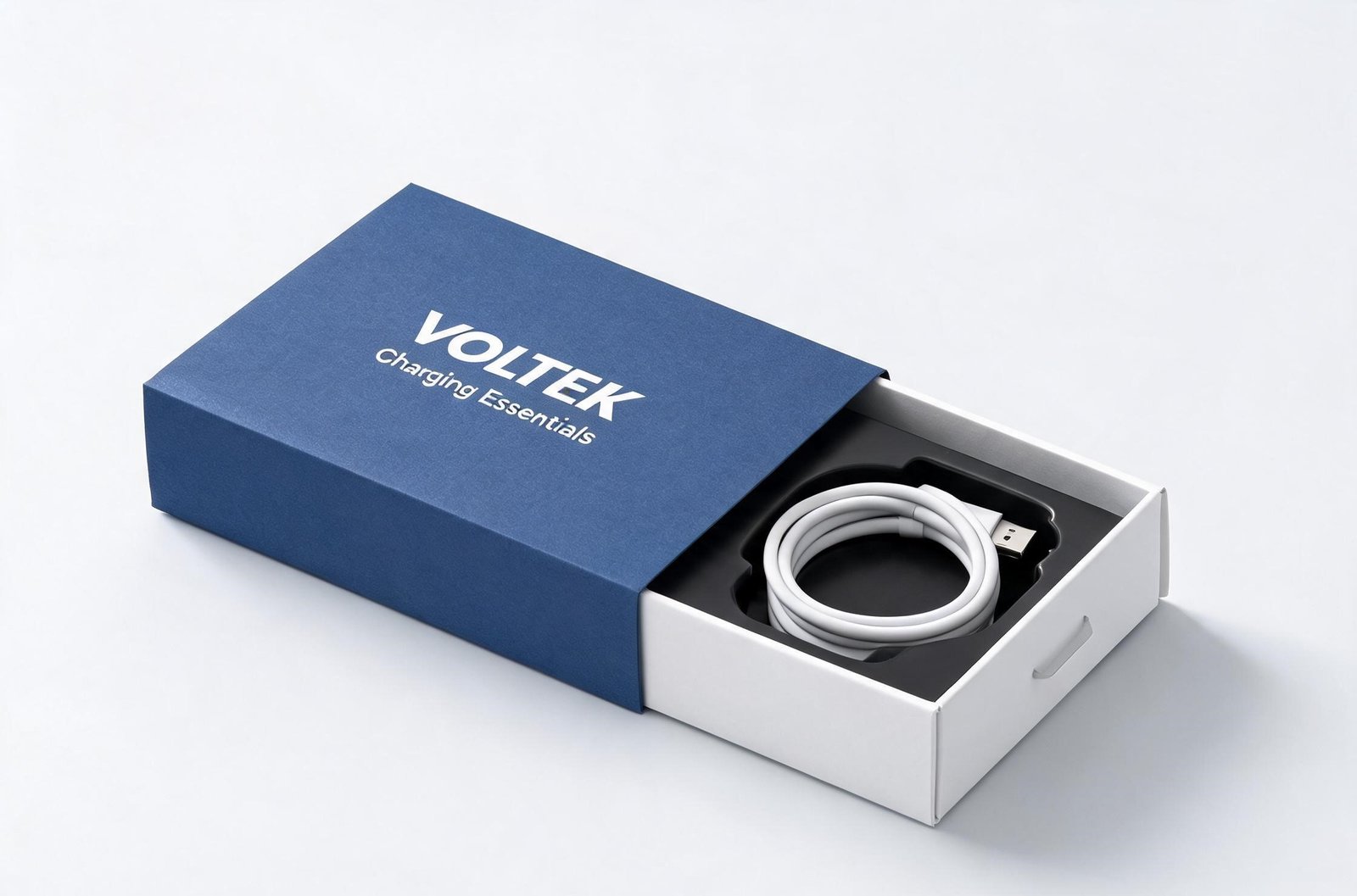
Some electronics deserve a slower unboxing. Drawer boxes pull open to reveal a tray in stages, which suits premium cables, smart home devices and anything sold as a gift — our drawer product boxes show the structure in detail. The format also protects better: the outer sleeve adds a second wall, and the inner tray can be foam or molded pulp built to the same specification as a carton insert. Because the tray is a separate component, artwork can wrap the sleeve on all four panels without interrupting the reveal moment.
The trade-offs are cost and assembly time. A drawer box uses more material and more handwork, so it earns its place above a certain price point — typically products retailing above $30–40. Below that line, a well-finished folding carton usually does the same job at a fraction of the cost.
A Production and QC Checklist Before You Sign Off
Before any electronics packaging run goes to press, walk this list with your supplier:
- Confirm the dieline against a physical sample of the device, not just a drawing.
- Verify ESD material certificates if the insert touches a PCB.
- Check regulatory artwork — CE, FCC, WEEE and barcode placement — against retailer specifications.
- Run a drop test on the final combination of carton and insert, edge orientations included.
- Inspect first production pieces for glue strength, hang tab integrity and print registration.
Every Criio shipment passes a pre-delivery inspection before it leaves the factory, so defects are caught on the production floor and not at your receiving dock. Photos of the actual production pieces go out with the inspection report, so you can approve the run before it is packed for shipping.
Start Your Electronics Packaging Project
If you are launching a device or re-specing an existing carton, work in order: structure first, insert second, finish last. Browse our electronic boxes catalog for retail-ready structures, or see the folding carton electronic boxes product page for a typical peg-hook carton.
Send us your product dimensions and target price and we will return a free dieline and a quote, with design assistance included. Minimum order is 500 pcs per design, samples take 3–5 days and bulk production 7–15 days, with worldwide shipping and FSC-certified board available on request. Contact us to get your electronics packaging project moving.